
Review
UNCHARTED. Brother, Where Are You? [REVIEW]
The creators of Uncharted are working with material that adventure cinema has already recycled and digested dozens of times.


While searching a chamber beneath one of Barcelona’s churches, Nathan Drake (Tom Holland) jokingly warns his companion, Chloe (Sophia Ali), not to play Indiana Jones. At another point, Victor Sullivan (Mark Wahlberg), the initiator of the entire expedition, cautions Nathan not to get too carried away with his Jack Sparrow impression. When it comes to Uncharted, many more contexts and references could easily be mentioned, without even bringing up the original video game.
There’s the pseudo-historical investigation straight out of The Da Vinci Code, the spectacular challenges worthy of Bond, especially the Pierce Brosnan era, or the elaborate fistfights reminiscent of the Bourne series. Every mission in this film feels like a mission impossible. The creators of Uncharted are working with material that adventure cinema has already recycled and digested dozens of times. Their film doesn’t provide a clear answer as to whether this genre can still achieve a sense of freshness.
On one hand, we get the same set of tricks and ideas; on the other, this repetitiveness is softened by a wink to the audience and a touch of comedy.
Director Ruben Fleischer doesn’t waste time pondering the essence of this type of cinema. He knows perfectly well what kind of material he’s working with. The key is to promise a reward, quickly push the heroes into uncharted territory, and equip them with the necessary artifacts: cross-shaped keys opening secret doors, notebooks with mysterious clues, maps leading to Magellan’s treasure. Adventure, onward!
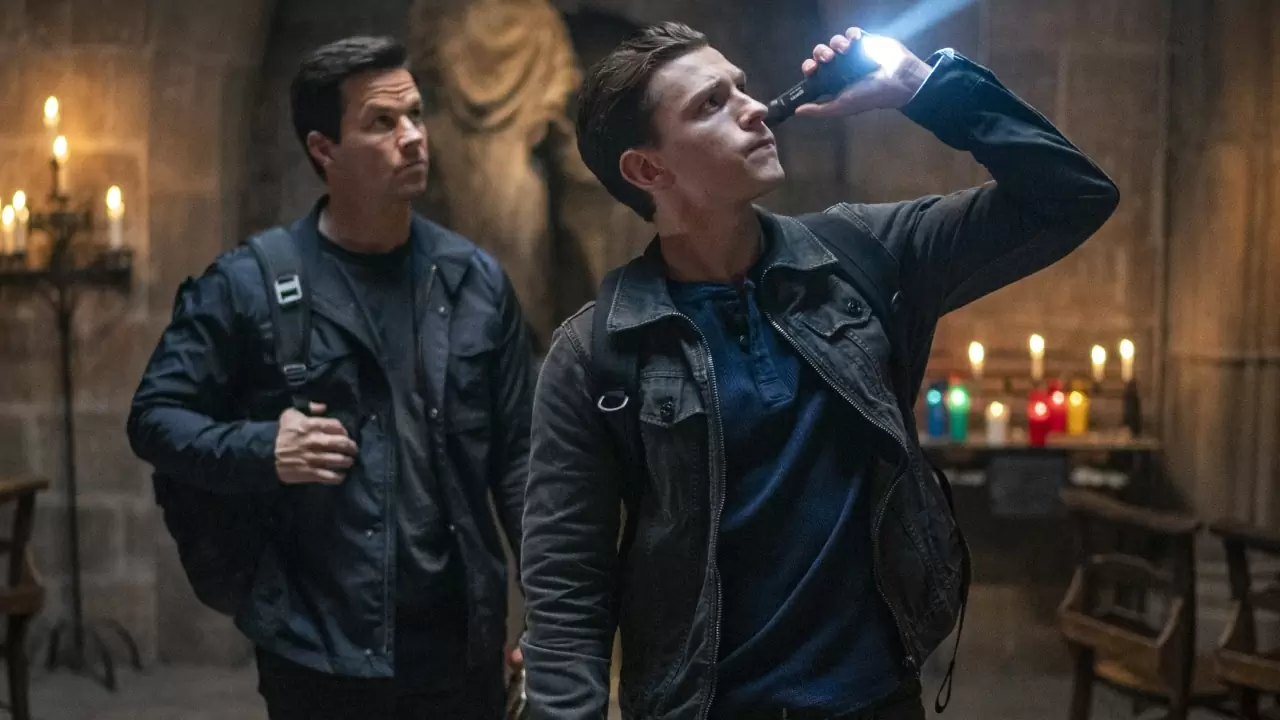
The narrative proportions in Uncharted are laid out clearly. It’s mostly about pursuit, spectacle, agility, and reflexes. Underwater, on land, in the air. Yet there’s also room for the characters to be given distinct needs, fears, and personality traits. Nathan is a nimble bartender and petty thief, lacking any real purpose in his monotonous life. He constantly longs for his older brother, Sam, who had to leave him when they were still living in an orphanage. Back then, finding the gold left behind by the legendary Portuguese navigator was their shared obsession.
Victor, on the other hand, hides more than one secret. Is he truly a cynical opportunist by nature, or someone more trustworthy? Does he care only about bags of gold, or also about the thrill of discovery? Most importantly, does he know what happened to Sam, who hasn’t been heard from in years? That’s precisely why Nathan agrees to team up with Victor. He hopes that along with the lost treasure, he’ll also find his lost brother. Two birds with one stone.
Each new stage of the journey naturally means a higher level of difficulty (many viewers will surely admit, also absurdity), requiring more skill points, a greater variety of weapons, and, above all, tons of luck.
The final sequence strikes a fine balance between the spectacle of New Adventure Cinema and outright farce, perhaps even parody. Yet it isn’t the elaborately designed action scenes that give Uncharted its charm, but rather the heartfelt, dynamic relationship between Victor and Nathan. Built on constant quips, boasts, one-upmanship, banter, slipping into the roles of mentor and student and then breaking out of them again. In this respect, Fleischer’s film feels least anonymous, lightest, most direct, eager to win over the audience. Uncharted is at its best when the two of them have to negotiate, settle disputes, and find compromise.

In Uncharted, betrayal follows betrayal. One deception replaces another. A generic villain (Antonio Banderas) plots and mutters under his breath, laying new traps. Any sense of danger, of course, is illusory. Even if the world collapses, Nathan will cling to the last ledge, leap across a chasm, defy the laws of physics—he’ll always make it, always escape disaster “by a hair’s breadth.” Uncharted brings yet another superhero to the screen. For one film, for three, for seven. But everything suggests that even this won’t be enough. After Nathan, more will be needed.


LUCIA’S GRACE. Resembles a Kind Of Missionary Endeavor

DOKUMENT. Short Film That Feels Monumental

BEAUTIFUL BOY. The Acting is Remarkable [REVIEW]

Looking Back at SPIDER: More Terrifying Than Horror
