
Review
SINBAD: LEGEND OF THE SEVEN SEAS. Fully Realized


At the beginning of its activity, DreamWorks Animation was able to compete on equal footing with productions from Disney and Pixar. Antz, The Prince of Egypt, of course Shrek, or The Road to El Dorado were just as successful and visually striking as the competition’s animations. They also featured complex plots in which the protagonists face difficult ethical dilemmas. Fully realized, carefully written characters draw attention and linger in the memory. Visual mastery takes a back seat—it is always meant to serve the story, not drive it. The opening sequence of Sinbad: Legend of the Seven Seas is a model example of setting the story in motion.
It proposes the spectacular convention in which the entire animation will unfold and sketches out the trio of main characters. We are not given a clear-cut exposition; instead, we meet Sinbad, Proteus, and Eris in action. It is through their behavior that we learn who they are and what kind of characters they possess—something that always speaks to the quality of the script.

From a cloud-level perspective, we dynamically approach two ships. The first is commanded by Captain Proteus, an honorable and self-assured leader returning with his crew to their home port of Syracuse. On board they carry an extraordinarily valuable artifact—the magical Book of Peace. On the second, a pirate vessel, Sinbad races toward an imminent boarding. Watching from above is Eris—the goddess of Chaos—interested in obtaining the book, but perhaps above all in turning Proteus and Sinbad against each other: former friends who still share a great deal of affection.
Their paths, however, have taken them in opposite directions. They now represent entirely different views and values. Proteus is a distinguished statesman of merit; Sinbad is a charming rogue and con man, likely the subject of more than one wanted poster.

The clash of these personalities forms the film’s dramatic axis and is also its greatest strength. They are bound by Eris’s deception: taking Sinbad’s form, she steals the Book of Peace, for which the titular hero is unjustly sentenced to death. Proteus does not believe the verdict is justified and, as part of a pact, decides to take Sinbad’s guilt upon himself. Before the execution can take place, the outlaw sailor must retrieve the book from Eris to save his friend’s life. Most intriguing is the fact that, at first, Sinbad has no qualms about fleeing the moment he regains his freedom.
This is a conflict built on oppositions reminiscent of those dividing Maximus and Commodus in Gladiator, or Moses and Ramses in The Prince of Egypt. In Sinbad’s case as well, a fraternal bond lies at the heart of the filmmakers’ focus. Here, however, its vector points in a different direction—not toward escalation, but toward the construction of empathy. Despite several differences from the titles mentioned above, the animation fits squarely within the same narrative tradition, addressing a problem built on similar foundations.
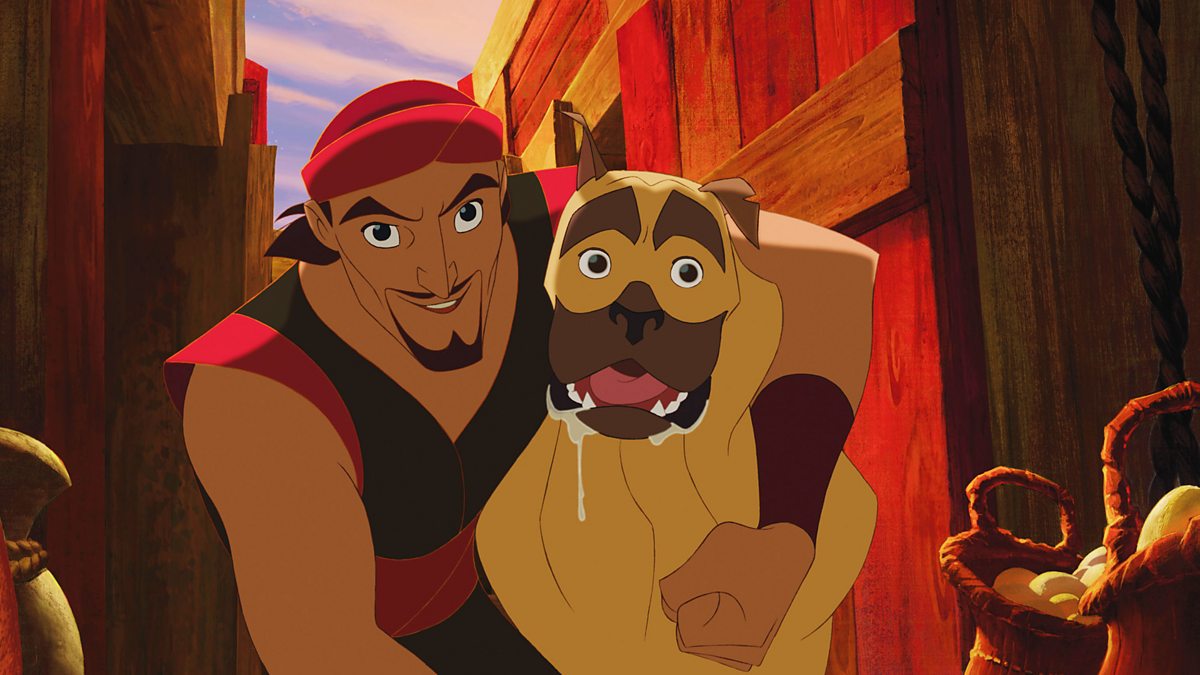
Sinbad: Legend of the Seven Seas is adventure cinema with perfectly calibrated proportions. A series of inventively staged action sequences intelligently expands the world before us, while the creators gradually usher us into a mythological order. As a result, the animation gains an allegorical, universal dimension. This is due not only to Eris, who sets ever more difficult challenges for the heroes, but also to several plot solutions—such as the moment when one of the islands where Sinbad’s ship stops turns out to be a gigantic creature.
Sinbad guides us through this world in a highly creative and non-literal way. Trusting their audience’s imagination, the filmmakers do not explain all the rules governing this place; the exploration of locations is left largely to conjecture. Fantastic elements are introduced through surprise, yet there is not a trace of randomness in their selection.
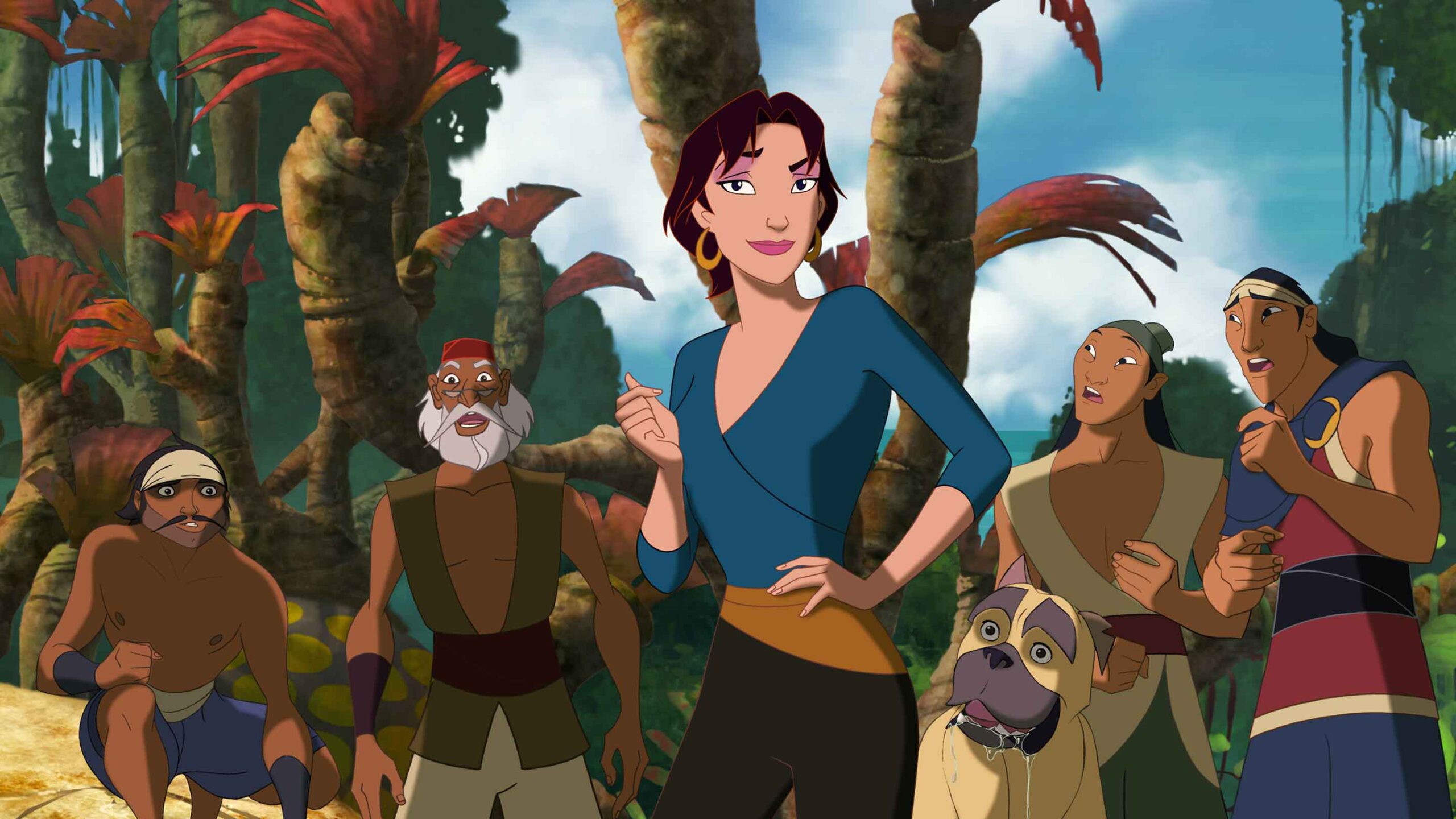
I particularly value Sinbad for knowing when to slow the headlong rush of action. The increasingly bombastic sequences of confrontations with Eris recede into the background, even becoming gently downplayed. Sinbad’s greatest challenge turns out to be resolving his strained relationship with Proteus. An intriguing paradox emerges as well: in the end, the goddess of Chaos becomes the catalyst for a nascent harmony.
Sinbad: Legend of the Seven Seas is a fully realized piece of entertainment. The DreamWorks production boasts scale, superbly directed action scenes, and an engaging dramatic thread supported by compelling characters. Drawn from One Thousand and One Nights, the story has been encoded to be accessible to Western audiences. This transfer—at the level of symbols and character imagery—never grates. Sinbad has taken on the contours of a universal legend, not merely one rooted in Arab folklore. That may well be DreamWorks Animation’s greatest success.


LUCIA’S GRACE. Resembles a Kind Of Missionary Endeavor

DOKUMENT. Short Film That Feels Monumental

BEAUTIFUL BOY. The Acting is Remarkable [REVIEW]

Looking Back at SPIDER: More Terrifying Than Horror
