
Horror Movies
Looking Back at RAVENOUS: Deliciously Unpalatable Horror
Ravenous is a very spicy film, strongly twisted, but in a good way. Extravagant but not overcooked. And, most importantly, made for repeated tasting.


Ravenous means someone hungry (in this case, a human being) to the extreme; someone who, out of deprivation, is ready to pounce on raw meat just to fill the gaping emptiness in their stomach. If this word immediately brings to your mind zombies and cannibalism, and you can already sense the smell of blood spilled onto celluloid, then the title of Antonia Bird’s film fulfills its basic function and sounds suitably… predatory. At the same time, it is by no means easy to decode and – once all the cards are finally laid on the table – to like. This is, after all, a strongly eclectic, original, deliberately unpalatable creation.
Interestingly enough, this is yet another case where a woman stood behind the camera. Initially, the helm of Ravenous was entrusted to a man – Macedonian filmmaker Milcho Manchevski (Before the Rain). He and the producers, however, quickly fell into a conflict of interests so typical for the business, and the director’s chair became vacant. Ultimately, at the urging of one of the production’s stars, Robert Carlyle, Bird took the seat – an artist with whom the actor had not only already collaborated successfully (Priest from 1994 and Face from 1997), but with whom he had also founded the film studio 4-Way Film.
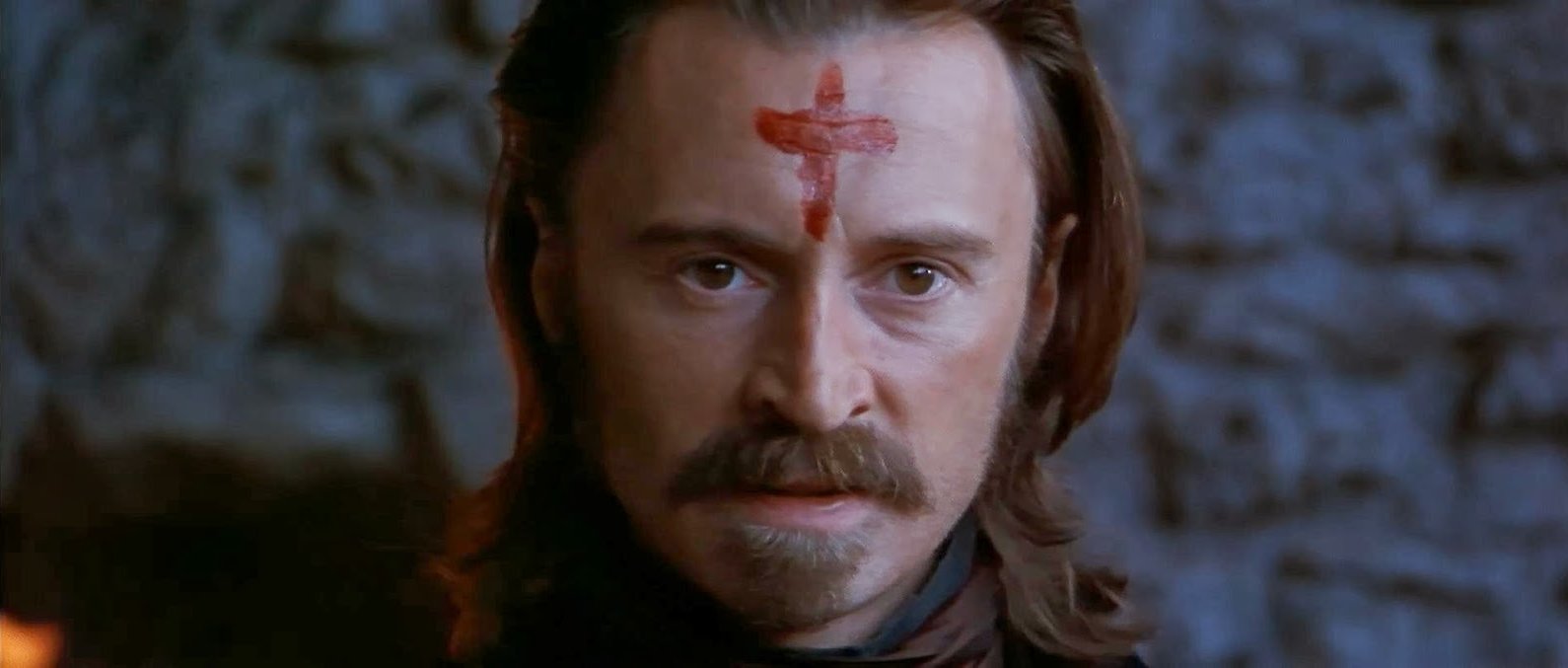
Admittedly, the author – who sadly passed away in 2013 – also complained about artificially piled-up problems and difficult working conditions on the set of Ravenous, yet she fulfilled her task with admirable resolve. The result is one of the most unusual representatives of the genre, comparable perhaps only to the relatively recent Bone Tomahawk.
Another matter is that we are dealing here with a western only in part. Ravenous is, to a large extent, juicy horror cinema merely set in the Wild West – portrayed by the Slovak Tatras and Czech interiors, therefore very familiar in feel – occasionally seasoned with truly jet-black humor. No less present is a specific kind of survival story that Alejandro González Iñárritu would not have had reason to be ashamed of. Incidentally, just like The Revenant by that same director, the story penned by Ted Griffin was also inspired by real events.

In May 1847, a group of pioneers under the leadership of George Donner and James F. Reed set out along a trail toward sunny California. Naturally, as is often the case on unconquered prairie, nothing went according to plan, and the company later known simply as Donner Party spent the entire winter in the Sierra Nevada mountains, where acts of cannibalism ultimately occurred. This ethically dubious deed allowed barely half of the more than eighty-person group – which included children – to survive.
Bird’s film is, of course, no attempt to recreate those events – something the opening moving-image quotation from Nietzsche (written, moreover, with an error) makes abundantly clear, followed quickly by a tongue-in-cheek addendum. Besides, Griffin, while writing the screenplay, was reportedly also inspired by Dashiell Hammett’s popular detective novel The Thin Man – successfully adapted for the screen as well – which explains a great deal. As a result, only the mountains, the nineteenth century, and the aforementioned cannibalism remain from the real story.
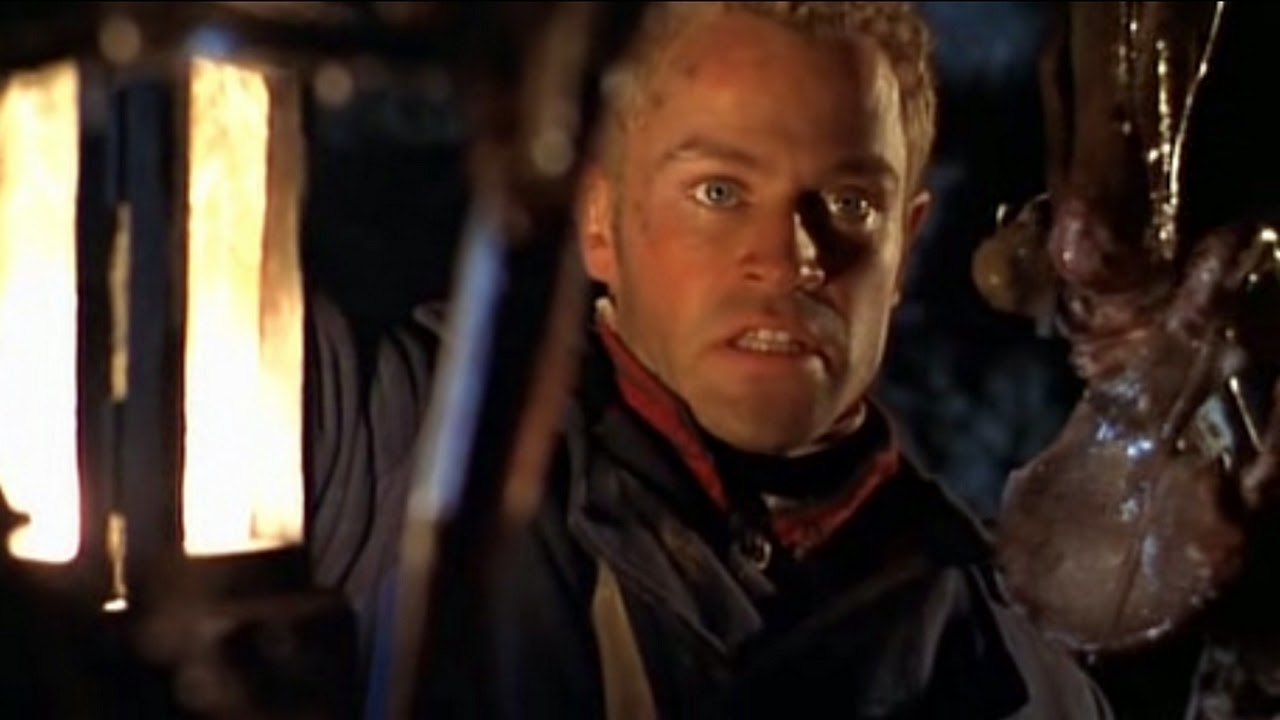
The protagonist is the fictional Captain John Boyd (the ever-excellent Guy Pearce), who for his merits in the war with Mexico receives orders to take command of an outpost cut off from the world in the aforementioned Sierra Nevada. Upon arrival, it quickly turns out that the post is populated by a whole range of colorful personalities who share one trait with Boyd – for various reasons, they are unfit for real combat. Still struggling with guilt and the traumatic experiences brought back from the Mexican front, Boyd is, of course, far from pleased with this turn of events, but there is little time for grumbling.
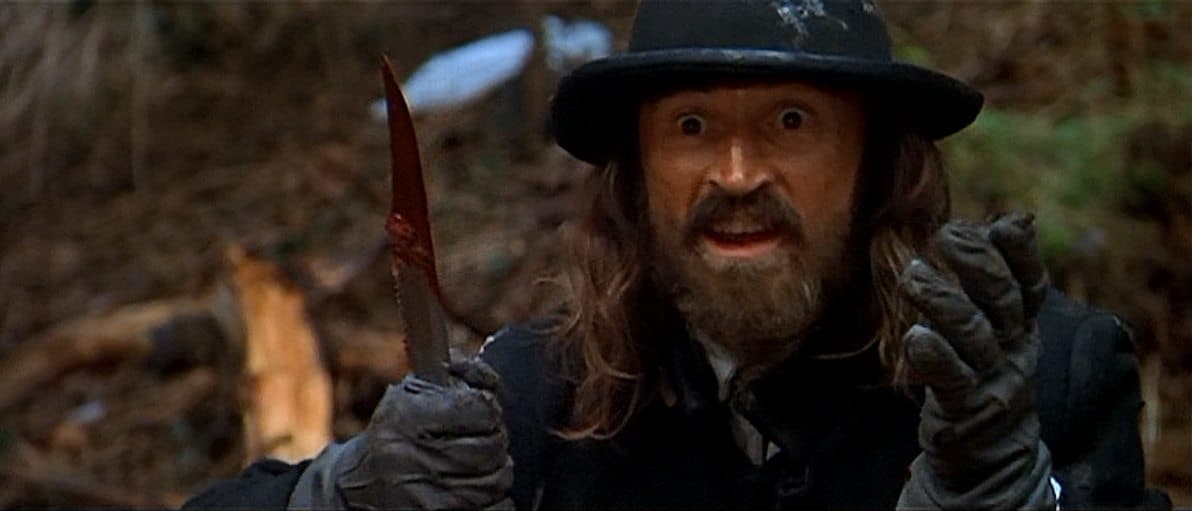
Immediately afterward, an exhausted stranger bearing Carlyle’s face literally staggers into Fort Spencer. He claims his name is Colqhoun (pronounced Kalhun) and, with great anguish, tells the soldiers about companions trapped among the nearby mountains, with whom he had been traveling together toward the ocean…
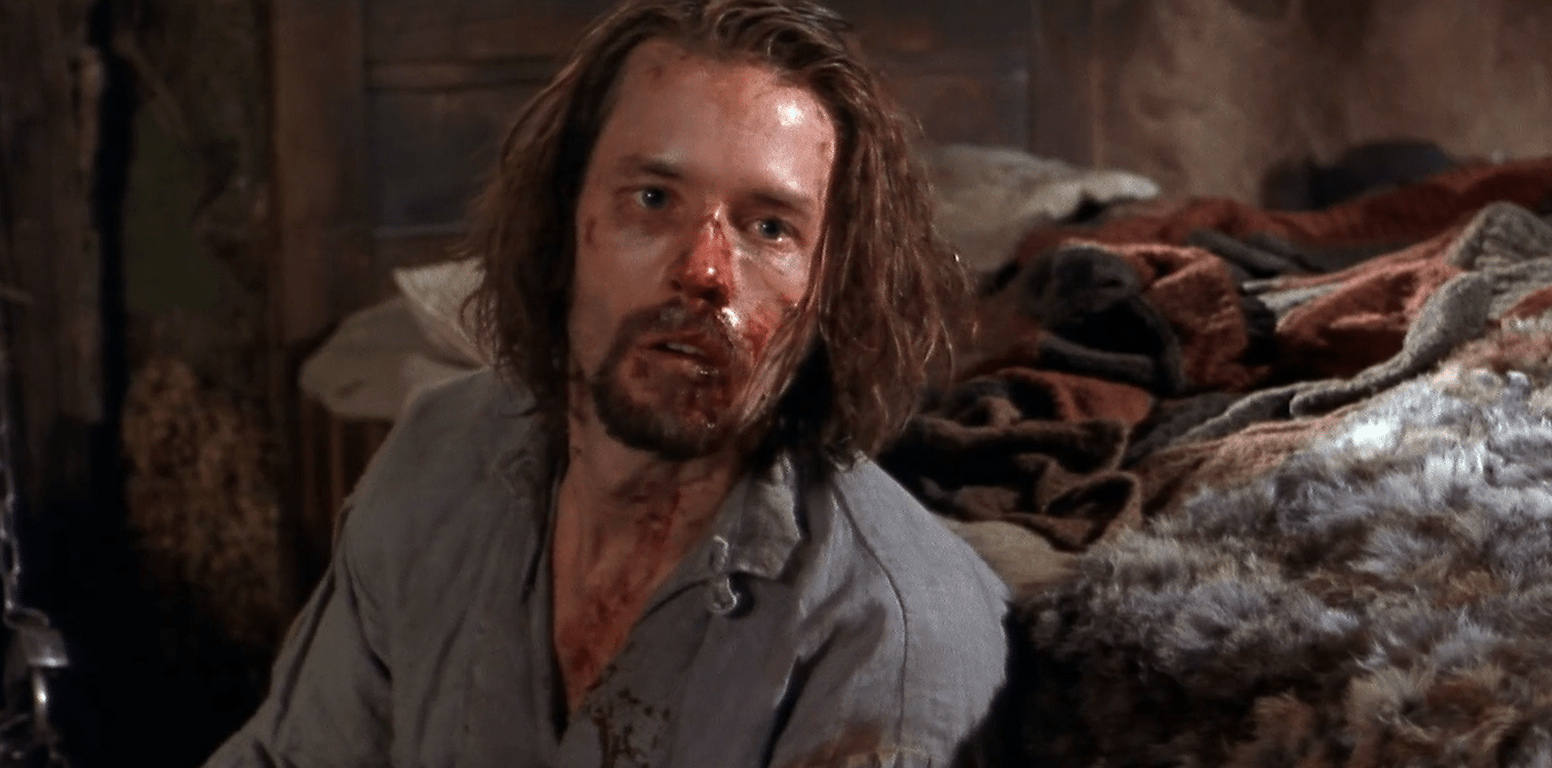
How things unfold from there is not, in fact, all that important. Although Ravenous does stand on a few plot twists and it is better not to know too much about them, the film’s quality, class, and originality – and thus also its purely entertainment value – lie rather in its individual component parts. And these, it must be admitted, are at times a true parade of contradictions. It is not even so much that Bird mixes film genres that seem incompatible with one another, because she does so with remarkable finesse, consistency, and overall cohesion.
A certain dissonance can, however, be felt in the atmosphere of the story, which changes like a kaleidoscope. Scenes filled with suspense, purely dramatic ones, and even genuinely affecting moments can cheerfully contrast with those bordering on the grotesque, almost pastiche-like, at which it is hard to suppress laughter.

This is particularly striking during the first such instances, perhaps because they appear quite unexpectedly, somewhat shattering the initially, carefully constructed mood. And this despite the fact that almost from the very beginning the filmmakers place everything in a slight parenthesis, seasoning the somber aura with lighter details that, in their own way, release tension and bring a bit of life into an otherwise straightforward narrative.
Over time, however, one can grow accustomed to these sudden shifts in tone – especially since neither the pacing nor, even more so, the core of the plot suffers because of them. In a sense, they even constitute part of the film’s unique charm and style. But they are not the only factors.

The cast is first-rate, albeit almost entirely male, consisting – aside from Pearce and Carlyle – mainly of distinctive supporting actors who usually go unnoticed: David Arquette (Scream series), Jeremy Davies (Saving Private Ryan), Neal McDonough (Band of Brothers), Stephen Spinella (Lincoln), as well as veterans Jeffrey Jones (Beetlejuice) and John Spencer (The Rock) in his final cinematic role before his death. Individually, none of them strains for an Oscar-worthy performance, but together they create a gallery of colorful, diverse characters – likable oddballs who are easy to grow fond of.
They are greatly aided by the aforementioned humor, which is also hard to fault. Well, perhaps except for subtlety, since neither verbal nor situational jokes display much of it. A separate paragraph is deserved by the excellent music, which becomes impossible to ignore after just a few scenes, and downright impossible to forget after the screening. This is because it, too, combines several different styles, many distinct solutions and arrangements, dictated by the fact that it was created by an exceptionally exotic duo. While composing pairs are not uncommon in film music, the combination of Michael Nyman’s distinctive aesthetic (The Piano) with Damon Albarn of Blur – making his debut in this field – and the amateur band Foster’s Social Orchestra, which performs some of the pieces, had to result in a truly perverse soundtrack.

It is therefore unsurprising that, on the one hand, this score can repel, seem overdone, kitschy, or even completely mismatched to the scenes it illustrates, which it can occasionally overwhelm. On the other hand, it remains so unusual and hypnotic in nature that it is impossible to tear oneself away from it. And even harder to imagine the film without it – a film that, somewhat paradoxically, it makes more interesting and more gripping.
In fact, the entire so-called technical side is beyond reproach. Despite the limited budget, which closed at a mere twelve million US dollars, and the relatively small number of locations, the film never once gives the impression of a cheap straight-to-DVD production. It may not indulge in spectacle worthy of the biggest blockbusters, but it does have its moments of glory. And everything – from the costumes, through Anthony Richmond’s restrained cinematography, to the flawless makeup – maintains a solidly high standard.
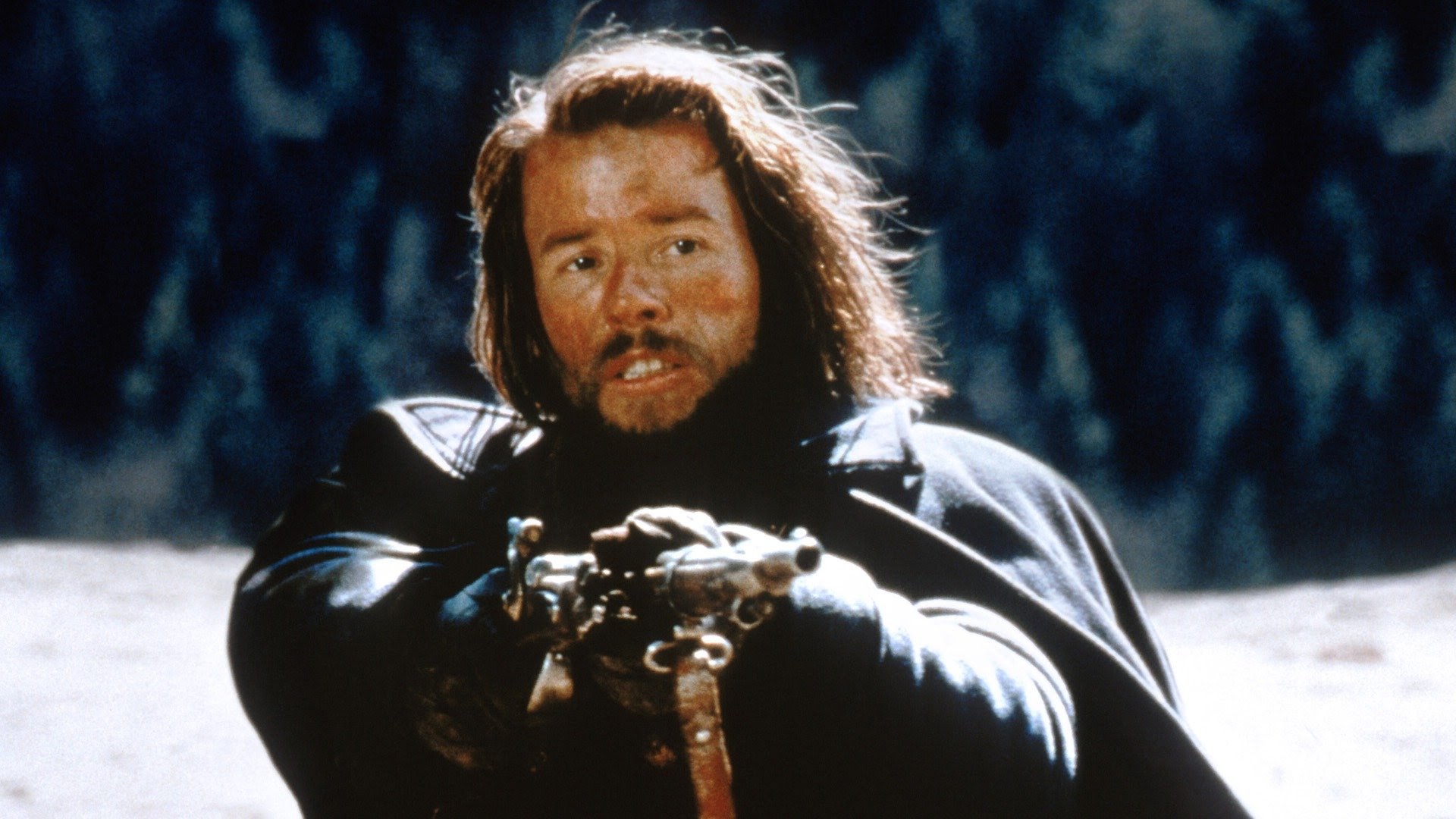
But what would all this be without the hectoliters of blood, which immediately forced the distributor to assign the Rrrrr! rating. There is so much gore here that at one point the filmmakers simply… ran out of it on set. Fortunately, this happened only during the shooting of the grand finale, which was entirely improvised by the actors in relation to the more explosive scripted ending (!). Even in this case, however, the crew managed to turn water into wine and smuggle a note of uncertainty and ambiguity into the entrails flying in all directions. Just true cinematic magic – even if not particularly ambitious, not overly refined, and not stunning in aesthetic terms.
The latter was driven home most vividly by Guy Pearce himself, who was forced repeatedly to bite with relish into juicy steaks dripping with their own sauce and other cuts of meat, even though in private he is… a vegetarian.

Apparently, audiences must have consisted mostly of vegetarians as well, because box-office attendance was poor. The hundred-minute piece – for reasons unknown trimmed by sixty seconds only in Finland – failed to make a splash in 1999, recouping only a fraction of the money invested in it. Not even the second circulation helped, where only over time did the film gain a devoted group of fans. Perhaps because the producers meddled with it somewhat without the director’s knowledge, slightly disrupting its structure, rhythm, narrative, and emphases.
At one point, Bird was even interested in preparing her own version intended for the European market, which ultimately never came to pass. Perhaps that was a mistake. It does not change the fact, however, that Ravenous, even in its current form, holds its ground, and its screening is a one-of-a-kind experience – especially from the perspective of a western – well worth having. It is a very spicy film, but, oddly enough, one that does not cause acidity or heartburn. Strongly twisted, but in a good way. Extravagant and at the same time not overcooked. And, most importantly, made for repeated tasting.


LUCIA’S GRACE. Resembles a Kind Of Missionary Endeavor

DOKUMENT. Short Film That Feels Monumental

BEAUTIFUL BOY. The Acting is Remarkable [REVIEW]

Looking Back at SPIDER: More Terrifying Than Horror
