
Review
SHOWING UP. A Slice of the Protagonist’s Life
The plot of Showing Up, though linear and fairly uncomplicated, feels fragmentary and incomplete. It’s essentially a slice of the protagonist’s life


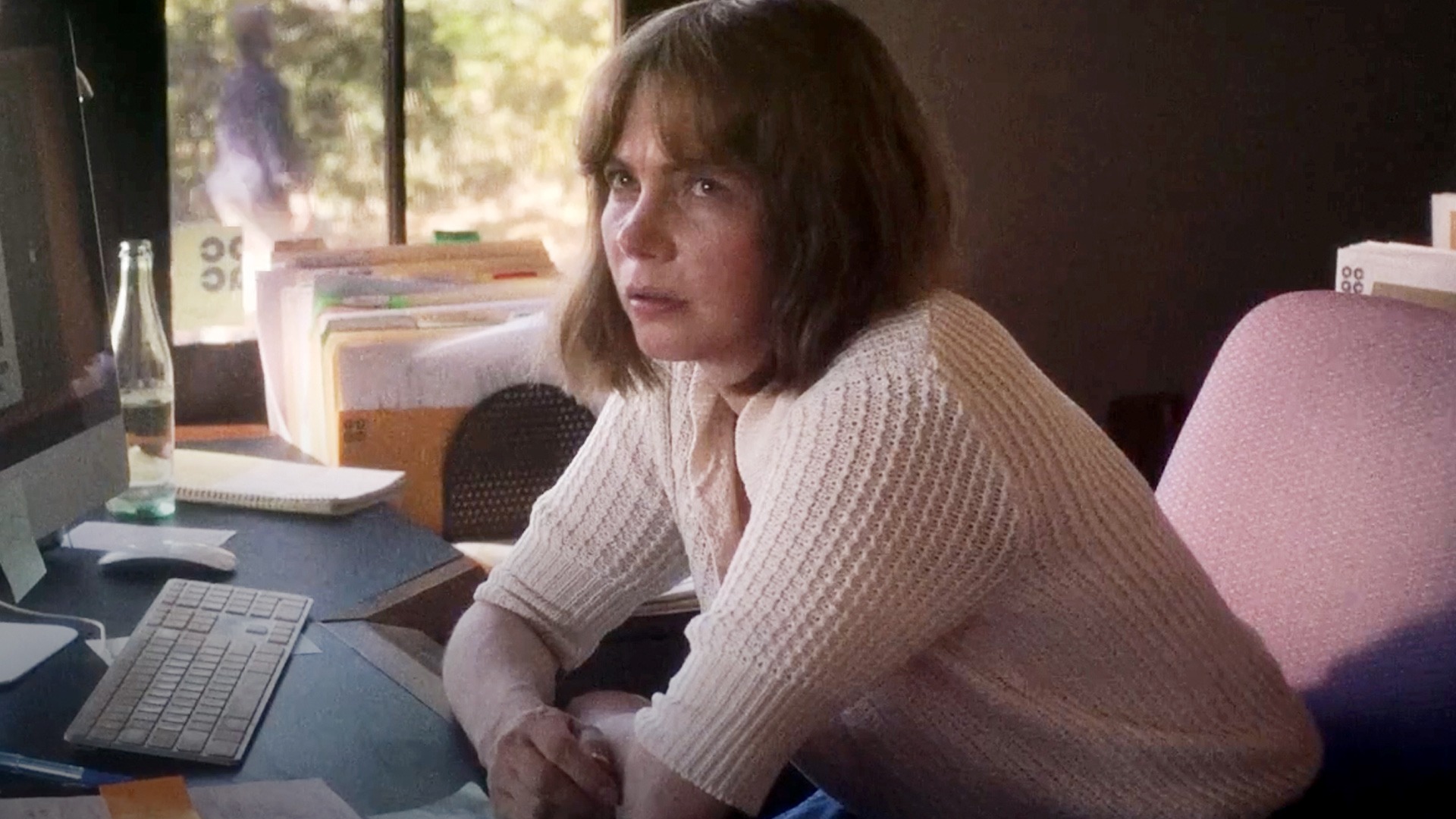
In Showing Up, Lizzy doesn’t look particularly happy with life. A smile rarely graces her face—most of the time, the protagonist wears a stony expression. This makes sense, given that she spends her days sculpting. By “days,” we mean the hours outside her office job at the university—under the not-so-watchful eye of her mother. On the horizon, however, looms an exhibition, a chance to break the routine. Unfortunately, reality seems to be working against Lizzy. The hot water heater refuses to cooperate, a neighbor throws loud parties, her antisocial brother loses control over his own life, and her father secretly houses suspicious acquaintances. Where is there room for art in all of this?
The plot of Showing Up, though linear and fairly uncomplicated, feels fragmentary and incomplete. It’s essentially a slice of the protagonist’s life, meandering between different locations and spheres of existence. Personal and family matters merge with professional challenges, collectively forming a vast, hard-to-tame monolith. Through Lizzy’s (Michelle Williams) daily life pass a variety of characters, first and foremost other artists, who always serve as a point of reference for her. Her triumphant and talkative colleagues measure her unfulfilled ambitions, her father (Judd Hirsch) is the old master whose achievements she aspires to, and her brother (John Magaro) embodies the threat that comes with pursuing art.

When making a film about artists, satire seems both the safest and most striking route. People in the art world are an easy target—you simply highlight their pretentiousness, artistic pomp, and empty content. Reichardt allows herself small jabs, but avoids cruel mockery—the humor arises, for example, from the empty phrases accompanying admiration for various works of art. “Cool,” “nice,” “great colors,” “amazing,” “fantastic”—Lizzy’s friends’ comments rarely impress with intellectual depth. One is instantly reminded of an anecdote about Leon Schiller, often recounted by Zygmunt Kałużyński.
The theater director reportedly once lost his patience with a student who, when asked about a play, could say nothing beyond: “I didn’t like it.” “You can dislike things in a brothel, but in the theater, you must justify it,” Schiller supposedly thundered. Reichardt’s artists would likely test his patience as well.

Still, the creator of First Cow does not go for full-blown satire. She isn’t as ruthless toward her characters as Ruben Östlund in The Square or Dan Gilroy in Velvet Buzzsaw. She consistently demonstrates patience and understanding, warmth and kindness, whether portraying American frontier pioneers or a slightly jaded sculptor in Portland.
True, the characters sometimes behave like complete jerks, yet soon enough they surprise us with deeply hidden reserves of empathy. A prime example is Jo (Hong Chau). The protagonist’s neighbor may appear selfish and narcissistic for most of the film—and at times she is. But not always. When life demands it, Jo rises to the occasion. She tends to an injured bird and, in the finale, shows up at the protagonist’s exhibition to offer recognition and support—despite Lizzy not attending Jo’s own opening.
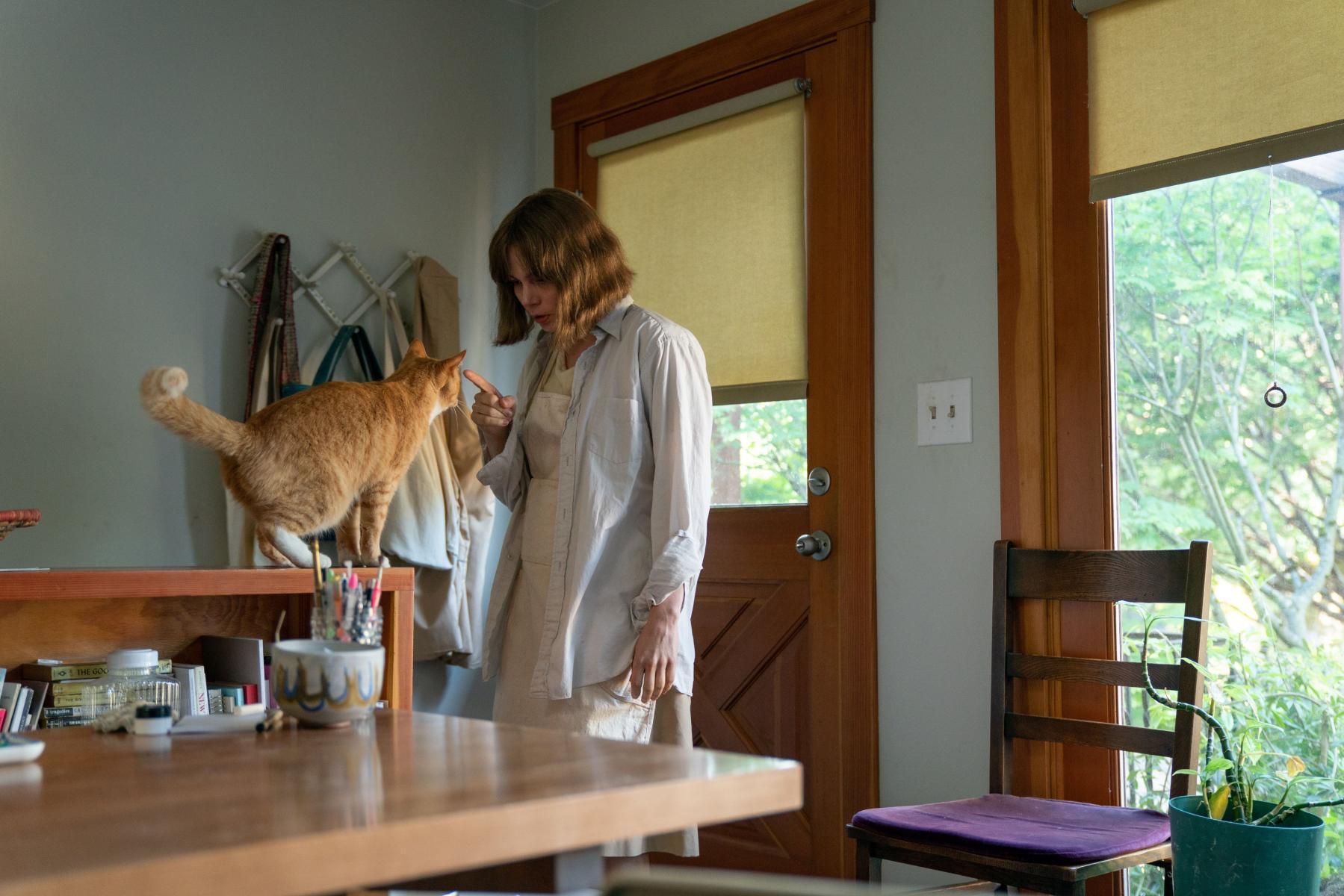
The bird itself becomes a central metaphor in Reichardt’s film. Initially under Jo’s care, it ultimately falls under the protagonist’s guardianship. Its fate subtly intertwines with Lizzy’s: she treats the animal with a tenderness she cannot summon in human relationships. She visits the vet with it, lets it accompany her while working on sculptures. The cat living upstairs—the source of all the chaos—has every reason to be jealous. When the exhibition succeeds, the bird disappears. Its broken wing has healed; nothing keeps it grounded. The species is significant too: in Showing Up, an ordinary pigeon becomes a symbol, in no way resembling the biblical dove.
It serves as a reminder that artists do not have to lead the most glamorous lives, appearing on the front pages like colorful parrots. We pass them on the street every day, brush past them at tram stops, feed them scraps in the park… Well, every metaphor has its limits.
The Agony and the Ecstasy—Irving Stone’s novel and Carol Reed’s film about Michelangelo—tells us much about the traditional approach to portraying an artist. In literature and cinema, the artist is most often depicted as a person struggling with matter, tormented by passion, misunderstood by those around them, working in the throes of inspiration—a romantic, highly dramatic, and consistently compelling model. Reichardt defies this image—and rightly so. In Showing Up, art is made between morning coffee and lunch, unsatisfying work, and a cold-water bath.
Passion drifts away, replaced by boredom and the struggle with small adversities. The artist is primarily a patient, skilled craftsman, capable of giving up what some consider life’s most precious commodity: free time. Thus, there is agony—but the agony of everyday life. Ecstasy is largely absent from Reichardt’s film. In its place appears, at most, a small smile breaking through the protagonist’s stony expression: a sign of satisfaction at a job well done.


LUCIA’S GRACE. Resembles a Kind Of Missionary Endeavor

DOKUMENT. Short Film That Feels Monumental

BEAUTIFUL BOY. The Acting is Remarkable [REVIEW]

Looking Back at SPIDER: More Terrifying Than Horror
