
Review
Looking Back at HIGH-RISE: Unique Study of Human Downfall
High-Rise is the most beautifully shot study of human downfall in years. All the component elements worked perfectly.

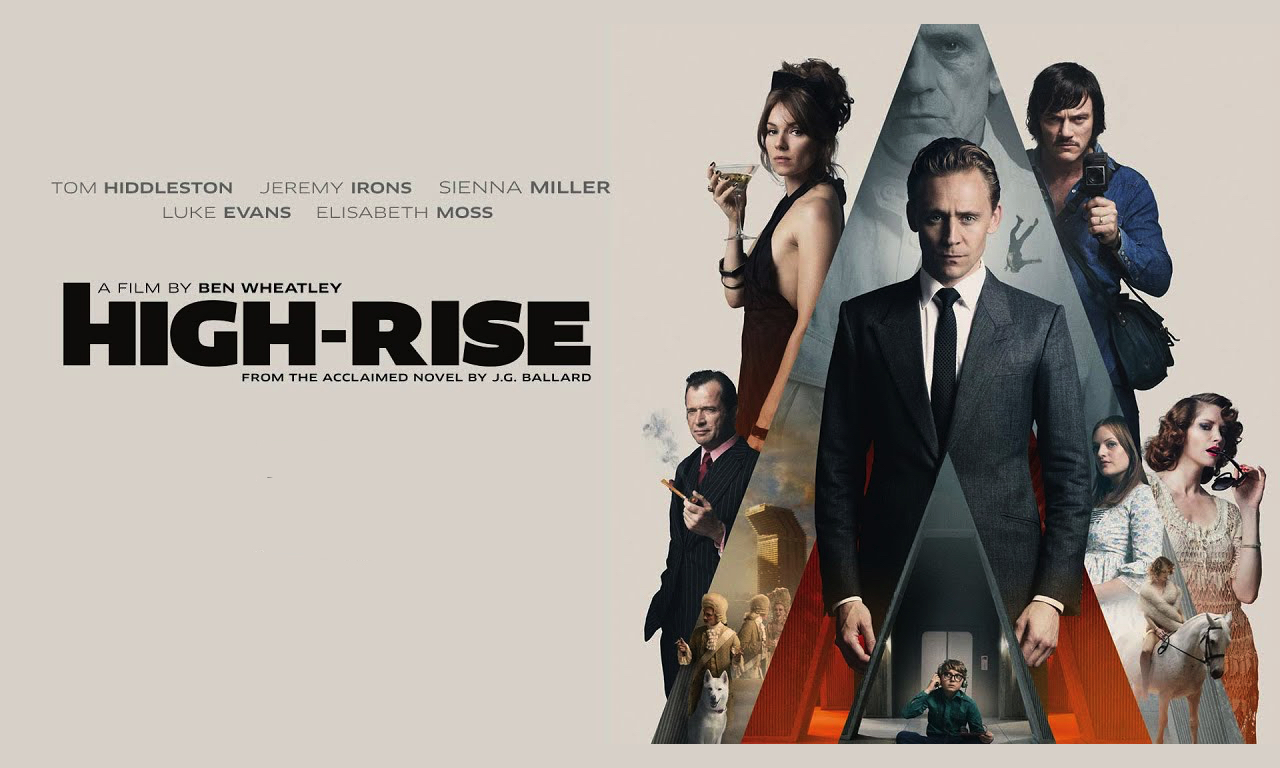
In one of the first scenes of High-Rise, the main character, Doctor Robert Laing (Tom Hiddleston), begins an autopsy of a human head lying on the table before him. With practiced movements he peels off the skin, which separates from the skull with a smacking sound, revealing to those present in the room what lies beneath. This brief fragment contains the symbolic message of the entire film: once the façade of appearances falls away, all the rawness and ugliness of human nature comes to the fore.
And although Ben Wheatley’s film is full of symbols, they are not used to construct a parable. Instead, the director attempts to combine retro cinema with futurism, offering the viewer an accelerating carousel of violence, sex, and pathology in the spirit of David Cronenberg and Stanley Kubrick. To what effect?

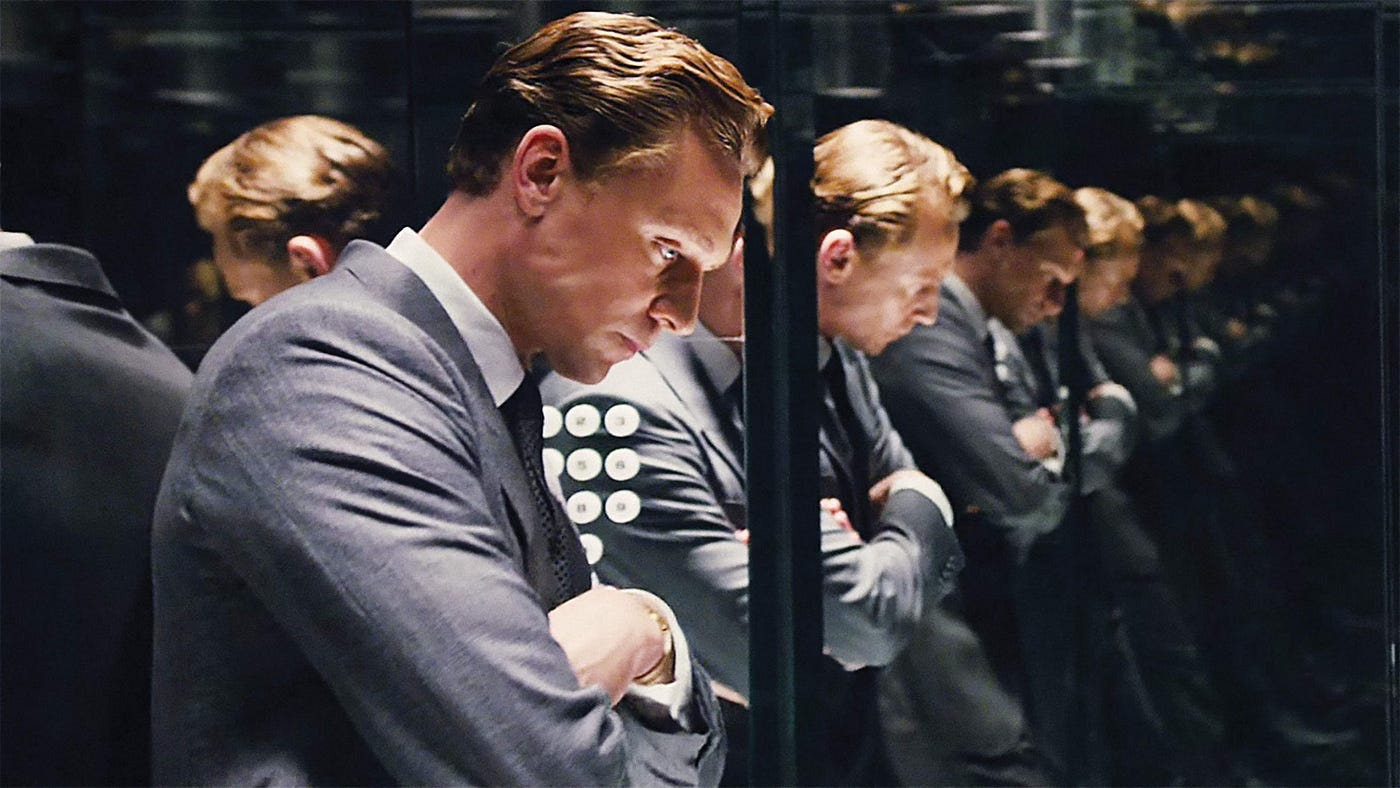
The aforementioned Doctor Laing moves into a luxurious high-rise building to start his life anew. He appears orderly and neat, like his impeccably tailored suit. Access to every convenience—a shop, a gym, a swimming pool—means that (apart from going to work) he hardly needs to leave his new place at all. This, in turn, makes itself felt through the numerous neighbors who lead a rather party-oriented lifestyle.
Between one banquet and the next, the protagonist meets Richard Wilder (Luke Evans), a film producer of the alpha-male type, as well as Charlotte Melville (Sienna Miller), a socially active, attractive single mother. He also discovers more and more small details about the building—clogged garbage chutes and unexplained power outages. These, in turn, trouble the building’s architect, Anthony Royal (Jeremy Irons), who occupies its top floor.

And the level on which one lives is very important. The lower the floor, the less luxurious and pleasant it is, and the residents of the lower levels are only mentioned in the film, most often with contempt. Apart from work, the characters indulge in increasingly unrestrained parties, boundaries begin to blur, and everything falls apart and merges into a chaotic sequence of violence and sex.
A plot that is initially clear and understandable becomes a suggestive collage of destruction and degradation. When appearances vanish, the worst instincts and a progressing bestialization emerge from the characters. Interestingly, the escalating failures of the building and the dysfunction of its residents quite coherently combine into a single biomechanical organism.

Even the architect, Royal, mentions this. One can sense unhealthy fascinations with the early work of David Cronenberg, who once made Shivers, set in an isolated building. In one scene, Richard Wilder repeatedly records his own voice on a tape recorder, speaking his first and last name, which each time sounds less and less distinct, until it turns into incomprehensible babble—a symbolically charged scene of the loss of humanity, subtly woven into the film.
There is also a great deal of stylistic reference to A Clockwork Orange. Both films share a setting in alternative versions of the 1970s, as well as blunt scenes of violence, often juxtaposed with cheerful, instrumental music. Beethoven, present in Kubrick’s film, is replaced here by Clint Mansell, who became famous for composing for Darren Aronofsky (it is enough to mention Requiem for a Dream).

The soundtrack to High-Rise is an excellent album, in which strings and brass are able to convey the ferocity of action scenes, while flutes and bells introduce calm and harmony when needed. The melodic leitmotifs in the tracks linger in the memory long after leaving the cinema. One can only hope that such a high level will be appreciated.
High-Rise is the most beautifully shot study of human downfall in years. All the component elements worked perfectly. The editing and cinematography, as well as the costumes and set design, are pleasing to the eye, yet they do not dominate the film. The greatest importance lies in the content and in the emotions it evokes in the viewer.

In this respect, it is a very rare, almost unique work. Amid the flood of repetitiveness, banality, and embarrassment, some viewers may be put off by High-Rise and its claustrophobic, unhealthy atmosphere. It is worth giving it a chance. After all, one goes to the cinema in order to experience things.


LUCIA’S GRACE. Resembles a Kind Of Missionary Endeavor

DOKUMENT. Short Film That Feels Monumental

BEAUTIFUL BOY. The Acting is Remarkable [REVIEW]

Looking Back at SPIDER: More Terrifying Than Horror
