
Review
PERFUME: A Crime Series on the Edge of Darkness
What I liked most about Perfume is that the darkness I experienced over these six episodes was palpable, nearly fused with the characters and their problems.


In 2018, following the unexpectedly positive reception of the series Dark on Netflix, a new German production arrived on the platform. Perfume is a crime series by Philipp Kadelbach. A crime story over which the one-of-a-kind scent of murder hangs. For all those who enjoy intense experiences, the series will certainly appeal.
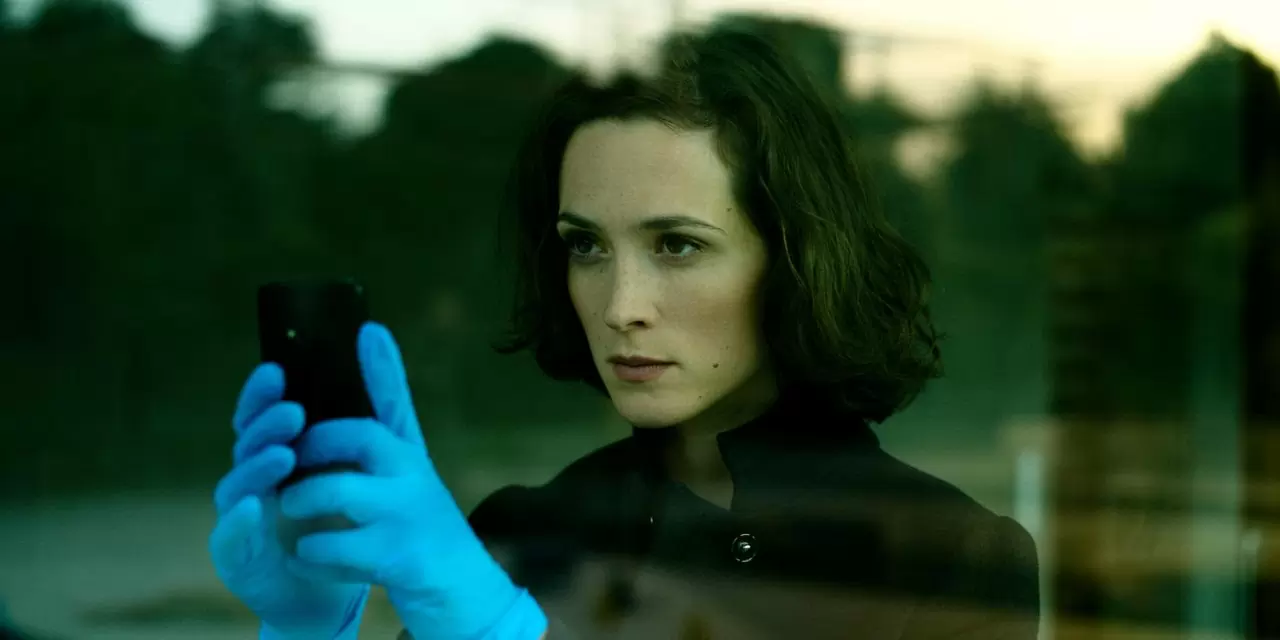
In one scene, we see the protagonist—trying to unravel a difficult criminal case—seeking inspiration while watching the film Perfume: The Story of a Murderer. There is nothing accidental about the convergence of titles and the quotation of one within the other. The theme of both the new German series and the 2006 film is the killer’s desire to obtain the scent of his victim (which also harks back to the 1985 literary source). When two detectives discover the body of a woman whose scent glands have been removed, it becomes clear that we are dealing with a murderer whose methods and motivations are uniquely unconventional.
The investigation turns suspicion toward a group of former acquaintances whose past hides a dark secret.

One of the striking aspects of the story in Perfume is how deeply it is infused with eroticism. The series employs the premise that scent can be a powerful tool for sensual arousal. One character’s goal (played by August Diehl, known from Inglourious Basterds) is to create a range of fragrances corresponding to the rich palette of human emotions.
Familiarity with these scents is meant to elicit specific emotional responses. The greatest challenge, however, is to produce a scent that programs the recipient to experience romantic rapture. The path to achieving this may lie in murdering a sexually carefree woman and extracting her scent.

These pursuits necessarily abound in many intense erotic scenes. One might even say that all events we encounter as viewers of Perfume are to a greater or lesser extent driven by sex. In flashbacks, we learn that the youth of this circle of friends revolved around exploring sensual realms, which had a profound impact on their personalities. Thomas—the boldest, most aggressive—became, as a consequence, the pimp of a high-end brothel. Daniel—the one who remained in the shadow of his more experienced peers—grew into a withdrawn impotent. Roman, though he found love, struggles with controlling his anger due to deep-seated insecurities.

The piquancy of this story is heightened by the fact that this yielding to desire affects both sides of the barricade: the suspect group of friends and the detective leading the investigation. She is herself involved in an intense affair with her direct superior. Because finding a way to permanently win the man’s heart becomes deeply important to her, over time she finds it increasingly difficult to maintain the proper distance from the case she is handling. In such circumstances, a surprising finale is hardly unexpected.
I must admit that at first I found it very difficult to engage with this story. It was not only that it developed extremely slowly. Nor was it simply that there is no character in the series whom one can wholeheartedly root for, since every person in this rich palette of characters is, to a greater or lesser degree, tainted by the darkness of their past, which directly influences their present actions. These actions, in turn, reflect profound disorientation and inner chaos. Yet the greatest barrier for me was the aura of unease that emanates from the story from afar, difficult to define.
Only around the third episode—halfway through the series—did I realize that these very traits are, in truth, the greatest strength of this production.

Perfume does not make concessions to the viewer. If something in a given moment hangs in the air, if someone is going to be slapped or sexually assaulted, rest assured, it will be shown. At the same time, the story unfolds unhurriedly, and the narrative does not hint that it is guiding us to the core of something extraordinary. What I liked most about Perfume is that the darkness I experienced over these six episodes was palpable, nearly fused with the characters and their problems—as though it were a natural part of their lives, the result of wrong choices and painful traumas.
It has been a long time since I encountered such an interesting, fully realized heroine in a series—one whose profound confusion makes it impossible for the viewer simply to follow in her footsteps.
Perfume is a sensual series.
It speaks of what each of us knows, but not everyone can admit: that beneath the mask of stately, composed individuals, we are locked in a continual struggle with the desires aroused by our senses. It is hard to resist the power of such rapture, especially when it is magnified by a scent that works on the subconscious.


LUCIA’S GRACE. Resembles a Kind Of Missionary Endeavor

DOKUMENT. Short Film That Feels Monumental

BEAUTIFUL BOY. The Acting is Remarkable [REVIEW]

Looking Back at SPIDER: More Terrifying Than Horror
