
Review
THE KILLING: A True Gem of a Crime Series
We’ve got plenty of shows set in police environments – some of them excellent – but very few resemble The Killing. You can completely sink into it.


I only watched the pilot of The Killing because I was writing a piece about a film being compared to that series. The plan was simple – switch it off as soon as I got a feel for the atmosphere and the main characters, and get back to writing. How did that end? After the pilot, I immediately dove into several more episodes. Suddenly I realized it was well past midnight – I supposedly had a lot to do, but the only thing I cared about was finding out who killed Rosie Larsen.
The story takes place in Seattle. Detective Sarah Linden is celebrating her last day on the job. After a long string of life complications, she’s finally getting her act together, planning to move to sunny California with her fiancé.
Her belongings are already packed or shipped, her plane ticket is ready, and Stephen Holder, transferred from vice, is getting ready to take her desk at the precinct. All that’s left is to wrap up a few formalities and ride out the day. But then, a bloody pink sweater and a debit card are found in the woods. The detective decides to check the name on the card and quickly head to the airport. However, during the conversation with the man in question, it turns out he hasn’t been in contact with his teenage daughter since the previous evening. The clothing belongs to her. The girl is reported missing. The search doesn’t take long – a car is found submerged in a nearby pond, and Rosie’s body is in the trunk.

Linden is not a good mother, far from the ideal friend. She wouldn’t make a good wife either. But she’s a great cop – the kind who will do whatever it takes to solve a case, even at the expense of her own happiness. She’ll keep rebooking her flight, hoping that she and Holder will quickly catch Rosie’s killer. But this investigation will be different from all the others.
The series, which premiered on AMC in April 2011, is actually a remake of the Danish Forbrydelsen.
As usual – if an interesting show is made in Europe, Americans will rework it to fit their style, just so viewers in the States don’t have to suffer through reading subtitles. What usually comes out of that? Mostly poor copies, worse than the original in just about every way. But The Killing is an exception to that rule. Veena Sud, responsible for this adaptation (interestingly, her previous work included no more than the solid Cold Case and… the MTV reality show The Real World), did a terrific job.

I watched the Danish version after the American one, so I’m not the best person to offer a detailed comparison, but many fans of the original not only praise The Killing, they actually prefer this remake.
We can’t speak of a one-to-one adaptation here – not only were the main characters constructed differently, but the story diverges around the midpoint of the first season. One of Forbrydelsen’s main strengths is its atmosphere – so Scandinavian it’s almost excessive. I know how that sounds, but in the American version, the so-called “Scandinavian” mood is even better. In Seattle, they’ve got just one type of weather: dark, gray, rainy. Thanks to the show’s outstanding technical side (those visuals!), you can almost feel the damp, the chill, the soaked clothes. Optimism and hope are hard to find here. People’s faces always seem tense, worried, sad.
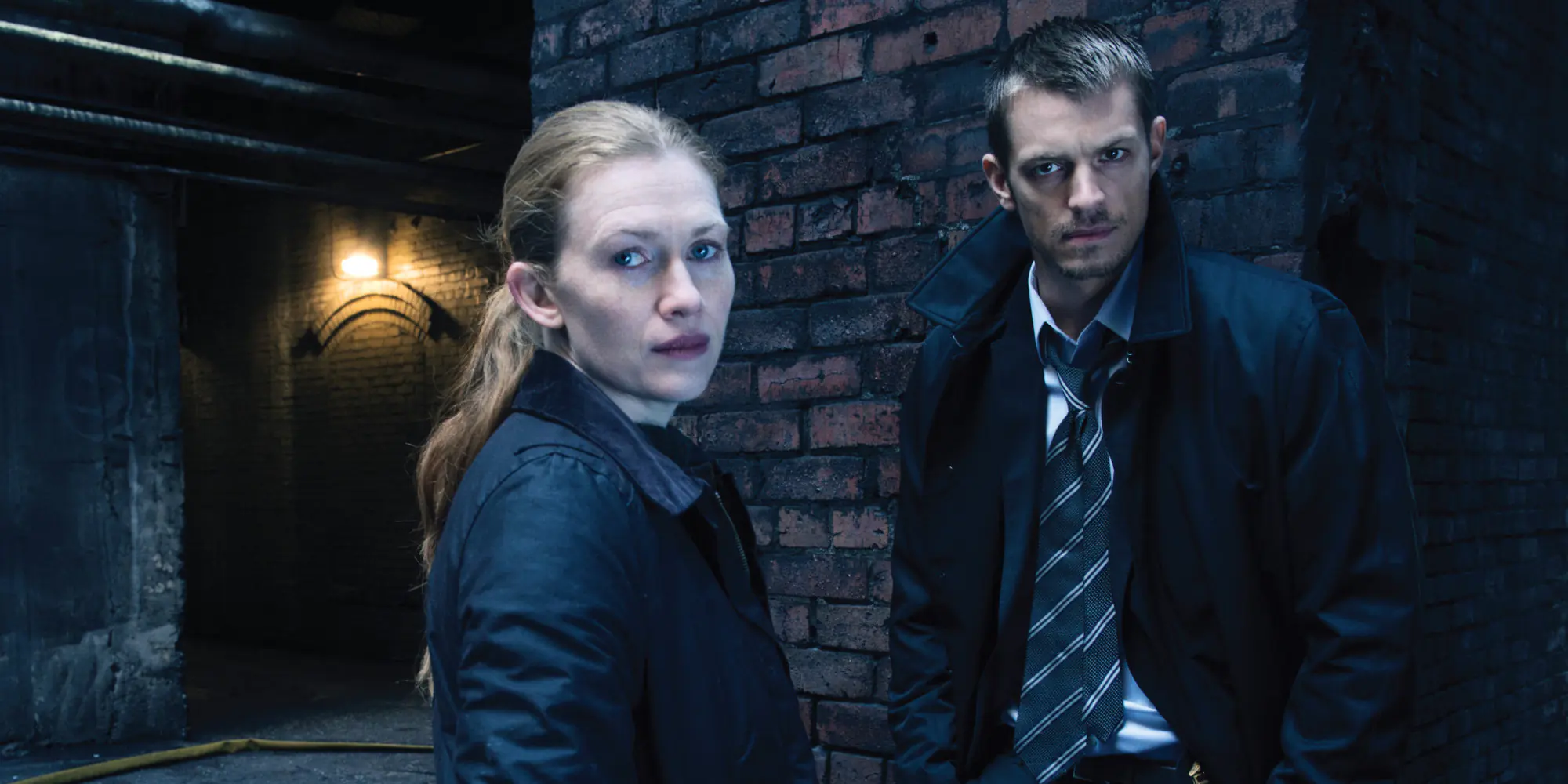
You won’t find any of those famous American pearly white smiles, trendy outfits, perfect hairstyles or flawless makeup in The Killing. Linden is perpetually exhausted (once the investigation starts, it seems she literally never sleeps, living only on coffee), pale, and dressed in a spectacularly unflattering patterned sweater. Mireille Enos brilliantly captured this character’s personality – complicated, haunted by her past, yet entirely focused on one thing: catching Rosie’s killer. In general, the character psychology in this show is on a very high level. There are no purely good or purely bad people here – everyone, including the two detectives leading the investigation, lives in that most interesting space: not black, not white, but gray (of course!).
Everyone has skeletons in their closet. That makes it even harder to figure out who killed Rosie. The perpetrator could genuinely be anyone; suspects change from episode to episode, and the mystery only draws you in deeper and deeper. Especially since the story is told from three different perspectives.

Alongside Linden and Holder, we also follow Rosie’s family and mayoral candidate Darren Richmond (the body was found in a car belonging to his campaign). So there’s more here than just the investigation – there’s also the theme of dealing with trauma and political intrigue.
In the third season, social issues are introduced – including drug addiction and prostitution among homeless teens. The fourth season lets us observe a strict military school.
Now, years after its premiere, you could name a handful of crime shows where solving a single case took an entire season or two. But back then (besides Twin Peaks) such examples were rare. The Killing feels a bit like a very long movie. This production completely absorbs you, not just with the story itself, but also with the atmosphere. The various threads don’t serve merely as red herrings – each of them adds something to the show.
Of course, as with any long narrative, a sharp-eyed viewer will spot logical inconsistencies, but there aren’t many of them, and the exceptional mood surrounding it all makes them easy to forgive. From a production standpoint, this series is a true gem. Some episodes were even directed by big names like Jonathan Demme (The Silence of the Lambs), Patty Jenkins (Monster, Wonder Woman), and Agnieszka Holland.
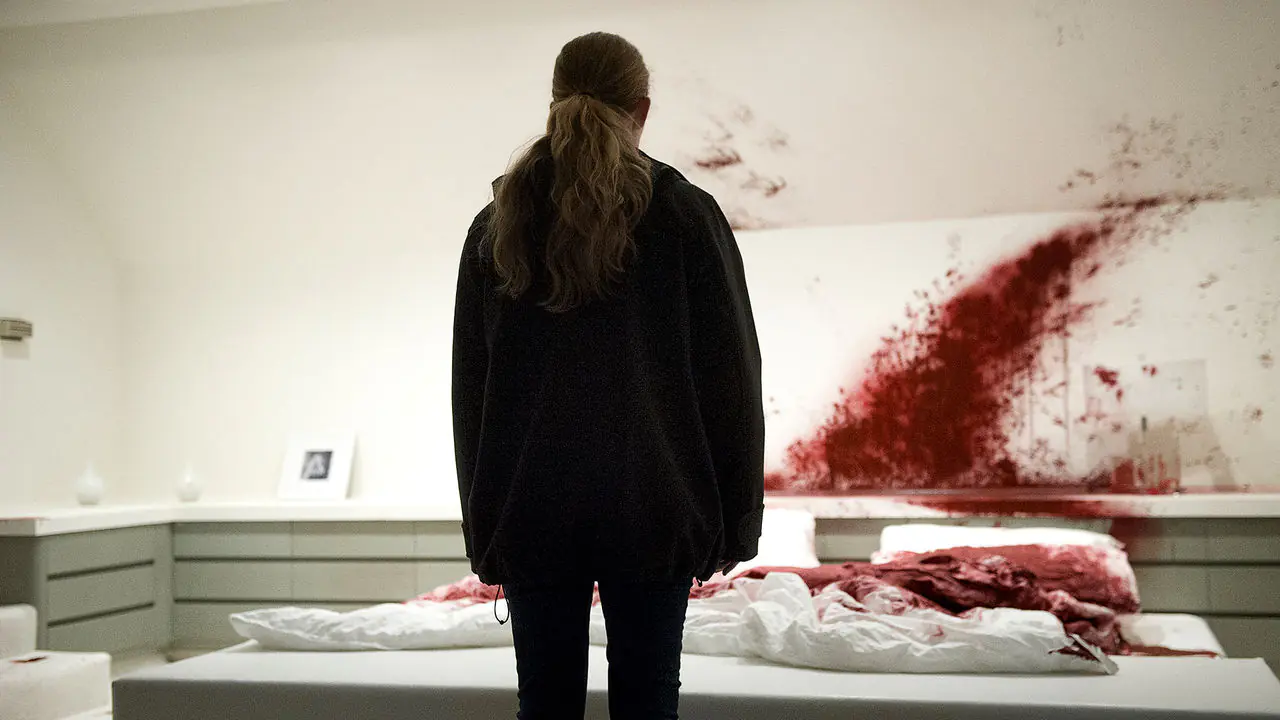
Despite glowing reviews and critical acclaim (including award nominations, mostly for the actors), the show wasn’t hugely popular. After episode six of the first season, viewership dropped noticeably and then stayed at a steady but modest level. Some viewers complained that the investigation was drawn out too much – just when everything seemed clear, it turned out not to be. But the creators had me hooked to such a degree that I see that as a strength. The long and complicated investigation into Rosie’s murder completely captivated me, and although my patience was tested many times, I never felt bored or frustrated (though if I had to wait weeks for each new episode, I might’ve felt differently).
I know I wasn’t alone in this opinion. When The Killing was canceled after two seasons, fans rallied and managed to get the show renewed. The next installment received mixed reactions – it was even darker and harder to digest. The main characters had changed significantly, their paths had diverged somewhat, and a painful part of Linden’s past resurfaced alongside the new case. Those disappointed by the direction taken in season two were usually delighted with this one. The most devoted fans, however, struggled with the tonal shift. Despite brilliant, powerful final episodes – the kind that truly drop jaws (fans of Peter Sarsgaard’s talent simply must watch this series – his performance is incredible) – the show was once again canceled.
And once again, that cancelation didn’t stick.

A short six-episode fourth season was eventually released on Netflix. It was meant to be a final chapter, a proper farewell, tying up the open ending from the season three finale. There’s a new case (this time involving the somewhat forgotten Joan Allen), quite interesting and neatly handled, but the investigation isn’t the most important part. The real focus is psychological – how the pair of detectives react to everything that happened before, during the previous case.
I don’t understand why neither Enos nor her co-star Joel Kinnaman were nominated for an Emmy or Golden Globe for their roles – the way they portrayed growing paranoia, guilt, and mutual distrust deserves the highest praise.
Some say The Killing ended in a way that was too contrived, even cheesy – I’m not one of them. Sure, the show had its weak points, and the ending is probably one of them. But importantly, it’s not offensive. Linden and Holder were given a chance at a different, less complicated life, but it’s not like their characters were watered down or given some emotional makeover. That really would’ve been terrible. Their personalities, and their unusual relationship, are the show’s backbone.
In the first season, as the investigation ramped up, one episode was almost entirely devoted to these two characters, without touching the case itself – an incredibly bold decision, but necessary, showing that the detectives’ private lives would greatly affect solving the case. If any viewer thought that kind of detour was pointless, The Killing probably wasn’t for them.

We’ve got plenty of shows set in police environments – some of them even excellent – but very few resemble a long crime film or novel in terms of narration and atmosphere.
The Killing is one of those rare cases. You can completely sink into this series, just like the moisture that soaks into the clothes and hair of its characters.


LUCIA’S GRACE. Resembles a Kind Of Missionary Endeavor

DOKUMENT. Short Film That Feels Monumental

BEAUTIFUL BOY. The Acting is Remarkable [REVIEW]

Looking Back at SPIDER: More Terrifying Than Horror
