
Article
Why James Gunn’s SUPERMAN Was Needed: Its Positive Impact
What could the success of James Gunn’s Superman bring? It will also be important in introducing mass audiences to the entire lore built around him.


We’ve got the best Superman in years! Today I can write that with full conviction. At the box office, James Gunn’s latest film has done quite decently, it’s been warmly received by audiences around the world, and critics’ reviews are overwhelmingly positive. As a Superman fan myself, I’m glad we’ve finally reached sunny days for this superhero, because it once seemed like the dark and rainy clouds would never leave DC’s cinematic universe. It was clear that the creators didn’t quite understand either the characters themselves or the needs of the fans. In the 20th century, only one superhero from this publisher could boast of being warmly received.
That was Batman, who triumphed both in Christopher Nolan’s Dark Knight trilogy and in Matt Reeves’s hit with Robert Pattinson.
Unlike the Caped Crusader, Superman hasn’t been as lucky with film adaptations. Of course, Richard Donner’s movie with Christopher Reeve is still fondly remembered to this day. Things went downhill with the sequels, though, each installment being rated worse than the last. The final nail in the coffin was the fourth film, which practically buried the franchise for many years. The return came only in 2006, when Bryan Singer made a quasi-sequel to the first two Reeve films, ignoring the later, poorly received ones.
That film, however, was met with a lukewarm reception and is largely forgotten today. Then came the dark times of Zack Snyder. In his vision of Man of Steel, he almost completely distorted the most essential interpretation of Superman, creating his own auteur take. Henry Cavill’s portrayal made him a monumental, alien figure who bore little resemblance to the comic book’s embodiment of hope and kindness. As an artistic experiment, it might stand on its own, but unfortunately, it became the foundation of a clumsy attempt to build a DC cinematic universe, which in my opinion only further devalued it.
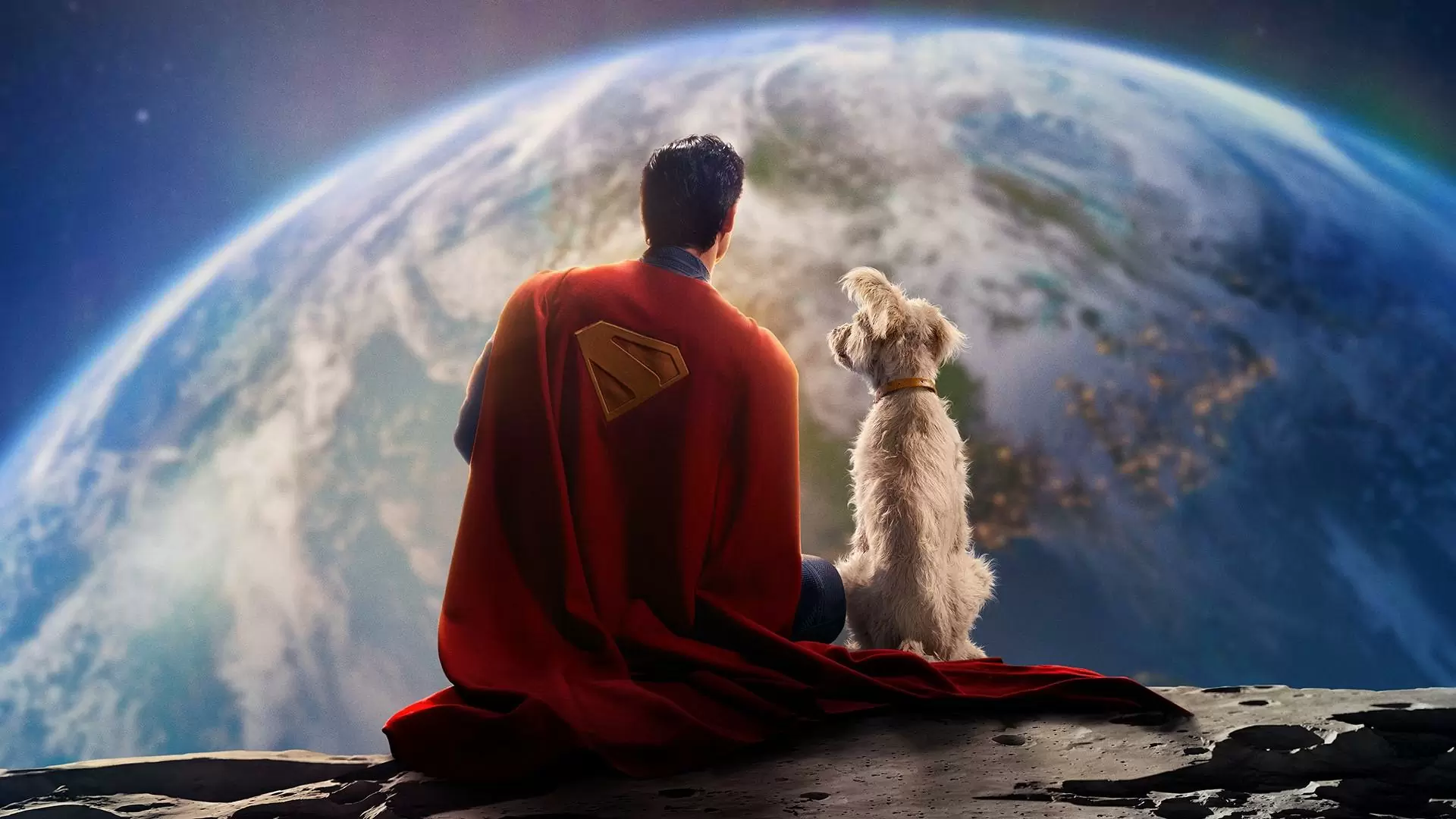
That was the case—until now. A lifelong comics fan, director James Gunn decided to completely discard the cinematic universe that had existed since Man of Steel and create a new one, much closer to his own vision. He wanted to begin with Superman, perhaps the most wronged DC superhero when it comes to films. He believed that it was possible to portray this hero well on the big screen while still preserving the essence of the character. In my opinion—and in the opinion of many others—he succeeded. So what positive consequences might come from this? After this lengthy introduction, I invite you to read on, where I’ll explore the greatest strengths James Gunn’s latest film brings.
“Up in the sky! Look! It’s a bird! It’s a plane! It’s Superman!”
Superman doesn’t have it easy in today’s world. Once, he was the very synonym of a superhero, the most popular hero of the 20th century, a sales juggernaut who inspired countless later creators. Today, he doesn’t evoke such awe anymore. Of course, his brand and logo are still recognizable, and the name “Superman” is still widely known in collective consciousness, but in truth, it’s hard to find real fans of this character. Unlike the relatable Spider-Man with his human problems, or the darkly compelling Batman, the Last Son of Krypton doesn’t seem as appealing, and in popularity rankings he falls far behind them. Browsing through online forums, I’ve noticed Superman is almost never mentioned among people’s favorite comic book characters. I’d even say—he’s not mentioned at all. The most common argument critics bring up is that he’s just “too boring.” At first glance, it might seem so. Here’s an overpowered, nearly indestructible hero with countless abilities, who gets standing ovations in Metropolis every time he saves the day. He always comes out unscathed and barely breaks a sweat.
Boooring. What’s interesting about that? As is often the case, appearances are deceiving, and the truth is surprisingly different.

These arguments usually stem either from a lack of knowledge about the character or from a superficial reading of superhero comics. Superman is not some goody-two-shoes in a cape who succeeds at everything. Nor is he just an alien visitor from Krypton. He’s the child of Kansas farmers, raised in a small village, who has spent his whole life striving for humanity.
Despite not being human and having the option to leave Earth for another planet, he chooses to stay and protect this one out of pure altruism. In the moments when he’s not saving the world, he works as Clark Kent, a journalist at the Daily Planet, who wakes up early every morning to go to work. He doesn’t need to do it—but he wants to.
Now, let’s move to Gunn’s film, because I think its critical and box office success will positively impact how Superman is perceived again. Skeptics of the character will see that he’s not as detached from reality as they once thought.
He’s a symbol of hope and empathy, showing that being good is something noble. To many, this might sound banal, corny, or childish, but in truth, these are values that should guide us all. Gunn’s latest Superman film may not win over the staunchest haters, but I believe it will persuade a large group of people to embrace this unique hero. A godlike figure who can fight a monstrous creature terrorizing a city—and in the same breath high-five a kid or save an innocent squirrel. You’ll find scenes like this in Gunn’s Superman (2025).
“1A, 1A, 1A, 1A, 1A”
What would a superhero be without his archenemy? Batman has the Joker, the Fantastic Four have Doctor Doom, Spider-Man has the Green Goblin, and Daredevil has Kingpin.
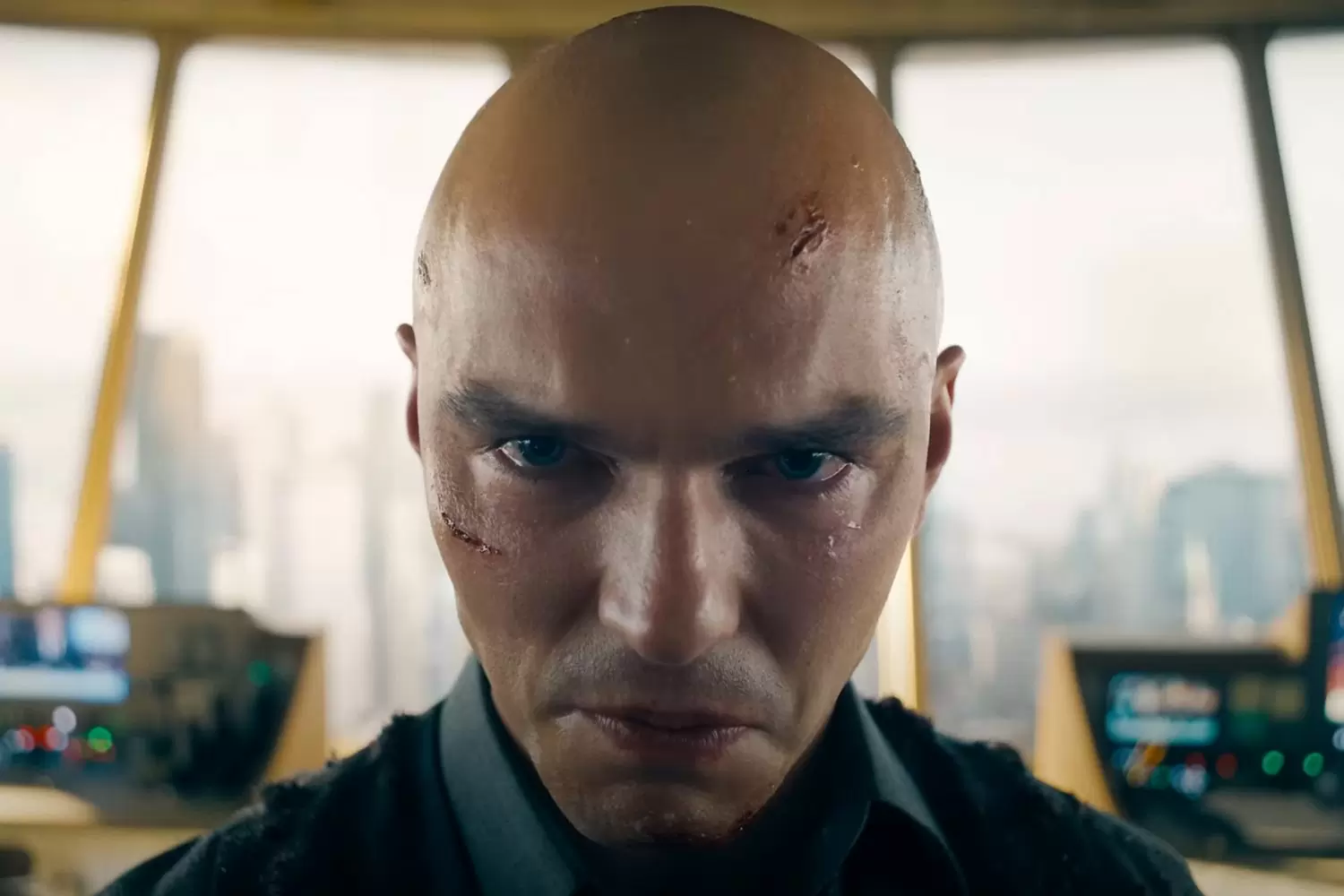
For Superman, it’s Lex Luthor. I’d argue that as many people as there are skeptics of Superman, there are also skeptics of Luthor. He adds to the dislike of the hero, because not only is Superman seen as “too strong and boring,” but his greatest foe is just “a regular, boring bald man.” At a surface level, without deeper understanding, it may indeed seem that way. How could Lex Luthor possibly compare to a Joker or a Doctor Doom, who are more visually striking and seem more compelling as villains? The answer may surprise you—but first, let’s go back in time.
Many people fondly remember Gene Hackman’s performance in Donner’s film.
I’m a fan of Hackman’s talent and of that role myself. The problem is that this version of Luthor is now very outdated. In that production, Lex is portrayed as humorous and sometimes even absurd—a theatrical criminal mastermind rather than the modern, realistic billionaire with political and ideological ambitions he has become in the comics. It was phenomenal for its time, but today it creates a misleading impression of the character. Later versions didn’t fare much better. In the 21st century, the role went to Kevin Spacey, Jesse Eisenberg, and Nicholas Hoult. Spacey’s portrayal suffered from being too tied to Donner’s outdated approach. Eisenberg, in Batman v Superman, created more of a fusion of Joker and Riddler than an actual Lex Luthor.
Each, in some way, tapped into parts of the character, but in my opinion, neither captured him fully. Now the role has gone to Nicholas Hoult.

Just as we’ve gotten the best Superman in years, we’ve also received the best Lex Luthor ever put on the big screen. What struck me most was the deep understanding of the character. Just as the Joker is the polar opposite of Batman, Lex Luthor is the antithesis of Superman.
Consumed by envy, armed not only with great intellect but also an inflated ego, he’s an example of a man who cannot stand the world’s admiration of a superhuman. He’s willing to do anything to humiliate Superman, ruin his good name, and ultimately even kill him. Superman has become his obsession—in the worst sense of the word. Hoult managed something else, too. Often villains are loved by audiences (Darth Vader, Lord Voldemort). The greatest achievement, however, is when the antagonist truly repels viewers and stirs real dislike (King Joffrey, Dolores Umbridge). Hoult’s Lex Luthor belongs in this second category.
What more can I add? This Lex feels ripped straight from the comics. I’m glad that even the harshest critics of the film appreciate this performance. Maybe thanks to this movie, Lex Luthor will more often be mentioned among the greatest villains in comics. After all, the world can’t live on Joker alone.
Mr. Terrific Show
What else could the success of James Gunn’s Superman bring? Beyond a better understanding of this superhero and his age-old archenemy, it will also be important in introducing mass audiences to the entire lore built around him.
As I mentioned earlier, the director didn’t shy away from the character’s legacy, and the various elements that make it up were included in the film. What exactly does the movie contain? Certainly, the full richness of the supporting characters from the Superman comics, led by his life partner, Lois Lane. For years, she was almost the archetype of a superheroine, but in the last two decades, it seems her recognition has waned. I hope that changes thanks to Rachel Brosnahan, who plays the role—because, in my opinion, she perfectly captures what is most essential about Lois: a mix of loyalty, intelligence, and spunk.

I also think that the popularity of the Daily Planet newsroom (with characters like Jimmy Olsen and Perry White) and Clark’s adoptive parents, Jonathan and Martha Kent, will grow. Although they often served as background in Superman’s stories, they ultimately remain a key part of his lore. I hope people unfamiliar with the comics or the old Christopher Reeve films will once again recognize that iconic golden globe atop the office building or the idyllic countryside of Smallville.
James Gunn also loves pulling characters from the forgotten corners of comic history. He demonstrated this in his Guardians of the Galaxy trilogy and in The Suicide Squad, introducing even casual viewers to characters like Groot or Peacemaker. The same approach applies in his Superman film. Gunn uses the movie as a platform to promote lesser-known superheroes, such as a less-famous version of Green Lantern, Guy Gardner, the somewhat forgotten Hawkgirl, and the niche character Mr. Terrific. I believe the latter, in particular, will gain popularity among fans—and that was likely the director’s intention.

Truth, Justice, and the American Way
When a film fails, it discourages audiences. When it’s part of a larger franchise, it can turn people away from the entire brand. But when it succeeds, the effects are completely the opposite. I believe the latter is true for James Gunn’s Superman.
Positive audience feedback and solid box office results make me confident that Superman will once again return to favor within the geek community. Perhaps younger viewers will explore older Superman titles, like the Richard Donner film with Christopher Reeve or the ’90s animated series that shaped my generation. Comic shop sales also show increased activity from fans buying comics featuring the Last Son of Krypton on the cover. This demonstrates that the number of fans has grown since the film’s release, and audiences, leaving the theater, are eager to explore the superhero further through the medium where he originated. To discover more of his adventures, his closest allies, and his iconic villains, such as Brainiac, Metallo, Parasite, Bizarro, and Mister Mxyzptlk.
Many self-proclaimed experts predicted Superman’s quick demise. On forums, they wrote that he’s a boring character, a relic of his time, and that modern audiences couldn’t find anything interesting in him. Even though many good comics, animated films, and series have been produced in recent years, none had enough impact to reach a broad audience. What was needed was one successful film to prove them all wrong. We must remember, however, that this is only the beginning: a long process awaits, and many more high-quality productions will be necessary for the Superman fandom to grow and thrive. I trust that James Gunn has a special plan for this exceptional hero within the new DC cinematic universe. I wait eagerly, with high hopes and great anticipation.
Author: Bartłomiej Misiuda


LUCIA’S GRACE. Resembles a Kind Of Missionary Endeavor

DOKUMENT. Short Film That Feels Monumental

BEAUTIFUL BOY. The Acting is Remarkable [REVIEW]

Looking Back at SPIDER: More Terrifying Than Horror
