
Review
PARADE’S END. Rebecca Hall and Some Other Actors
Parade’s End has many strengths – the cinematography, the acting, the costumes – but it’s Rebecca Hall who remain the show’s greatest asset.


Parade’s End, Ford Madox Ford’s saga, is one of those series long considered impossible to adapt. The action of the four novels stretches over more than ten years, the story is meticulous and detailed, and the cast of characters is extensive. In 1964, a short three-episode series aired with Ronald Hines and Judi Dench in one of her first roles… And the next attempt to adapt Ford’s novels came nearly fifty years later, when Tom Stoppard teamed up with the BBC and HBO.
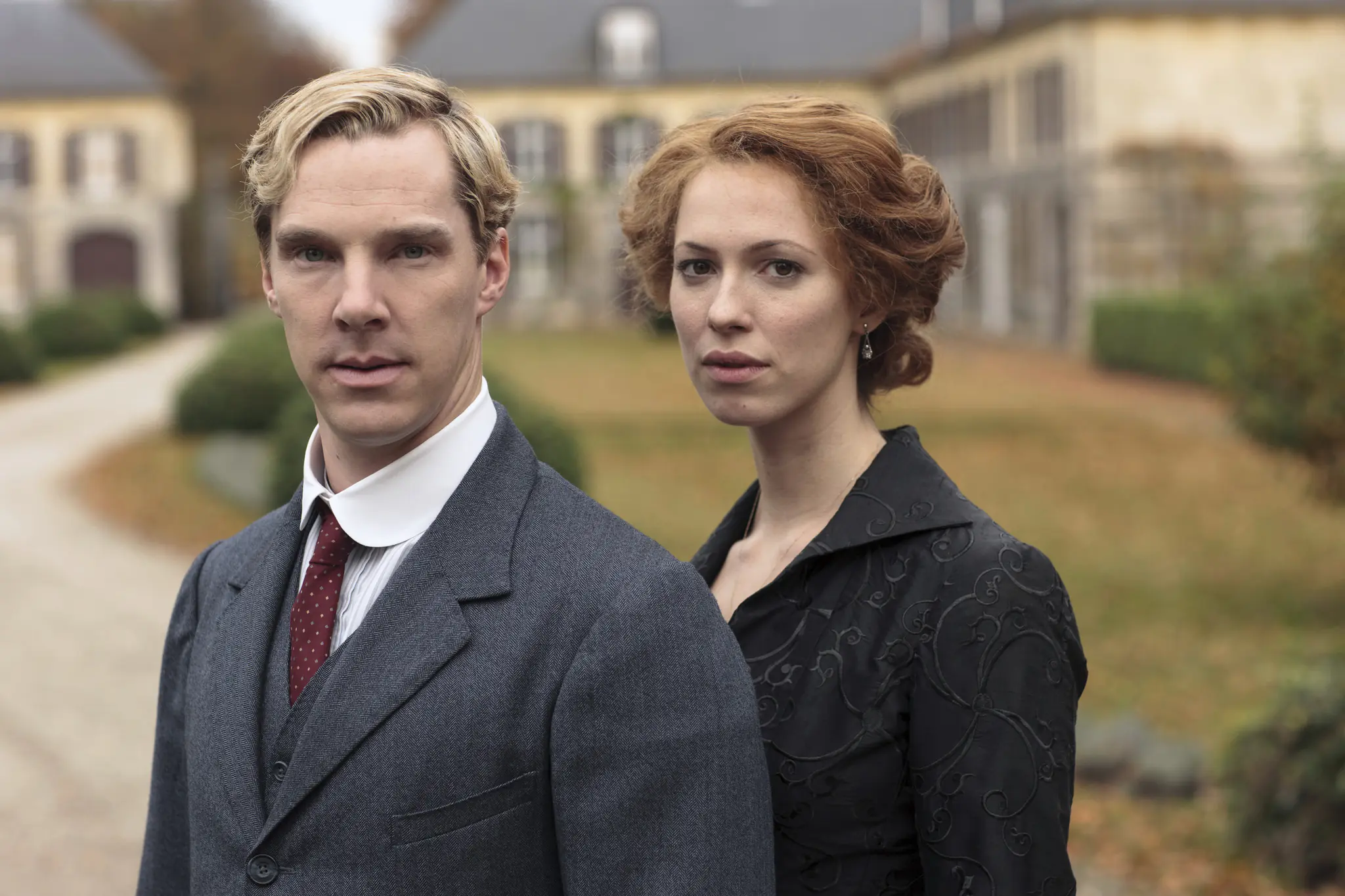
Although the series was classified as a war drama – and indeed, part of the action in three of the five episodes takes place during the First World War – what really comes to the fore is a love triangle. Sylvia Satterthwaite (Rebecca Hall) seduces Christopher Tietjens (Benedict Cumberbatch), a brilliant statistician but above all a flawless, proper English gentleman, during a train ride. Two months later, she discovers she is pregnant, and the couple quickly marries, but both they and their close ones know that Tietjens is most likely not the father, and Sylvia simply used his sense of duty to avoid scandal.
Meanwhile, Tietjens meets Valentine Wannop (Adelaide Clemens), a young suffragette who immediately captivates him.

Christopher Tietjens is completely different from his wife. Sylvia is not interested in politics; she’s more curious about local gossip. She does and says whatever she pleases. Men go crazy for her, but she alternates between ignoring them, mocking them, or graciously allowing them to admire her; she spends her wedding night with her lover. She loathes her husband and tries to extract any feelings, any reaction from him.
She attempts to manipulate him, pretending to be ill or flirting with her suitor at a party, yet Tietjens silently and with dignity endures her antics. A husband who, as a hobby, corrects Encyclopædia Britannica over breakfast bores her so much that at one point she throws a teacup at him and bitterly says: If I killed him, no court would convict me! She soon leaves Tietjens and runs off with her lover, Potty Perowne (Tom Mison).

Christopher suffers, but he is so noble and honest that when Sylvia leaves him, he tries to maintain appearances: his wife is abroad, caring for her mother, a real angel, not a woman… Divorce is out of the question – Tietjens believes marriage is forever.
He won’t get divorced, even if he meets someone he would genuinely want to be with. And of course, he does meet someone he would genuinely want to be with. That someone is Valentine Wannop, a young suffragette. She impresses Tietjens with her boldness and resourcefulness; she, in turn, is enchanted by his nobility and erudition. During a horseback ride, they quote Romeo and Juliet to each other and discuss the current political situation in the world. Slowly, a pure love and a meeting of souls begins to blossom between them.

There’s no denying that the character of Valentine Wannop is just dreadfully boring.
Perfect, immaculate, well-read, intelligent, natural, the embodiment of virtue – all she’s missing is a halo over her head. But there are many contradictions within her – the feminist fighter for women’s rights is shocked when an older friend comes to her asking if she knows how to get rid of a child, because Valentine didn’t know that one could do “that” and not have a child. Sylvia Tietjens is by far the more interesting character.

Adelaide Clemens not only had to hold her own opposite Benedict Cumberbatch, but also Rebecca Hall… and unfortunately, she completely failed to do so. Cumberbatch, who is clearly capable of acting, does well – even if his performance occasionally has a whiff of Sherlock about it – but this series is above all a showcase for Rebecca Hall. There is in Sylvia Tietjens an incredible charm, sadness, and self-destruction. She is always hiding behind a mask that rarely slips – you never know when Sylvia is just teasing, when she’s genuinely worried, when something is truly tormenting her.
Rebecca Hall played it with lightness and grace, making the most of every second of screen time she was given. Next to her, Adelaide Clemens comes off especially pale, colorless, and simply bad.

To be clear, the series doesn’t rest on romance alone. It also speaks about the horrors of war, about the hypocrisy of politicians and society, about duplicity, about marriage, about good and evil. However, these themes are often hinted at, touched on only in passing.
The plot had to be trimmed and shortened in places to fit the timeframe dictated by the original books, so there wasn’t time to really dig into the other stories. It’s a bit of a shame, because it’s clear that the character of Tietjens could have gained a lot if he talked less about politics and did more instead.

The cast is also strong – aside from the already mentioned Hall, Cumberbatch, and the unfortunate Clemens, we also get Miranda Richardson, Rupert Everett, Janet McTeer… and that’s just some of the well-known names, though few had the opportunity to show what they’re capable of (take Richardson, for example – a phenomenal actress, and she had scandalously little screen time).
The series looks stunning – at any point you pause the film, you could take a still and send it straight to print.

It’s a very good production, though I’d argue whether war drama is the best label. I did roll my eyes a few times at the sweet, melodramatic moments, like Valentine thinking about Tietjens and staring at the sky through a heart-shaped hole. That was balanced out for me by Sylvia Tietjens, the spiteful, sarcastic manipulator. Parade’s End has many strengths – the cinematography, the acting, the costumes – but as far as I’m concerned, it’s Rebecca Hall and her Sylvia Tietjens who remain the show’s greatest asset.


LUCIA’S GRACE. Resembles a Kind Of Missionary Endeavor

DOKUMENT. Short Film That Feels Monumental

BEAUTIFUL BOY. The Acting is Remarkable [REVIEW]

Looking Back at SPIDER: More Terrifying Than Horror
