
Review
IRONHEART. A Heart of Stone [REVIEW]
Ironheart ends up as a series of missed opportunities—frustrating mainly because of its inability to bring anything to a satisfying conclusion.

![IRONHEART. A Heart of Stone [REVIEW]](https://dev.filmfolly.com/wp-content/uploads/2025/09/IRONHEART-A-Heart-of-Stone-REVIEW.webp "Ironheart-recenzja | FilmFolly.com")
Ironheart, the latest Disney+ and Marvel Television series that concludes Phase Five of the Marvel Cinematic Universe, is a classic “mixed bag.” The six-episode miniseries contains interesting, intriguing elements—as well as those that… don’t really make sense. Here’s my take on this new project bearing the name of Kevin Feige. Ironheart tells the story of Riri Williams—a character we met in the 2022 film Black Panther: Wakanda Forever. I phrase it that way because the series, which picks up with the character’s further adventures, doesn’t bother to reintroduce her.
Instead, in a flurry of quick, chaotic scenes, we’re shown what the brilliant young tech creator has been up to since we last saw her. This stands in stark contrast to projects like Ms. Marvel or She-Hulk, which took a more traditional approach to presenting their central characters, effectively situating them within the wider Marvel Cinematic Universe. Those series allowed us to engage with the characters’ lives, not only by showing their core traits but also by giving space to explore the web of relationships surrounding them.
The Opening: Rushed and Disjointed
In the first few minutes of Ironheart, Riri (played decently by Dominique Thorne) is expelled from MIT, takes the tech gear she built during classes—her Iron Suit—and returns home to Chicago.
There, in search of money, she becomes entangled in a sketchy business run by Parker, also known as “Hood.” At first, it seems like his nickname, played by Hamilton, Transformers: Rise of the Beasts, and In the Heights star Anthony Ramos, is a nod to Robin Hood—his crew appears to act in the name of the “greater good,” wanting to democratize access to technology. But that illusion fades quickly. Hood is just out to enrich himself, using a magical cloak he “won in a fight with a demon at a club,” as one line explains—only partially a lie, as it turns out.
 An important element of the story involves Riri being haunted by a vision of her friend and stepfather dying in a garage. But—and this is crucial—we don’t learn about their relationship until several episodes in. Initially, the series gives us no indication of how these characters are connected. As a result, the emotional impact of these events is greatly diminished.
It’s not like the expertly executed opening of Guardians of the Galaxy, where we see a child’s fear as he faces his mother’s death—a silent, gripping moment that instantly bonds us with the protagonist. In Ironheart, the lack of clear character connections robs the story of that emotional resonance. Sure, witnessing anyone’s death is traumatic, but without understanding the personal ties, the behavior of the characters becomes harder to grasp.
This lack of clarity and emotional context adds to the overall confusion.
Chaos Reigns
The early episodes of Ironheart are characterized by chaos—scenes seem glued together in a random order, with little narrative cohesion or cause-and-effect logic. It’s hard to sink into the story when it constantly shifts gears and introduces elements from entirely different genres or worlds. One could almost salvage this style by suggesting Riri has memory loss and is piecing together her past—but that’s not the case. The scenes simply unfold without rhyme or reason. 
Should Have Been a Movie
After finishing all six episodes, I couldn’t shake the feeling that Ironheart would have worked far better as a two-and-a-half-hour movie. If key scenes were trimmed, a few characters cut, the script polished, and the plot arranged more logically, we could have had something emotionally impactful.
As it stands, most episodes barely elicit a shrug. Story beats lack proper setup or payoff. New story threads crop up only to be immediately replaced by… more new threads.
Ironheart: Daddy Issues and Wasted Potential
Despite its mess, the series—helmed by showrunner Chinaka Hodge—does contain some intriguing ideas. Unfortunately, they’re all undercooked. Rather than choosing the most compelling stories and developing them fully, the writers throw in countless interesting setups that never get followed through. Take, for example, the “daddy issues” affecting half the cast, or the compelling (but condensed to two conversations) moral dilemma: can I give an AI the likeness of my dead friend? Is interacting with this imagined version therapeutic—or a descent into grief and madness, like Leo’s character in Inception? Fascinating questions that are never allowed to fully unfold.
 One of the most compelling characters is “Joe,” played by Alden Ehrenreich, whose real name reveals a connection to a major figure from the early days of the MCU. His dilemma centers on whether to follow in his famous father’s footsteps or forge his own path. Even Hood’s true motivation ties back to parental relationships. A key theme hovering over the entire series is whether everything we do in life is shaped by what our parents did—or wanted to do. This theme is especially evident in Riri’s repeated answer to the question of why she built the Iron Suit: “Because I could.
” A phrase that masks a quote from her late stepfather, a tech-enthusiast fan of Tony Stark. Without his passion, would Riri have ever turned to tech? Yet none of these threads are given the space they deserve. Each promising start is quickly abandoned in favor of yet another underdeveloped subplot.
(SPOILER?) Magic? In Ironheart?
Perhaps the strangest turn in Ironheart is the sudden introduction of magic into Riri’s tech-centric world. While the MCU has long included mystical elements—think Avengers and Doctor Strange—here, the shift feels jarring and unearned. It breaks the flow of the story, throwing off the already fragile balance. 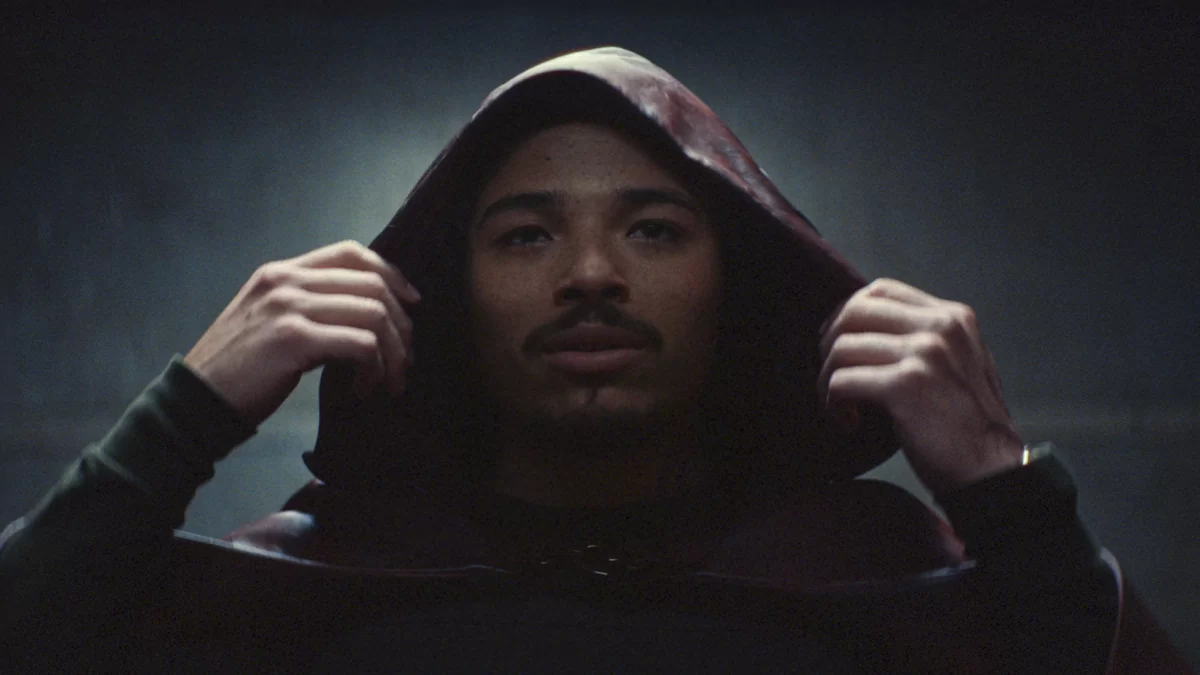 Worse still, combining magic with technology only adds to the narrative confusion. The vague rules around magic use make these sequences hard to understand—for both characters and viewers. The magical elements introduce yet another unexplained plotline with little grounding. That said, this expansion of the world does allow Marvel to finally introduce a highly anticipated character who’s been teased since WandaVision. Sacha Baron Cohen delivers a standout performance as this devilish figure, full of charisma, charm, and unpredictable madness hidden behind sly glances. His screen presence is undoubtedly a highlight—but the fact that he debuts here, in this chaotic series, only deepens the confusion.
Marvel has had several recent magic-focused projects where his appearance would’ve made far more narrative sense. (End spoiler?)
Final Verdict
Ironheart is a textbook example of a project suffering from “too many cooks in the kitchen.” The result is overloaded and lacking in flavor. The creators tried to cover so much ground and include so many characters that, ultimately… they said nothing at all. No plotline is properly developed or resolved. What we get is a string of cool ideas leading into more cool ideas—with no real connection between them. Nearly every scene introduces a new twist or gimmick that, while individually interesting, fails to build a cohesive or emotionally engaging story.
 As a result, while some moments might impress on their own, the series as a whole is so chaotic that the final effect is little more than a shrug. There’s simply too much here, and none of it gets the attention it deserves. Ironheart ends up as a series of missed opportunities—frustrating mainly because of its inability to bring anything to a satisfying conclusion. What a shame.


LUCIA’S GRACE. Resembles a Kind Of Missionary Endeavor

DOKUMENT. Short Film That Feels Monumental

BEAUTIFUL BOY. The Acting is Remarkable [REVIEW]

Looking Back at SPIDER: More Terrifying Than Horror
