
Review
AWAY. Is Humanity Ready to Conquer the Red Planet?
I want to emphasize I was, quite simply, enchanted by Away. This is exactly the kind of variation the science fiction genre needed.


2019 marked exactly 50 years since a human first set foot on extraterrestrial ground. After 1969, the Apollo program returned to the Moon more than once, but the next frontier has yet to be crossed. In the new century, preparations for a manned mission to Mars are taking increasingly realistic shape, thanks in part to the efforts of Elon Musk and his company SpaceX. Filmmakers are therefore doing what they should—imagining what it would be like to stand on the Red Planet. Will we be up to the task? What awaits us there? Such an endeavor should be preceded by a credible visualization. Away.

The artistic success of The Martian by Ridley Scott made it clear that regardless of when the real rocket finally launches, viewers will reach Mars first—and more than once. Also thanks to television series. Recently, we have had the dramatized documentary titled Mars, as well as The First, a Mars mission series with Sean Penn from Hulu.
An alternative vision of space travel was provided by Apple TV in For All Mankind. Netflix decided to join the race as well. And, surprisingly, it added something peculiar. Because Away, instead of racing with technology and thrilling action, prefers to focus on inner experiences.
Less extroverted—more introverted is this journey. Perhaps that is why I liked it so much.

After reigniting the star power of Hilary Swank in I Am Mother, the popular streaming giant decided to offer the actress a new contract, this time in a series. She was entrusted with an extremely responsible role. As Commander Emma Green, she was to lead an international crew, setting a course for the dreamlike Red Planet.
The catch is that boarding the ship and facing the historic opportunity to reach the yet-unconquered is tantamount to leaving her family behind. In this case, we’re talking about a growing daughter who looks up to her mother and an ambitious husband—also an astronaut—whose health problems have grounded him. Add to that the fact that each of the remaining members of the five-person crew is going through a similar emotional rift, and we get the full picture of the extraordinary psychological burden astronauts face during space travel.
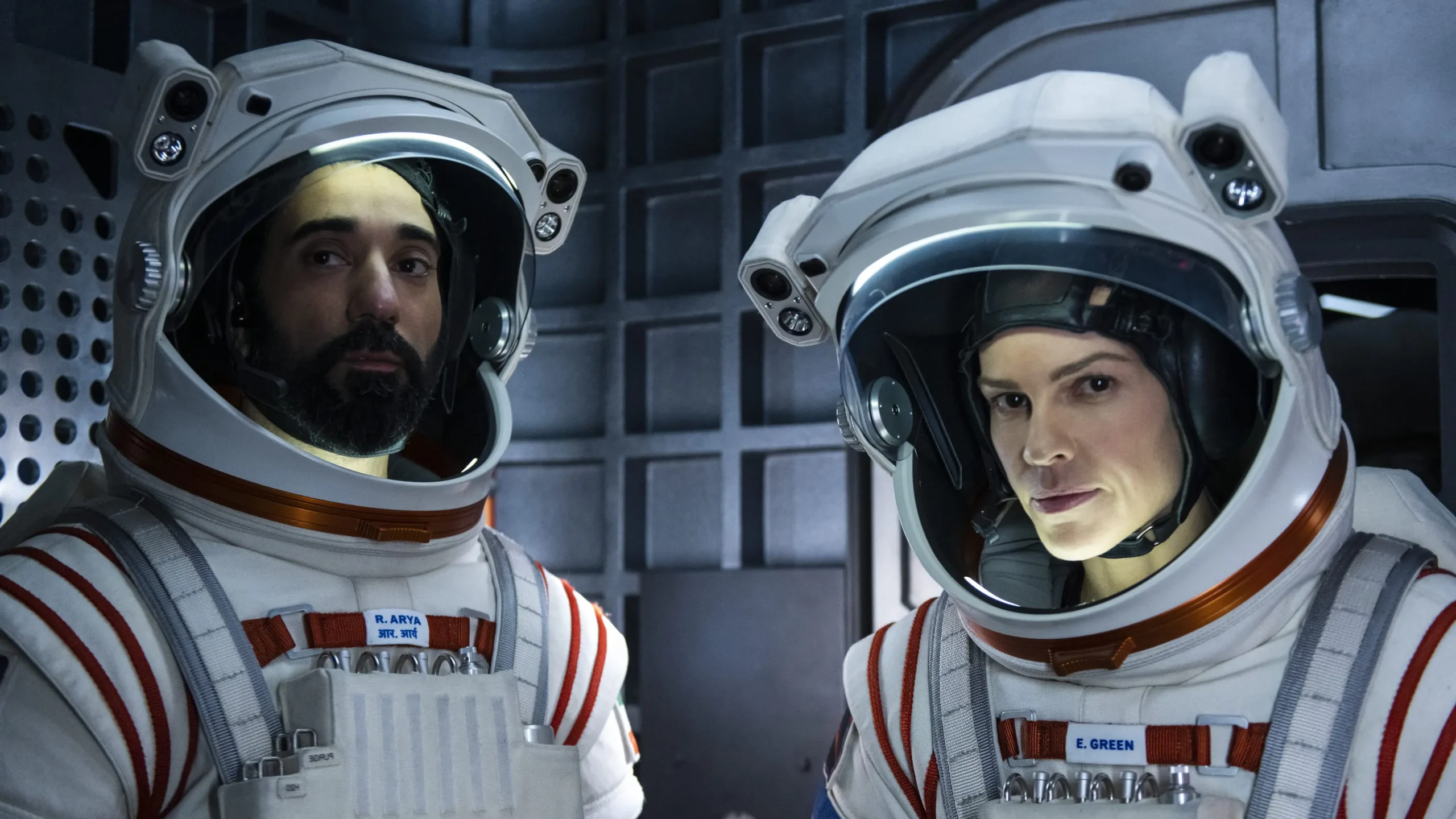
It is no coincidence that it is often said that while we may be technically ready to reach Mars, it is highly uncertain how long-term separation from Earth, gravity, people, and fresh air might affect us. Netflix’s series largely deals with precisely this. At first, I had serious doubts about whether NASA should have allowed regular, even visual, online contact between crew members and their families.
I had the impression that knowing the problems their loved ones were dealing with might have the opposite of the intended effect. Instead of providing support, it could plunge them into sadness and depression due to the helplessness and distance in which they find themselves. A friend whose father worked as a sailor quickly dispelled my doubts. In reality, email contact is the best thing any kind of traveler can get. It helps maintain psychological stability over long months.

And so Hilary Swank drifts through space with her companions, encountering a few obstacles along the way.
One time the pilot catches a virus, another time the engineer goes blind, and yet another time the water purification system fails. But the most important challenge for the astronauts turns out to be silencing their own demons, which they carry with them from Earth. Accepting their pain, accepting their position, and facing the inevitable. Each crew member carries a different kind of psychological burden—the uniform of the mission masks their traumas, in a context where seriousness is essential. But to overcome the cosmic void, cooperation is needed. Fortunately, nothing inspires action like a moment of honesty over floating vodka.
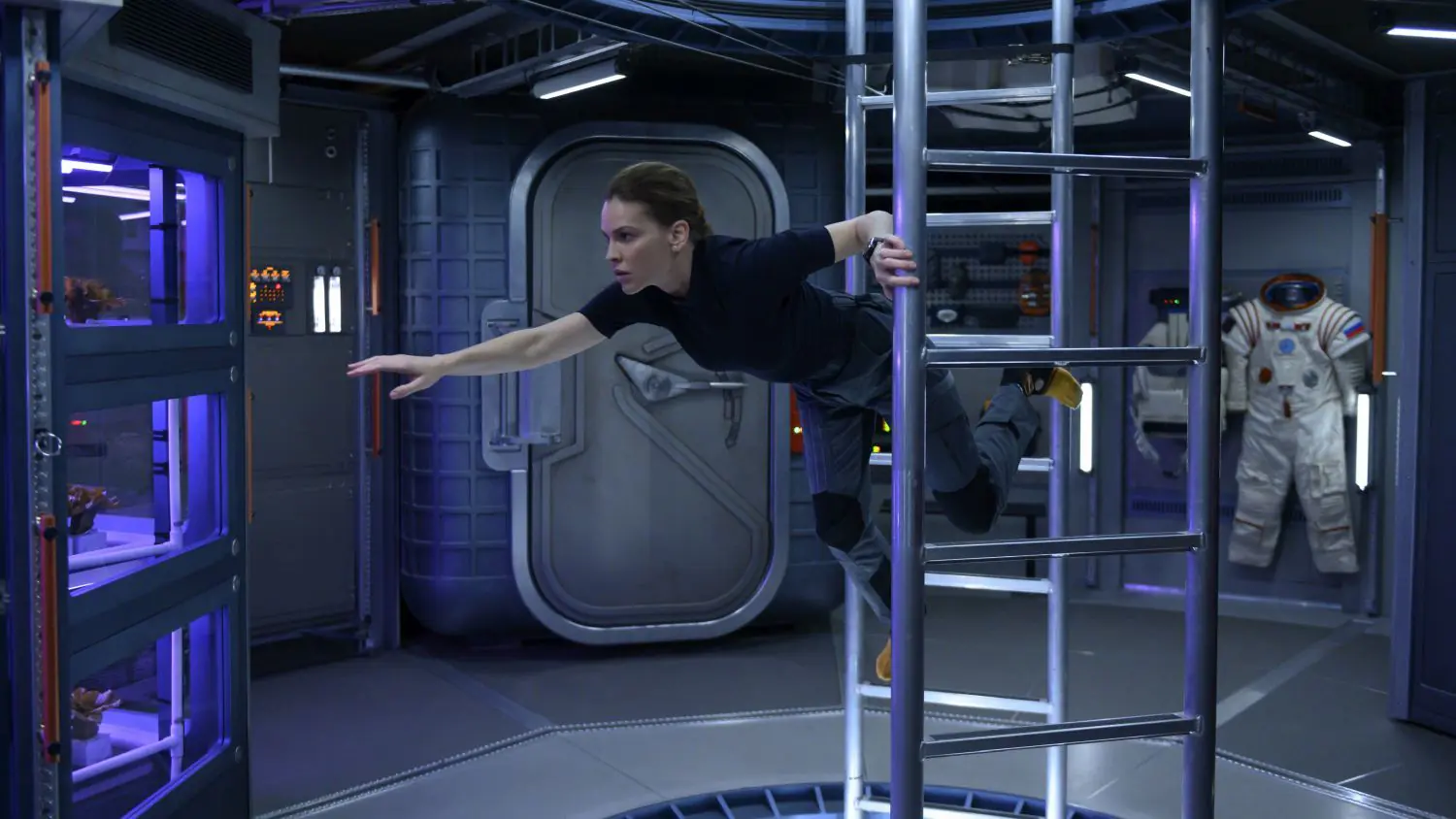
The weakest, least convincing storyline in the series is that of the daughter, who begins to lose her footing after parting with her mother. From young Talitha Eliana Bateman’s performance, it is hard to say whether she is going through a rebellious phase or simply losing her way in the rough relationship with her father. The film marriage of Hilary Swank and Josh Charles, however, manages to fill this void, providing a depiction of a unique love that overcomes all boundaries. Excellent, emotional performances.
The other actors, though less known by name, also deliver strong impressions. Of particular note is a fine performance by Mark Ivanir as the Russian onboard engineer who, although initially at odds with his commander, eventually (in part due to internal drama) very convincingly bows his head and melts hearts.

I can already see the barrage of accusations aimed at Away—that it is too much like a soap opera, too sentimental, too boring, slow, and hard to digest. So be it, though in that case I must disagree.
Speaking from the perspective of someone who has seen more than a few cinematic explorations of space, I want to emphasize that I was, quite simply, enchanted by Away. This is exactly the kind of variation the science fiction genre needed. No technological obsession, melodramatic, with respect for the feelings and dilemmas of those who, in the near future, will be faced with a tremendously important challenge for humanity. For the first time, I felt it.


LUCIA’S GRACE. Resembles a Kind Of Missionary Endeavor

DOKUMENT. Short Film That Feels Monumental

BEAUTIFUL BOY. The Acting is Remarkable [REVIEW]

Looking Back at SPIDER: More Terrifying Than Horror
