
Horror Movies
Looking Back at KILL LIST: Genuine Terror
For some, Kill List will be an exceptionally difficult reflection on the dark side of human nature; for others, an image of a struggle against fate.


Horror is meant to frighten. Everything else is secondary. Hence Kill List, directed by Ben Wheatley, can easily be considered a success. Not only does it make the viewer shift uneasily in their seat long before the nightmare reaches the film’s protagonists, but it also provokes genuine terror in the final minutes.
I would, however, hesitate to call it one of the best representatives of horror cinema of recent years. It is an intriguing and extremely demanding work, above all frightening, yet it owes this to choices made by the British director and co-screenwriter which, in my view, seem controversial. Still, one should be familiar with Kill List, if only because it was with this very film that Wheatley entered viewers’ awareness as a new talent.
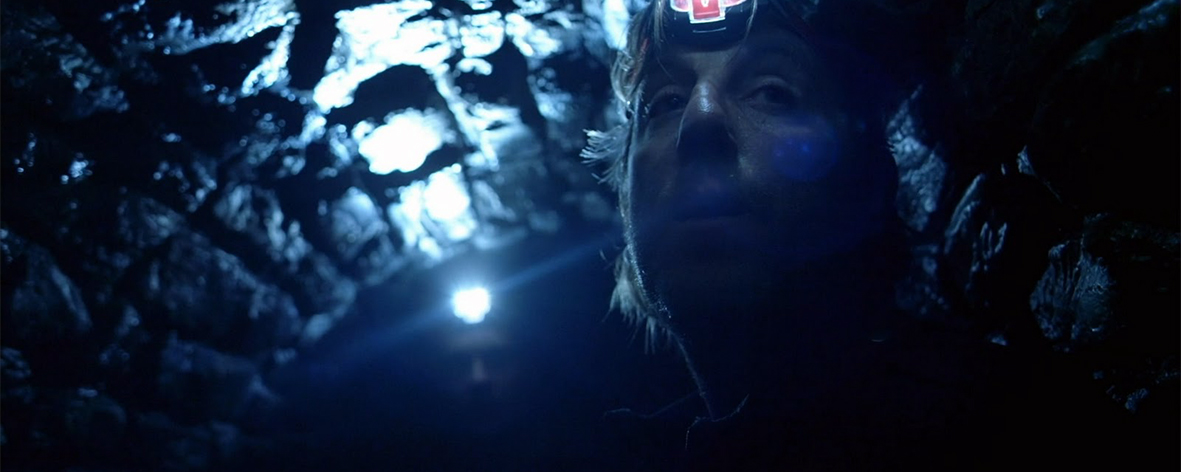
Eight months after a failed job in Kyiv, contract killer Jay (Neil Maskell) is still reluctant to return to work. Instead of shooting people, he prefers to stay at home and play with his son. But the money has already run out, arguments with his wife (MyAnna Buring) are intensifying, and his partner Gal (Michael Smiley) has another gig lined up. The men therefore accept an offer from a mysterious client who needs only a few drops of Jay’s blood to sign the contract; this alone should make our protagonists realize that they are not dealing with a standard assignment. Hired for three different killings, they have no idea where it will lead them.
The first thing that stands out during the screening of only Wheatley’s second theatrical film (the first was the black comedy Down Terrace from 2009) is a clear division into three parts: social drama, crime thriller, and horror. Sitting down to watch Kill List as a genre film, an unsuspecting viewer will certainly be quite surprised that for the first twenty minutes they are observing a family drama with a constantly screaming married couple. Mike Leigh could be proud of the nervousness with which Wheatley opens his film – the British Jay argues with his Swedish wife Shel about practically everything, from his financial situation to the lack of toilet paper.

These scenes are full of realism, not only because the director abandons all unnecessary formal embellishments, but also because the actors were left to their own devices – a fair amount of the dialogue we hear was improvised on set. Such screen truth only heightens the tension, which arises from a situation uncharacteristic of horror cinema. It also forces the viewer to stay on guard, uncertain of what will happen next.
Wheatley smoothly transitions into the crime section, again emphasizing authenticity, which results in exceptionally brutal images, such as splitting a head open with a hammer. The director does not shy away from presenting such a scene to viewers from beginning to end, without any visible editing cuts, with emphasis not only on the image but also on the bone-chilling sound.
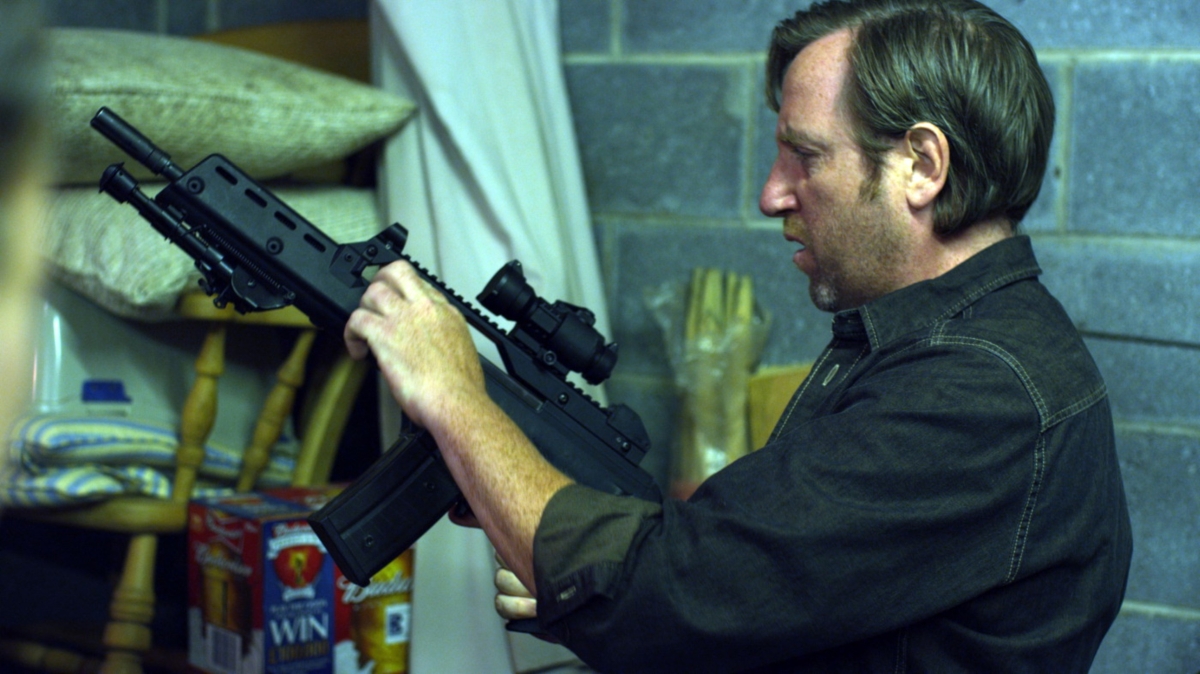
Here, Jay is the executioner, one of his targets the victim. The question of the protagonist’s sadism recedes into the background, because we quickly realize that the seemingly simple task conceals ever more doubts. Perhaps both of these issues are somehow connected, and Jay was chosen precisely because of his unrestrained aggression. This, however, does not explain why each of his victims thanks him before death, nor why Fiona (Emma Fryer), Gal’s girlfriend, draws a strange symbol on the mirror in the protagonist’s home.
This lack of answers builds uncertainty, fear, and finally horror of the worst kind, because it is unknowable, devoid of justification, purpose, and even logic. And although Kill List does not frighten us with monsters, we feel that forces beyond human understanding stand behind the entire intrigue. The director succeeds in creating an extraordinarily suggestive, dark atmosphere that absorbs the viewer completely, yet offers nothing beyond that.

This is my main charge against Wheatley’s film – it wants too much to frighten us, relying on ellipses and omissions, while providing no satisfying reason in the finale for this macabre story. We are left with conjectures, unclear elements which, against the backdrop of the whole puzzle, seem detached from the rest; for the British filmmaker, only fear matters.
Either we submit to it, abandoning the search for meaning, or we react with reluctance, even anger, at such a directorial tactic. At the same time, he does not deprive us of the possibility of interpreting the viewed plot. Therefore, if someone has not seen the film and does not want to spoil the experience by trying to organize it for themselves, they should not read the next paragraph.

For some, Kill List will be an exceptionally difficult reflection on the dark side of human nature, on our drive toward self-destruction; for others, an image of a struggle against fate, when it is impossible to perceive the so-called grand plan that constitutes our existence. One can also discern in Wheatley’s horror a question about the meaning of life for a godless person, for whom religion means nothing.
This latter reading, incidentally, corresponds nicely with another British horror film, the now-classic The Wicker Man (1973), where the main character, a deeply religious person, also becomes a puppet in the hands of followers of a strange religion. It is telling that both end up on the altar of someone else’s faith. The finale is similar, though not entirely – the hero of that film at least learns the reason for the entire masquerade, whereas Jay remains in ignorance until the very end, an ignorance more harrowing than the most heinous crimes he has committed.

Nihilism rules the cinema of the creator of Kill List, which could also be observed in his subsequent productions – the black comedy Sightseers (2012) told the story of a pair of seemingly polite and calm lovers who murder everyone in their path who disrupts their vision of a perfect world, while A Field in England (2013) was a psychedelic journey into the seventeenth century, an experiment with an unclear plot, based on the enslavement of a group of deserters by a diabolical alchemist.
Even the episodes of Doctor Who directed by Wheatley were marked by a much darker tone than usual. And High-Rise, an adaptation of J.G. Ballard’s prose, with a star-studded cast and stylistic extravagance, yet with no lesser drive to condemn humanity for what it is. It is hard, however, to tear one’s eyes away from the Briton’s works, despite all their brutality and doubt in humanism. Perhaps this will change someday, but for now almost his entire filmography can be described as a list of death.


LUCIA’S GRACE. Resembles a Kind Of Missionary Endeavor

DOKUMENT. Short Film That Feels Monumental

BEAUTIFUL BOY. The Acting is Remarkable [REVIEW]

Looking Back at SPIDER: More Terrifying Than Horror
