
Features
10 Forgotten Samurai Movies. The Fading Gleam Of The Sword
Samurai drama is the genre most associated with Japan. My aim was to highlight lesser-known yet masterful films that are not appreciated enough.


Hana wa sakuragi, hito wa bushi
Among flowers, the cherry blossom; among men, the warrior (a Japanese proverb about samurais)
Samurai drama is the genre most associated with Japanese cinema. I believe it has more enthusiasts than karate films, yakuza films, kaijū films, or pinku-eiga. The history of the genre is shaped by certain exemplary works, and films with samurai themes have been made by many outstanding directors, which has contributed to the genre’s popularity not only in Japan but also abroad. Most samurai works are historical films or adventure-costume films set in the Edo period (1603-1867), known as jidai geki. The protagonists of these films, besides samurais, often include feudal lords known as daimyō, as well as ronin (masterless samurais) and high-ranking officials (e.
g., chamberlains). The plot often serves as a pretext to showcase sword fights (in Japanese chanbara, a word also used for the sub-genre of films).

47 ronin
Japanese warrior films have been made since the beginning of cinema, but unfortunately, many old works have been lost. Today, Daisuke Itô (Man-Slashing Horse-Piercing Sword, 1929), Teinosuke Kinugasa (the first sound version of 47 Ronin, 1932), and Sadao Yamanaka (Humanity and Paper Balloons, 1937) are considered pioneers of samurai cinema.
The genre has also produced a number of charismatic stars: Chiezô Kataoka, Toshirô Mifune, Kinnosuke Nakamura, and Tatsuya Nakadai – each of whom has played the role of the famous swordsman Musashi Miyamoto, the most frequently portrayed hero in the turbulent history of the Land of the Rising Sun.
Japanese filmmakers often revisited the event from the Genroku era when forty-seven ronin from Akō avenged the official responsible for their lord’s death. Popularized by the play (Chūshingura – The Treasury of Loyal Retainers from 1748), the event became good material for directors. Teinosuke Kinugasa (in 1932), Daisuke Itô (in 1934), Masahiro Makino (in 1938), Kenji Mizoguchi (in 1941), Kunio Watanabe (in 1958), Hiroshi Inagaki (in 1962), and Kinji Fukasaku (in 1978) all utilized this material.
Those who know this story only from the fantasy film with Keanu Reeves are missing out. The 1962 and 1978 adaptations are very good, but Inagaki’s three-and-a-half-hour version is a complete masterpiece.

Rashômon
The true triumph of Japanese costume dramas occurred in the 1950s. Akira Kurosawa’s Rashomon (1950) won the Golden Lion in Venice and an honorary Oscar for Best Foreign Language Film. This second award also went to Teinosuke Kinugasa’s Gate of Hell (1953) and Hiroshi Inagaki’s Samurai (Miyamoto Musashi, 1954). Kurosawa’s Seven Samurai (1954) received the Silver Lion in Venice. My aim was to highlight lesser-known productions within the genre, so I omitted Kurosawa’s masterpieces and also excluded Masaki Kobayashi’s outstanding works, Harakiri (1962) and Samurai Rebellion (1967).
The result of my research is ten films, arranged chronologically, made by ten different directors. Most of these creators are masters of the genre, but they are not as appreciated as they deserve to be.
The Tale of Osaka Castle / Daredevil in the Castle /Ôsaka-jô monogatari, dir. Hiroshi Inagaki

The Tale of Osaka Castle
In the 1950s, Hiroshi Inagaki became known in the West as one of the most outstanding directors of samurai cinema, alongside Akira Kurosawa. His trilogy (1954–1956), in which Toshirô Mifune played the famous swordsman Musashi Miyamoto, gained recognition outside of Japan and won an Oscar for Best Foreign Language Film (until 1956, awards in this category were given without competition, i.e., without nominations). Inagaki is also the creator of the Japanese adaptation of Edmond Rostand’s Cyrano de Bergerac (Samurai Saga / Life of an Expert Swordsman, 1959). However, the director’s magnum opus is the adaptation of another famous story – 47 Loyal Ronin (1962). Inagaki had been making films since the 1920s, and there are certainly many interesting things to be found in his filmography.
Here, I want to draw attention to a production that few people remember, even though it covers an important historical episode. The Tale of Osaka Castle refers to the events that took place in 1614–1615. During the Siege of Osaka, Shogun Tokugawa’s army clashed with the forces of the Toyotomi clan, who ruled over the Brocade Castle.

Toshirô Mifune, in his typically expressive style, played a character named Mohei. He is a wanderer with the heart of a samurai. He is a peasant who wants to see the city. He is a small man who gets caught up in the whirlwind of great politics. Mohei is a very dynamic character. He does not need a sword because he is not a brawler. But he can fight; a stick is enough for him to show his character and strength. Inagaki does not spare his hero, testing him many times. It is evident that the director approves of the protagonist’s attitude: availability and readiness for any skirmish, not for glory or material gain, but for a piece of land that symbolizes independence and peace. Along the way, the director condemns firearms, which here are the tools of traitors.
The story culminates in an exciting and spectacular finale. Mifune, who did not work with Kurosawa as often as with Inagaki, played energetically, slightly overacting but without falling into grotesque. As always in this director’s films, the visual setting is important – it is more spectacular than in other Japanese filmmakers’ works because, unlike many of his peers, Inagaki preferred colorful ornamentation. Therefore, Osaka Castle appears almost fairy-tale-like – a place worth fighting for, as only there can one find balance and solace.
The music for the film was composed by Akira Ifukube, who is mainly remembered today as the composer for Japanese monster movies (primarily Godzilla). Few people, however, remember his work in the field of samurai film music. This is probably due to the fact that few people also remember Inagaki, with whom Ifukube often collaborated (including on one masterpiece – 47 Loyal Ronin). The discussed work has good music during the opening credits – it is a perfect introduction to the story’s mood. The composer created something like a march that symbolizes readiness for battle, but there is also reflection, melancholy, and monumentality in this piece – they remind us that the price of victory is very high.
Destiny’s Son / Kiru, dir. Kenji Misumi
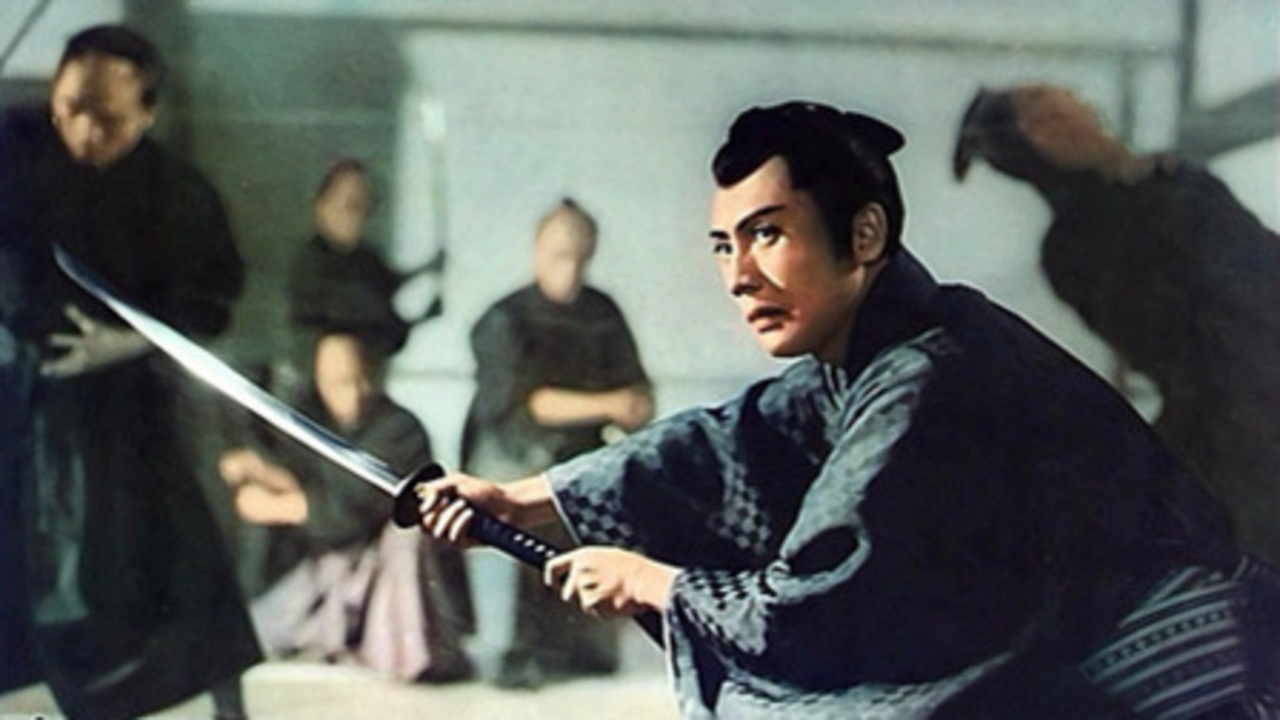
Destiny’s Son / Kiru
Kenji Misumi became famous for his collaborations with the brothers Shintarô Katsu and Tomisaburô Wakayama. With the first, he produced the series about the adventures of the blind swordsman Zatôichi, as well as other films such as The Devil’s Temple (1969) and Hanzo the Razor (1972). The second brother starred in his series Lone Wolf and Cub (1972–1973). When discussing the film Destiny’s Son, however, I wanted to highlight the lesser-known actor Raizô Ichikawa, who died at the age of 37 but managed to play several memorable characters.
Among the most famous are the legendary bandit Ishikawa Goemon and the master swordsman Ryûnosuke Tsukue, the protagonist of Kaizan Nakazato’s novel series, which inspired many films. In Destiny’s Son, Ichikawa played an orphan named Shingo. He grows up with the burden of a cruel secret from the past that has the potential to turn his life into a series of misfortunes.
During his first journey, which lasts three years, Shingo learns the secrets of sword fighting. His technique is exceptionally effective because even the way he holds his weapon scares off opponents. The film chronicles the journey of a warrior – young, but already bearing the immense weight of experience. Misumi’s work lasts only 70 minutes and has no slow moments – situations change rapidly, years pass quickly, and a person gets to know life more deeply and feels the scent of death more intensely.
The screenplay was written by Kaneto Shindô, the creator of the poignant drama Onibaba (1964), but this film is particularly a feast for the eyes. There are many interesting shots that – despite being filmed in color – bring out the maximum brutal realism of the samurai era. Naturally, some things had to remain off-screen, as the taboo sphere was still full to the brim in the early 60s. This is especially evident in the scene where a woman runs at a group of men with a knife and, to enable her brother’s escape, removes her clothes. In such a situation, the men truly do not know what to do. But only for a moment…
Warring Clans / Sengoku yarô, dir. Kihachi Okamoto
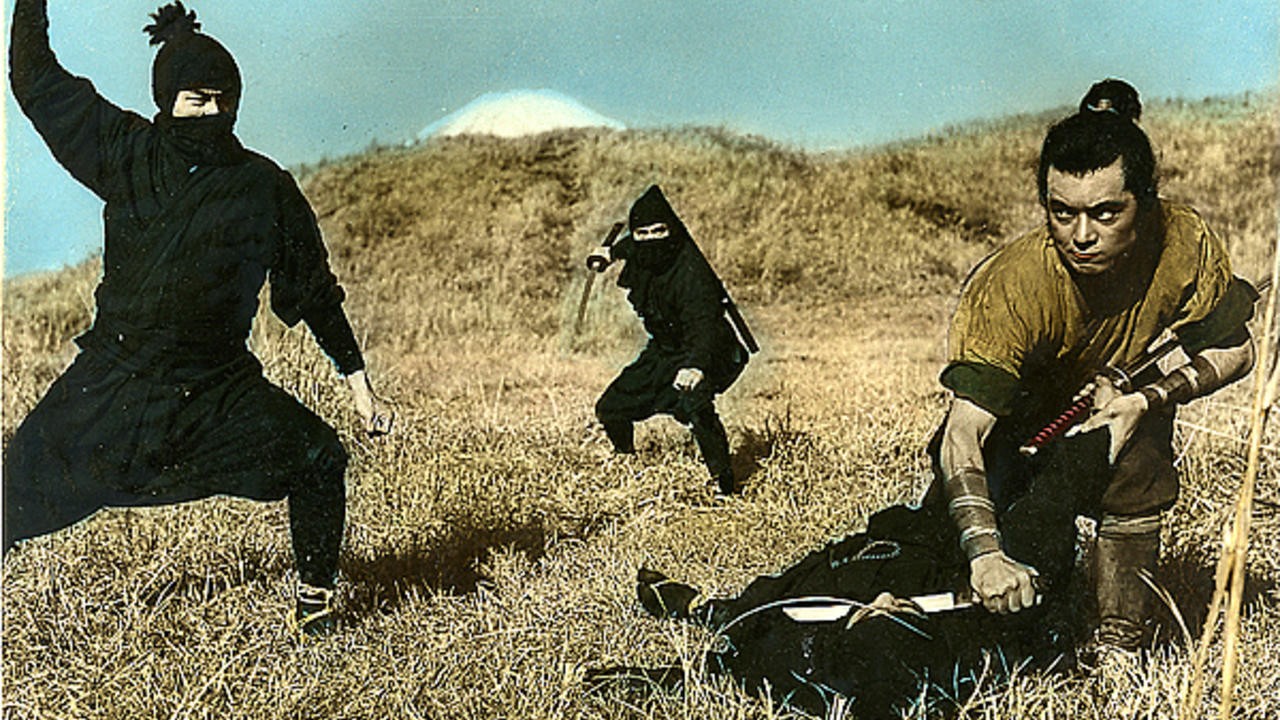
Sengoku yarô / Warring Clans
Kihachi Okamoto is another significant figure in the history of Japanese cinema. He is the creator of thorough historical war dramas such as The Emperor and the General (1967) and Battle of Okinawa (1971), as well as gripping samurai films like Sword of Doom (1966) and Kill! (1968). It’s also worth seeing his first chanbara film, Warring Clans. The story centers on colorful characters, and true to the Japanese title, it is a rogue tale from the Sengoku era, a time of clan wars between Shingen Takeda and Nobunaga Oda.
Muskets, a new addition to military arsenals, are fiercely fought over in the film. Pirates, led by a beautiful woman, hunt for this cargo. This role is played by Kumi Mizuno, whose name might be familiar to fans of kaijū-eiga. Yuriko Hoshi, who also starred alongside Japanese monsters, plays Saghiri from the samurai bashaku clan. Bashaku referred to transport companies whose armed employees defended against attacks.
The action is dynamic, and the hundred minutes pass swiftly without a moment’s respite. The director allows some nuances to slip by, so they can be caught on subsequent viewings. Indeed, this is a film one eagerly returns to because the characters (though not all) are endearing.
There’s a vivid villain – the scarred ninja warrior Saburoza (Tadao Nakamaru), a treacherous assassin but also a man loyal to his clan. But above all, Yûzô Kayama should be highlighted, typically in the background, but here playing the most crucial role. In Hiroshi Inagaki’s 47 Loyal Ronin (1962), he portrayed a victim of heartless bureaucracy, but here he is thrust into a completely different period. There was greater freedom then, a war was raging around, and the country had not yet become bureaucratized. Kayama’s repertoire includes several notable titles (e.g., Akira Kurosawa’s Red Beard from 1965), but he achieved greater success in the music industry as a guitarist, singer, and composer.

Sengoku yarô / Warring Clans
This film is the quintessence of adventure cinema, where the action is packed with numerous ambushes, but it is also a comedy. A madcap farce about the pursuit of happiness and attempts to become a ruler, both literally and metaphorically. The characters played by Yûzô Kayama and Ichirô Nakatani seek only control over their own lives, but Makoto Satō portrays a historical figure who will indeed gain dominance over an entire nation.
This character is Tōkichirō Kinoshita, later known as Hideyoshi Toyotomi. Unfortunately, this person in the film is the weakest link – overly exaggerated, even by Japanese standards. Some ideas are too wild for a normal viewer to accept without raising an eyebrow, but they do not significantly detract from the overall experience. The film is intriguing and original, enjoyable without the aid of an alcoholic drink like sake. I got the impression that the director intended to parody the style of some Japanese filmmakers, especially those from the 1950s. It is possible that Okamoto crafted a new formula for swashbuckling cinema, inspiring younger creators like Hideo Gosha.
The sword is the soul of the samurai.
If he forgets or loses it, it will not be forgiven.
(fragment from the testament of Shogun Ieyasu Tokugawa)
Bushido: The Cruel Code of the Samurai / Bushidô zankoku monogatari, dir. Tadashi Imai

Bushido: The Cruel Code of the Samurai / Bushido zankoku monogatari
Unlike the aforementioned films, Tadashi Imai’s picture is not an action movie but an ambitious look at the samurai era and its impact on the present. The film’s action stretches from the early seventeenth century to contemporary times (post-war Japan). Times change, generations pass, people start families and try to live normal lives. But in a samurai family, control over life is taken by the bushido code. According to it, a samurai’s life does not belong to him but to his lord. Words like loyalty and honor are repeated, but there is no monotony because, despite the common message for the entire saga, each mini-story has its distinct feature.
Kinnosuke Nakamura – an undoubtedly outstanding actor – played a series of diverse characters in this one film, finding a distinguishing feature for each, to present a complete picture of Japanese society. For this extraordinary display of his abilities, he received the Blue Ribbon Award, given by Japanese critics and journalists.
Samurai drama has been very cleverly interwoven into the framework of a contemporary story. The message is clear – even though centuries pass, the system does not change, and people unconsciously imitate their ancestors. The bushido code will endure for ages because there will always be masters and their subordinates, and thus there will remain a hierarchy that does not make life easier but rather complicates it further.
Unemployed individuals resemble ronin searching for a place, while those who have jobs are like samurai who owe obedience to their employers. The Japanese have indeed risen from their knees, and no one loses their head for a lack of respect, but a part of that world remains, influencing individual fates. The Edo period is often referred to as a time of peaceful rule, but that’s not entirely true, say the filmmakers.

Bushido: The Cruel Code of the Samurai / Bushido zankoku monogatari
This film is an intriguing chronicle of Japan, reminding us of events like the bloody executions of peasants resulting from protests against high taxes.
Roughly at the center of the story is the 1783 eruption of Mount Asama, which, among these numerous bloody events, seems like the voice of God signaling people to come to their senses. But this voice was not heard… In my opinion, this film definitely deserves to be considered among the top Japanese cinema, alongside the best works of Akira Kurosawa and Masaki Kobayashi. However, in Japan, it did not gain recognition; on the contrary, it was treated very critically. It was appreciated in Europe, winning the Golden Bear at the Berlin Film Festival. Five years earlier, at the same festival, Tadashi Imai, the son of a Buddhist abbot, received the Silver Bear for directing.
Assassination / Ansatsu, dir.
Masahiro Shinoda

Ansatsu / Assassination
Another outstanding work far from simple entertainment. In 1864, during the waning years of the shogunate, an assassination occurred that became chronicled due to its political motivations. Director Masahiro Shinoda, in one of his best films, explains why it had to happen. We meet Hachirō Kiyokawa, a skilled swordsman who organized a group of ronin to defend the shogunate’s interests.
He was released from prison, where he was held for murder, making him someone who cannot be fully trusted. His character is revealed through numerous flashbacks, as another skilled swordsman, appointed as an assassin, studies his life to find weaknesses and assess his chances in a duel.
The film is innovative in its technical aspects. The director uses freeze frames to emphasize the significance of scenes and presents the titular assassination through character point-of-view shots with a shaky camera. There are also many flashbacks that explain a lot, but one needs to use their brain because not everything is spoon-fed. In the role of Hachirō Kiyokawa is the excellent Tetsurô Tanba (later cast in the James Bond film You Only Live Twice). He creates a full-blooded, ambiguous character, gradually revealing the nuances of his nature. Shima Iwashita has a smaller role, but her name is worth remembering. She has been married to director Masahiro Shinoda for fifty years and is an excellent actress (notably in Double Suicide).

Ansatsu / Assassination
Assassination is one of the flagship films of the so-called Japanese New Wave, yet it rarely appears in professional film studies publications.
It also did not win prestigious awards, but its artistic value—at least in my opinion—is undeniably high. Shinoda focused on realism but did not create a boring and verbose spectacle. He told this story in his style, using original narrative techniques not to show off his craft but to intrigue and provoke thought. He wanted his film to stand out from the many similar productions flooding Japanese cinemas. He achieved partial success because some will pick it out and appreciate it, but most will probably traditionally overlook it.
Eleven Samurai / Jûichinin no samurai, dir. Eiichi Kudô
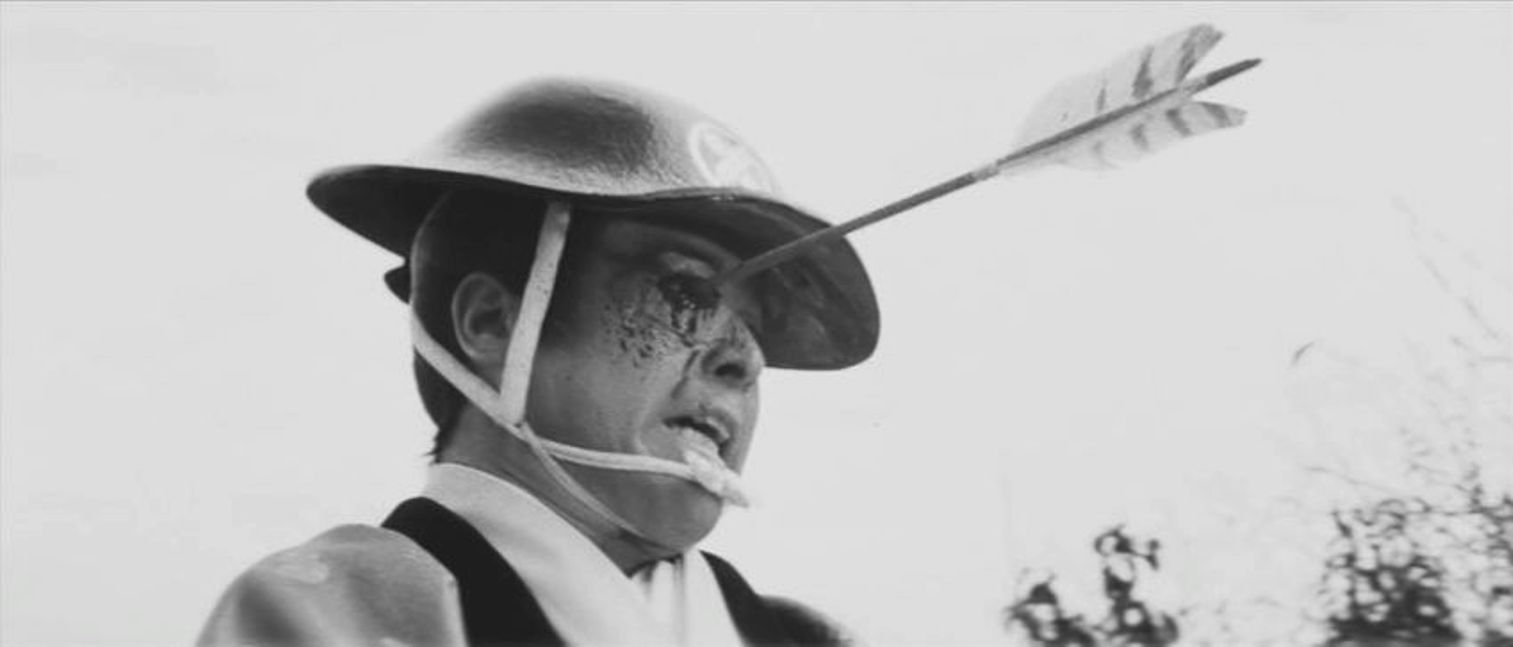
Eleven Samurai / Juichinin no samurai
Between 1963 and 1967, Eiichi Kudô directed three films that were titled The Thirteen Assassins (1963), The Great Killing (1964), and Eleven Samurai (1967) in the West. The plots of these films are similar, each featuring a group of samurai rebelling against the nobility to defend samurai traditions. Therefore, the films have been grouped under the label Samurai Revolution Trilogy. The title that initiated this series is quite well known, as Takashi Miike remade it successfully in 2010 as 13 Assassins.
The last part of the trilogy, sponsored by the number 11, although seemingly conventional, turns out to be a well-crafted work, full of surprising twists and delivering the kind of experience expected from a samurai drama.
The rule of the twelfth shogun of the Tokugawa clan did not yet herald the final end of the samurai era. However, corrupt and arrogant officials were a thorn in the side for those who lived by specific rules, enjoying stability and peace. When the shogun’s brother, an impulsive and uncouth man, commits a senseless crime, the nobles— to protect their position and the authority of the supreme commander—assign him protection instead of punishing him. This incident leads to the formation of a group of eleven rebels aiming to bring justice to the unpunished heir.
Among the protagonists, there are no charismatic figures like Toshirô Mifune, Tatsuya Nakadai, or Tetsurô Tanba, but this (paradoxically) makes the story seem closer to reality and unpredictable. Behind the camera, there isn’t an outstanding individual, but the director cannot be accused of incompetence, as he has crafted several excellent scenes (an intriguing prologue, an ambush in the forest, a fight in the rain, etc.) and guided the actors in a way that maintains the story’s appeal and keeps the audience interested.
The noble person is distinguished by dignity, not pride. The common person may be proud, yet lacks dignity. (Confucius)
Steel Edge of Revenge / Goyôkin, dir.
Hideo Gosha

Steel Edge of Revenge / Goyôkin
Hideo Gosha, who had already impressed with his debut film Three Outlaw Samurai (1964), created a work at the end of the decade that is hard to overlook. Steel Edge of Revenge can be seen today as the beginning of the end of the genre, much like Sam Peckinpah‘s The Wild Bunch (1969) heralded the end of the western.
And similar to Seven Samurai (1954) and Yojimbo (1961), it received a western remake titled The Master Gunfighter (1975) directed by Tom Laughlin. But most importantly, this film has not aged a bit and still makes a colossal impression. The enigmatic prologue floods the screen with unease, but the true visual masterpiece is the climactic scene. The recipe for such a spectacle is simple – plenty of snow, turbulent sea waves, the darkness of night, and raging fire. The soundtrack also greatly helps; in Masaru Satô’s music, there is nostalgia, drama, and horror, which, combined with the sound of crows, creates an eerie atmosphere.
The film, however, offers much more than just visual and auditory appeal. We have two protagonists who understand the concept of honor differently. Magobei Wakizaka believes that samurai honor involves rejecting selfishness and defending the weak, but Chamberlain Rokugo Tatewaki holds a different view – loyalty to one’s clan is fundamental, and if something threatens it, it must be eliminated by any means. This leads to the massacre of a fishing village – the target is a ship loaded with gold. To seize the precious cargo, representatives of the Sabai clan kill the witnesses, the defenseless fishermen, and take the loot.
Magobei becomes an unwitting accomplice to the crime. Tormented by guilt, he leaves his family (the wicked chamberlain is his brother-in-law), but after three years, the past returns. Tatewaki plans to seize another gold shipment at the expense of the villagers – this time, however, Magobei does not intend to stand idly by. He tries to wash the blood off his hands by preventing another crime.

Steel Edge of Revenge / Goyôkin
In the 1960s, Hideo Gosha maintained a consistently high standard, but Steel Edge of Revenge is, for me, an extraordinary work.
The plot, the central theme, the atmosphere, the acting – all these elements create a unique depiction of a bygone era. At the forefront is Tatsuya Nakadai, a significant figure in the genre. He played memorable roles in Harakiri (1962) and The Sword of Doom (1966). He also appeared in Hideo Gosha’s Hitokiri (1969), but Steel Edge of Revenge stands out with four excellent performances. Thanks to actors like Tatsuya Nakadai and Tetsurô Tanba, the duel between the characters is intriguing. Both can act restrainedly but in a way that reveals the deep-seated suffering of their characters. If one of these protagonists had been played by Toshirô Mifune, he would undoubtedly have dominated the film, but here we have two equally significant figures.
The female role is also very good – Ruriko Asaoka as the chosen one of the gods, a woman cruelly tested by fate, unable to keep her emotions in check. A few scenes were stolen by Kinnosuke Nakamura, who played a mysterious ronin whose motives are not entirely clear, i.e., it is uncertain whether the scent of gold or justice attracts him more. Abroad, this actor is known as the driving force behind the aforementioned Bushido: The Cruel Code of the Samurai. In Japan, he is known for his role as Musashi Miyamoto in six films by Tomu Uchida (an old hand in the industry since the 1920s).
The content of Steel Edge of Revenge (as the film is titled in the USA) is Confucian in spirit.
Confucius taught that it is cowardly to know what is right and not do it, and the gravest error is to commit a mistake and not correct it. These words fit the stance of the character played by Tatsuya Nakadai. He realizes he did wrong, but fate gives him a chance to redeem himself – to regain his honor and become a person deserving of the title of samurai. With his film, Hideo Gosha tried to answer the question of why the samurai is a species doomed to extinction. When loyalty and honor, the two most important values, cause division instead of unity, the end is near. Because these attributes should be inseparable, like a splendid sword forged in the Echizen province. If the sword breaks, the samurai dies; if the code of honor loses its significance, everything ends – cherry blossoms wither, and the sun sets over the country.
The final “dance of demons” is a symbolic funeral of the samurai caste. Although the film has the character of an impressive adventure spectacle, it also contains many interesting observations and reflections. For me, it is number one in this ranking.
Killer’s Mission / Shokin kasegi, dir. Shigehiro Ozawa

Killer’s Mission / Shokin kasegi
Like most samurai films, the script for this piece is based on historical sources, but in this case, that doesn’t matter much.
There’s no point in questioning how much of the story is true, as it quickly becomes clear that we are dealing with a purely entertaining production. The film can be seen as Japan’s response to Bond, specifically You Only Live Twice (1967). Shikoro Ichibei is a powerful and clumsy man who doesn’t look like either a spy or a master swordsman. But James Bond could learn a lot from him, not only in the art of combat but also in dealing with women (he can be rough, but sometimes his tough guy mask drops). Like his Western rival, Ichibei is equipped with ingenious gadgets (for example, his cane is not only a sword sheath but also a telescope). He is not the only spy in this film – he teams up with a woman who uses a deadly comb filled with viper venom.
In 1974 director Shigehiro Ozawa made his crowning achievement – the karate film The Street Fighter starring Sonny Chiba. Killer’s Mission also possesses cult film characteristics. It is inventive and charmingly kitschy, with action as fast-paced and improbable as Bond films, and the main character stands out from the rest. A few words about the plot: in the Hōreki era (mid-eighteenth century), a Dutch ship arrives at the shores of Japan; when the European ambassador fails to reach an agreement with the shogun, he forms an alliance with the Satsuma clan, which aims to overthrow the Tokugawa family’s rule…
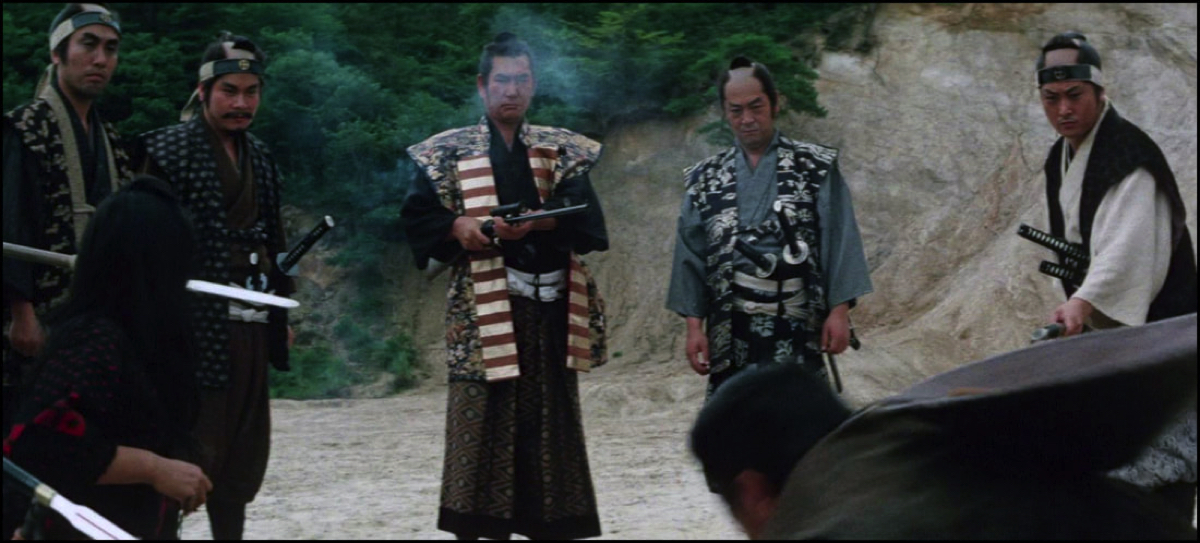
Killer’s Mission / Shokin kasegi
Actor Tomisaburô Wakayama (known for the Lone Wolf and Cub series) excelled in the role of the super-agent and humorously parodied his brother Shintarô Katsu (from the Zatôichi series) in a scene where he pretended to be a blind masseur. However, Wakayama is not a lone wolf here, as Yumiko Nogawa (agent Kagero) and Chiezo Kataoka (Satsuma clan ambassador) also create very interesting performances, only surpassed by the protagonist in combat skills. At that time, Kataoka was a veteran of Japanese cinema, increasingly falling into a routine.
He became an icon of samurai dramas back in the 1920s and ended his career with over three hundred roles (IMDb lists only half of his achievements). Composer Yagi Masao did a good job on Killer’s Mission, creating music in a European style, which made the film resemble a Euro-western. The discussed film is also known (in the DVD market) as Bounty Hunter 1: Killer’s Mission and is the beginning of a series that includes films: Fort of Death (1969, dir. Eiichi Kudô) and Eight Men to Kill (1972, dir. Shigehiro Ozawa), as well as a twelve-episode TV series Bounty Hunter (1975), where the similarities to spaghetti westerns become even more apparent.
When fighting with an opponent, you are not fighting with a person,
but with the evil that he embodies through his actions
(Munenori Yagyu – The Art of War of the Yagyu Family)
Shura / Demons, dir. Toshio Matsumoto

Demons / Shura
Of all the films presented here, this one surprised me the most. First: I didn’t expect a black-and-white film from the seventies. Second: the title suggested that supernatural phenomena would appear.
Third: despite the absence of supernatural phenomena, the film has a lot of horror elements. Fourth: the lead actor Katsuo Nakamura turned out to be the younger brother of Kinnosuke Nakamura, whose name appears most frequently in this compilation. Fifth: the creators managed to achieve an extraordinary, very stifling and claustrophobic atmosphere, as the cinematographer did not shoot spectacular outdoor scenes but theatrically darkened sets. However, despite the theatricality, so much happens here that it’s impossible to look away from the screen.
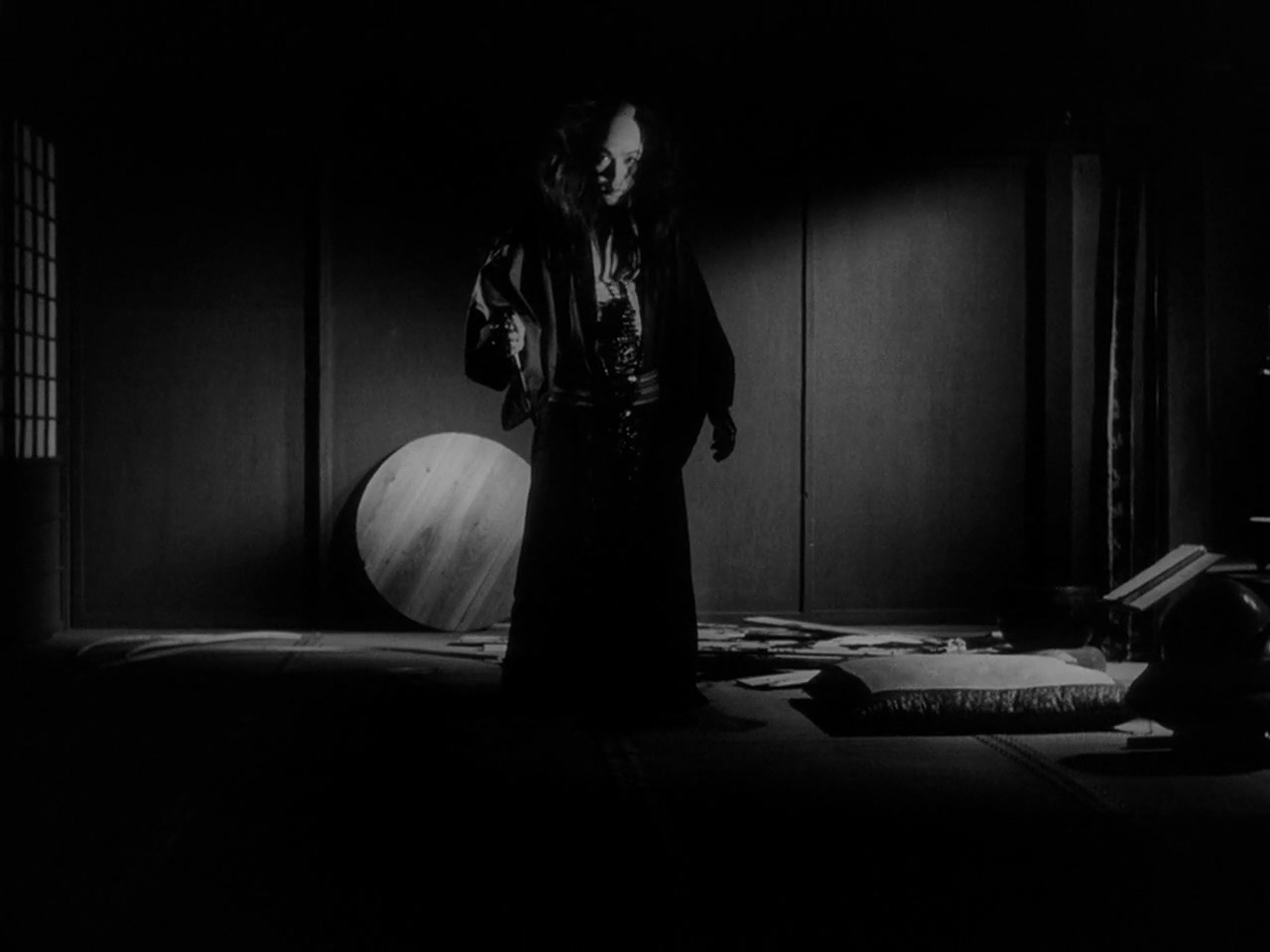
Demons / Shura
After the era of widescreen and colorful blockbusters, a film directed by Toshio Matsumoto might seem like a step backwards, but that’s a misleading impression. The typical use of lighting in early cinema introduces a suitable dose of horror and tension, but the most significant aspect is not the form but the content of the message. The message is that emotions and feelings destroy people, turning them into demons. If we didn’t have emotions, we wouldn’t have a propensity for violence either. It all begins with a romance between a ronin and a geisha (very successful roles by Katsuo Nakamura and Yasuko Sanjo), which transforms into a tale of bloody revenge presented in a non-standard form.
The intrigue unfolds in a setting darker than night (splendid sequences where lit lanterns are carried by unseen figures), evoking a dream-like vision. The dreaminess is reinforced through repetitions that create an impression that truth merges with illusion. This is what hell looks like, says the director – when people have something on their conscience, they live in fear. The main sin is emotions, but the strongest are those towards monetary means (a hundred ryo is the most important, says one of the characters).
Yagyu Clan Conspiracy / Yagyû ichizoku no inbô, dir. Kinji Fukasaku
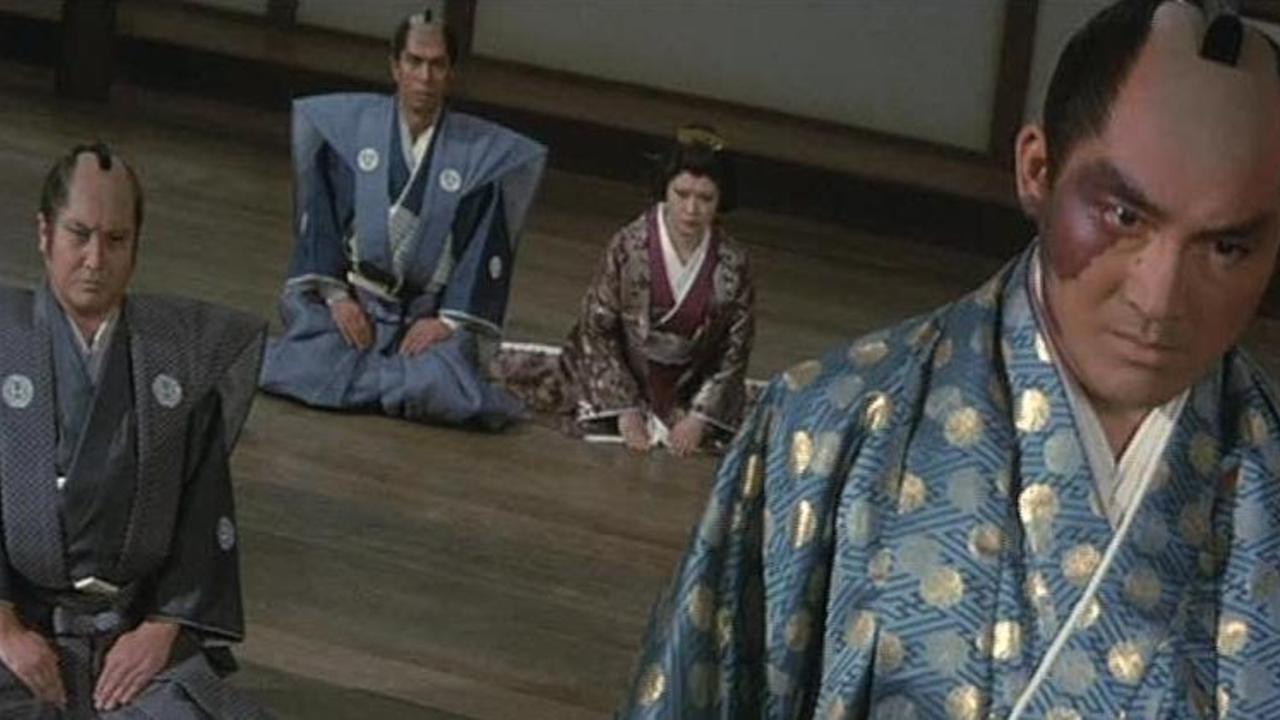
Yagyu Clan Conspiracy / Yagyû ichizoku no inbô
Countless films have been made about the famous swordsman Musashi Miyamoto, played by the most outstanding Japanese actors. Much less frequently portrayed on screen are the representatives of the Yagyū family, owners of one of the oldest fencing schools, Yagyū Shinkage-ryū. This illustrious clan, significant to the martial arts, became the subject of a film directed by Kinji Fukasaku, known for war epic Tora! Tora! Tora! (1970) and the brutal dystopia Battle Royale (2000).
However, this director is primarily known for gangster dramas (his films under the label Battles Without Honor and Humanity were particularly popular). In 1978, he completed two historical dramas. One was The Fall of Ako Castle, another successful interpretation of the story of the 47 rōnin, but more intriguing due to its less clichéd historical aspect was Yagyu Clan Conspiracy. The film was made with proper scope, at times unpredictable, and brilliantly cast. Leading the ensemble, as mentioned several times before, is Kinnosuke Nakamura, from the renowned acting family and descendant of kabuki theater stars. His son, named Jūbei, was played by Sonny Chiba, with supporting roles filled by Isuzu Yamada, memorable as Lady Macbeth in Throne of Blood (1957), Tetsurō Tanba as a mysterious swordsman (a disappointing performance), and Toshiro Mifune as a dignified daimyō.
The film is set during a fratricidal struggle for power following the death of the second Tokugawa shogun. A group of thieves breaks into a tomb and steals… the stomach of the deceased leader. This act is meant to serve as evidence that the shogun was poisoned. These suspicions quickly prove true. The plot was devised in response to the shogun’s opposition to the succession of his eldest son, who was unsuitable due to his ugliness and stuttering. Leading the conspiracy was Yagyū Munenori.
His enemies were supporters of his younger (and more handsome) brother.

Yagyu Clan Conspiracy / Yagyû ichizoku no inbô
Two excellent actors, Kinnosuke Nakamura and Sonny Chiba, played father and son, but they had only a few scenes together, the best being the last. It vividly indicates that the conflict is about more than fratricidal strife. This scene highlights the clash of two attitudes, two worlds.
In the first, more sterile world, there is a political struggle for power, deceitful and dishonorable. Also prevalent here is a difficult-to-understand servitude, adhering to a specific hierarchy and decisions that dictate the fate of subjects. In the second world, we observe life on the edge, a playground for warriors. In this theoretically inferior environment, there is equality and loyalty, alongside the conviction that every life is precious.
Yagyu Clan Conspiracy is a magnificent cinematic feast. The director’s masterful hand is evident at every turn, and the actors also maintain a high standard, elevating the production to another level. Discussing this film, one must note that the creators departed significantly from historical sources.
They convincingly explained deviations by noting that chronicles often erased sensitive issues, such as subjects’ betrayal of feudal lords. History written in books abounds in distortions and hypotheses. Reality is more complex, and what truly matters are not dates or events but people, who shape history. Their diverse characters stand out from the crowd—it is not armies that wage war, but individual units with varying temperaments. This multitude of characters symbolizes this, although some characters, of course, could not be fully developed. 130 minutes proved insufficient for the film to be complete and not superficial. The action unfolds swiftly, without any drag, with a large dose of emotion and surprising plot twists. Despite the crisis in Japanese cinema at the time, a sensational historical epic emerged that rivals the greatest achievements in the genre’s history.


LUCIA’S GRACE. Resembles a Kind Of Missionary Endeavor

DOKUMENT. Short Film That Feels Monumental

BEAUTIFUL BOY. The Acting is Remarkable [REVIEW]

Looking Back at SPIDER: More Terrifying Than Horror
