
Review
PIETA. Despite Its Subject, It’s a Godless Film
A sadist, a brute, an executioner, a criminal, a cold-blooded primitive. It’s hard to like the protagonist of a film Pieta by Kim Ki-Duk.

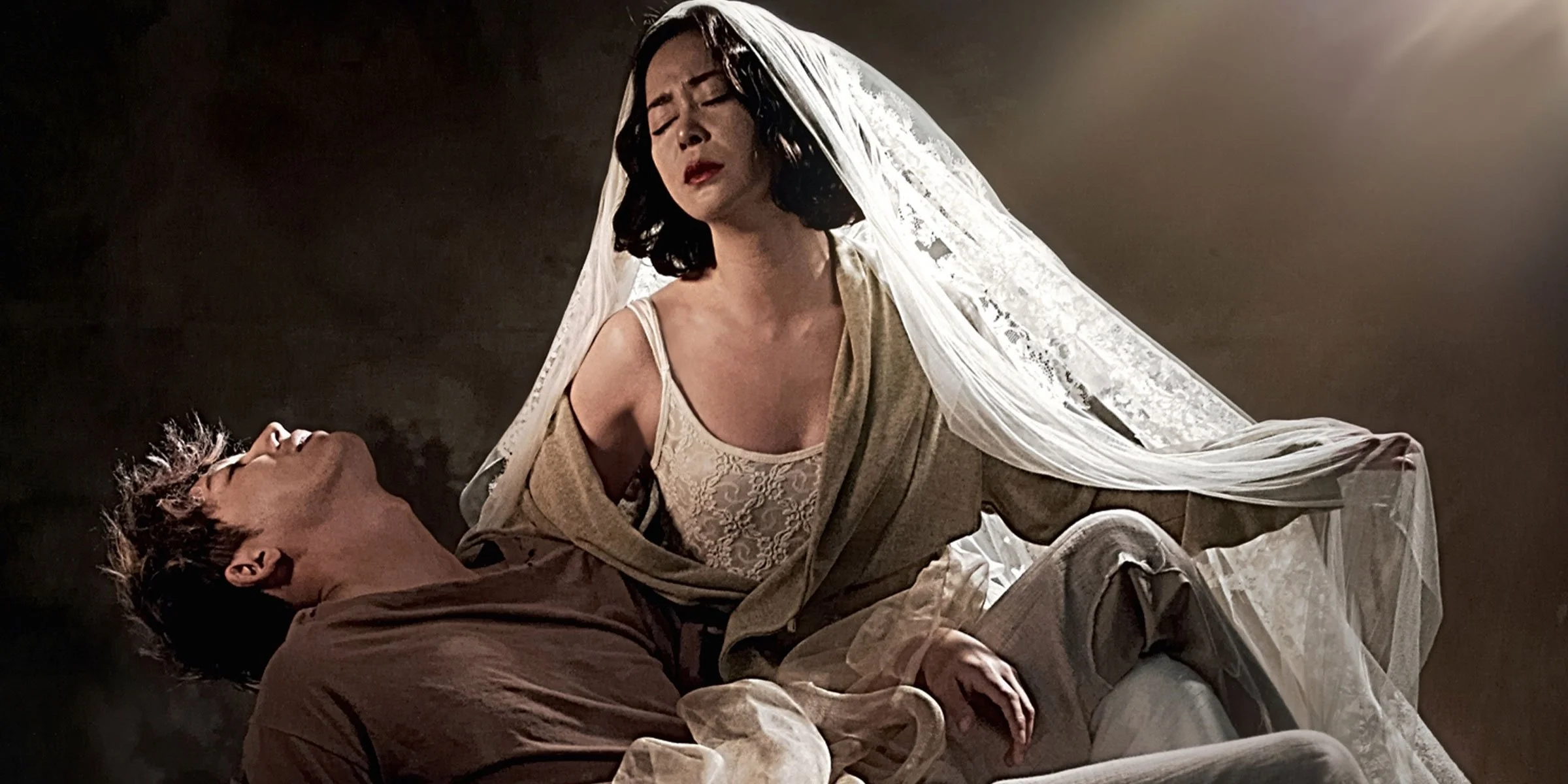
A sadist, a brute, an executioner, a criminal, a cold-blooded primitive. It’s hard to like the protagonist of a film Pieta by Kim Ki-Duk. The director succeeded in arousing disgust toward this character in me. The opening scenes, in which Gang-Do (Jung-Jin Lee) visits one debtor after another, astonish with the calculation with which the protagonist punishes them for failing to deliver the expected money. He is an animalistic, ruthless figure—driven by instinct rather than feeling. I also suspect that he may be autistic to some degree. I realize this is a rather bold comparison, but we have already seen a similar character in cinema—Leon from a film by Luc Besson.
Gang-Do is not Leon’s mirror image, but he shares many of his traits. Both avoid emotional or physical bonds with anyone, are individualists (loners), and represent the criminal underworld that took them in during childhood. Both approach their work entirely unreflectively. The most important difference between them is that Leon is privately a kind, harmless person—unlike the hero of Pieta, in whom no sensitivity has developed.
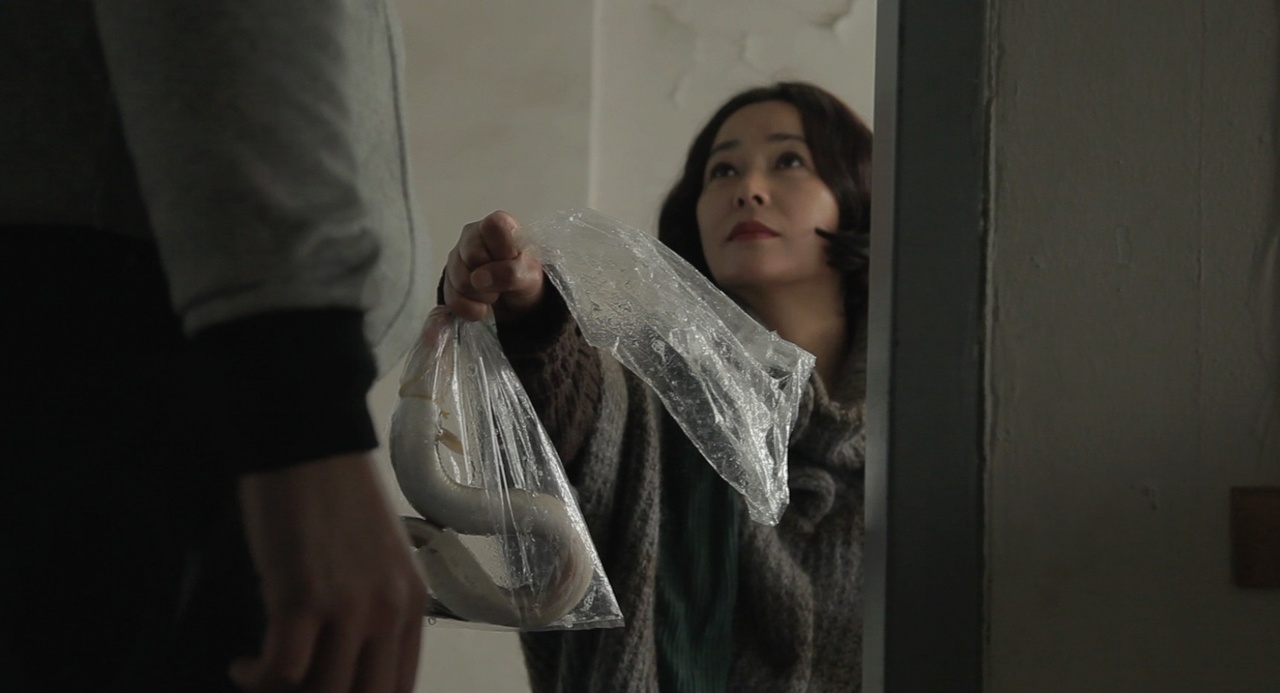
Pieta is not a remake of Leon: The Professional. In my view, the winner of the Golden Lion merely draws on a similar arc of character evolution. Gang-Do initially seems unbreakable and unchanging—until he begins to be haunted by his mother, Mi-Son (the intriguing Mi-Soo Jo). This is another parallel to Besson’s film—eventually, Matilda appears at Leon’s side. The first act of Kim Ki-Duk’s film pulls you in quickly. The protagonist is repellent, yet so alien and different that it’s impossible to stop following his fate. It’s also hard to remain indifferent to the story being told. These are undoubtedly strengths of Pieta’s precise, at times surprising screenplay.
The Korean director’s film is also a look at the slums. We are not told exactly where the action takes place, which gives the film a universal dimension. Ki-Duk does not want his work to be interpreted through the lens of South Korea’s specific situation; his story is global in scope. We encounter hopeless poverty, unemployment, filth, disability, and decay. Together with Gang-Do we traverse narrow, claustrophobic streets and interiors.

The action unfolds in a place where capital collides with poverty. Above the slums rise the tall towers of wealthy corporations. Here the director introduces a clearly defined political and social context, indicating the phenomenon that interests him—and taking the opportunity to comment on it. Ki-Duk does not shy away from expressing his own critical stance.
Above all, however, this is a universal story about a fallen mother and a fallen son. Their relationship is deeply toxic at first, but as the film progresses it becomes increasingly convincing through the warmth that grows between them. Mi-Son and Gang-Do discover feelings they would never have suspected in themselves. They become capable of more toward one another. The film is very well acted by Jung-Jin Lee and Mi-Soo Jo. These are complex characters, constantly clashing with each other—and, more importantly, with the viewer’s morality and ethics. They are dynamic figures who command attention; their aggression often shocks.

The actors convey all of their emotions and states superbly. These two characters—so maladjusted and unaccustomed to the presence of another person—awkwardly try to build a bond and show empathy. Sequences built on this dependence are moving and encourage us to root for them.
Despite its subject, Pieta is a godless film. Kim Ki-Duk does not seek God either. The title alludes to the famous sculpture by Michelangelo depicting Mary holding the body of Christ taken down from the cross. Yet in the Korean director’s film there is no mysticism. No one here is holy. Mi-Son pulls Gang-Do out of the mire—but she herself has long been sinking in it as well.


LUCIA’S GRACE. Resembles a Kind Of Missionary Endeavor

DOKUMENT. Short Film That Feels Monumental

BEAUTIFUL BOY. The Acting is Remarkable [REVIEW]

Looking Back at SPIDER: More Terrifying Than Horror
