
Horror Movies
Revisiting WOLF (1994): Calm, Elegant, and Well-Told Horror
Perhaps this is precisely how horror should be understood—fear is a consequence of a well-told story, and dread hides between the lines. Wolf illustrates this very nicely.


The distant times of my childhood and early youth fall in the 1990s, when films were watched on television, in cinemas, and on VHS. No one had yet heard of widespread access to the Internet, DVD discs—debuting toward the end of the decade—were an extremely expensive invention, and piracy was limited to copying VHS tapes or buying new releases at the market in cinema quality. Happy times. And simpler ones. Wolf.
In any video rental store, every film was assigned to a single genre, which made choosing much easier, even if controversial decisions sometimes occurred—for example, when Beetlejuice ended up in horror, and Predator in action. Today, when entering IMDb, one must be prepared for most titles to be assigned several genres, which in itself is not a bad thing, but sometimes unnecessarily complicates simple categorization.
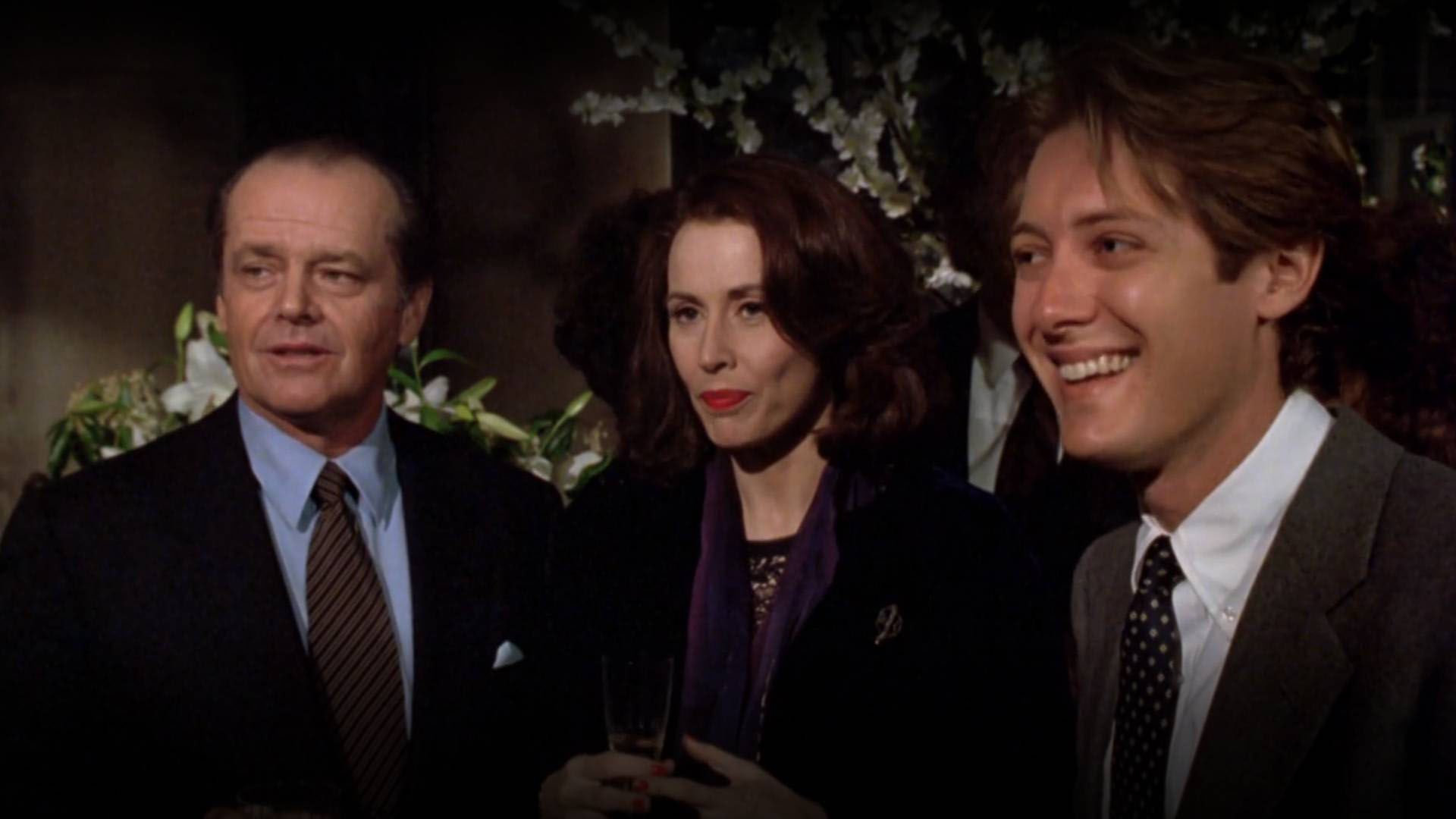
So when, three decades ago, I picked up a cassette with the film Wolf, I expected nothing other than a horror movie. At the time, I kept notebooks in which I wrote down everything I watched, including the names of the director, screenwriter, cast, country of production, my rating, and of course the genre. After the screening of Wolf, when I sat down to record this information, a certain thought surprised me—that I had not, in fact, watched a horror film. Mike Nichols’s picture, although it clearly met the genre’s requirements, struck me as completely different from anything I had seen before.
Instead of mindlessly trying to scare me, it made me consider the reason why I was watching a werewolf on screen. It was calm, elegant, not devoid of bloody scenes, yet even there exceptionally restrained and in good taste. It was… cultured, if one can say that about a film work. Where did such a reaction to Wolf come from? In broad narrative terms, it is hard to imagine a more classic monster story—a man is bitten by a wolf and then notices changes occurring in his body and character.
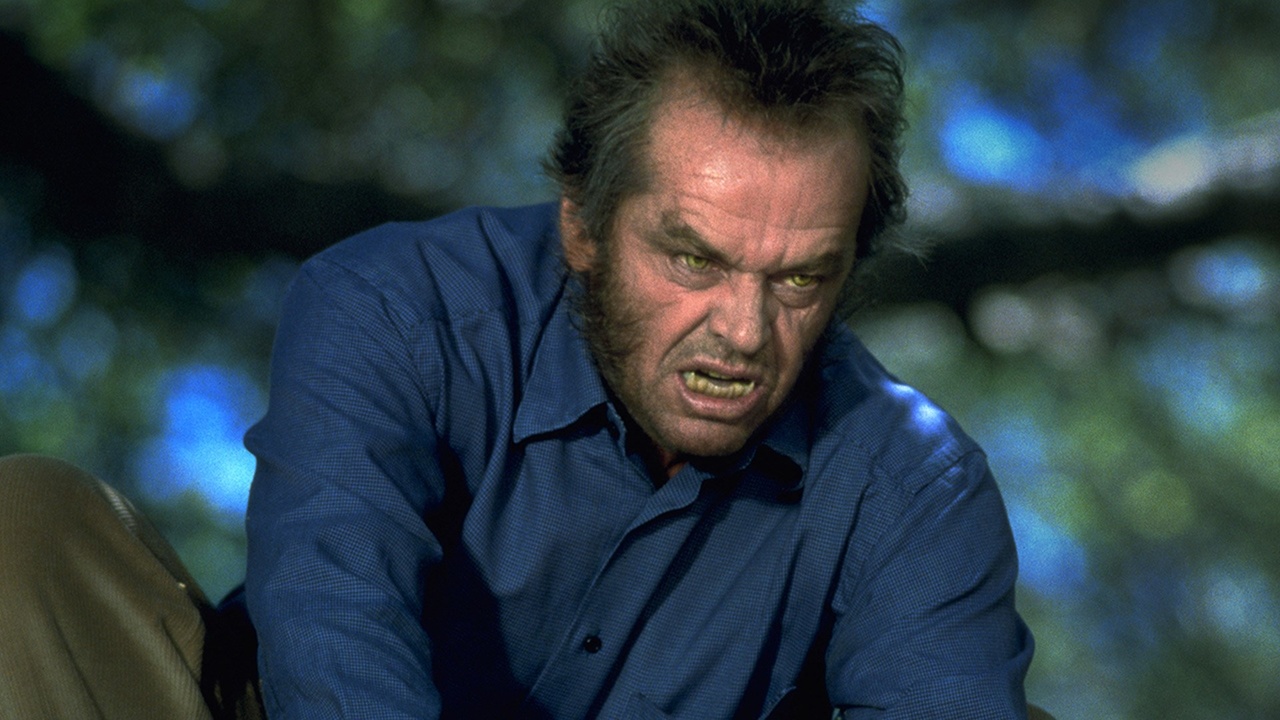
Heightened senses, increased appetite, and elevated libido come at a price, and soon the poor man begins running through the forest at night, killing deer and howling at the moon. He naturally remembers none of these escapades, nor the physical transformation into a werewolf; he realizes that something bad is happening to him, while at the same time having to admit that he feels great. Soon, people begin to die.
A typical werewolf story, one might say—except that this classic motif is dressed here in very unobvious garb. Will Randall is an older man, polite, calm, and submissive to fate. A respected publisher at a reputable house, whose days in that job seem numbered, and who himself is not particularly interested in changing the course of events. And why should he? As he says, good taste and individuality have ceased to be advantages; now ambition, harassment, lies, and controversy matter. One must be an animal. When the wolf’s nature awakens in him, this kind and agreeable man bares his teeth—also metaphorically—and decides to fight for what is his.
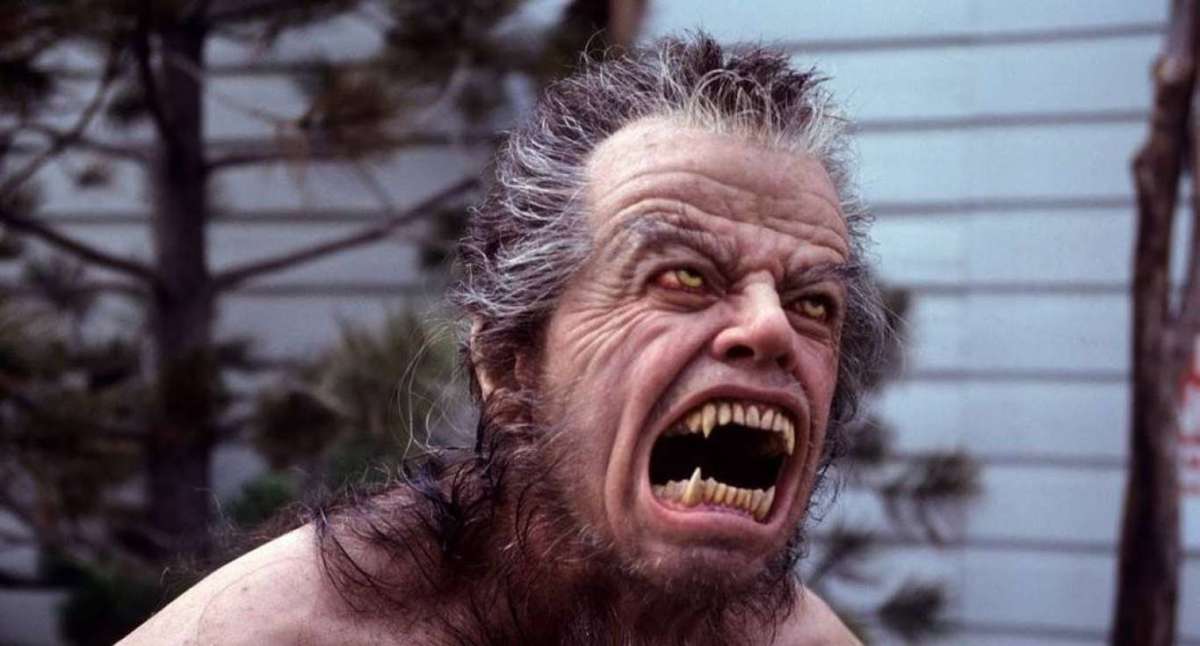
Jack Nicholson seemed the perfect choice to portray the wolf being born within the protagonist, though not necessarily Randall himself. In this role, the actor never raises his voice, avoids his characteristic expressiveness, and does not shy away from his age. At the beginning of the film, he even appears older than the actor playing the new owner of the publishing house, Christopher Plummer—although Nicholson is, after all, nearly a decade younger. Randall somehow enforces a calm narrative pace, an ironic and discreetly humorous tone, and a level-headed approach to the whole story.
Perhaps that is why it is difficult to consider Wolf a full-fledged representative of werewolf horror—its protagonist clings so strongly to what attests to his humanity, his intelligence, and his culture that even after the transformation he does not become entirely covered in fur in order to turn into a beast. Nichols, moreover, is more interested in human nature than animal nature. The director of The Graduate, The Birdcage, and Closer always sought to show the human being in full light, not judging him, but rather giving him a chance to speak on his own behalf.

Even corrupted characters deserved a second chance in his films, although a simple division into good and evil did not exist—his characters were often victims of the environment from which they came, hostages to the laws and rules governing it, functioning well within that world, yet ultimately moving toward an awakening.
Old and unaccustomed to fighting, Randall initially prefers to give up his former life, accept his own impotence and aversion to the current aggressive publishing policy—and even to civilization itself. However, after being bitten by the wolf, he notices not only the façades that have surrounded him so far (especially the betrayal of those he relied on most), but also a surprising ease of adaptation to a new environment. Wolfish laws had begun to rule the human world, so it is hardly surprising that a real wolf can find his place there.
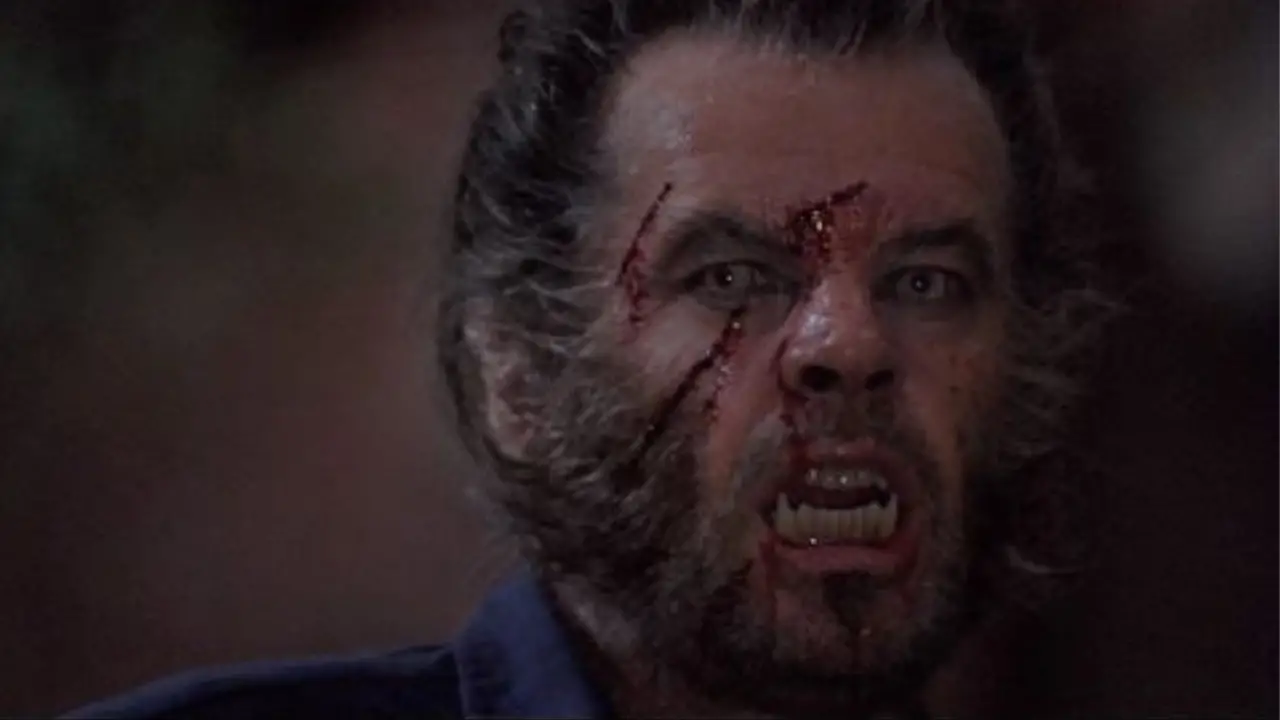
But the titular animal resists the simple label of monster. Quite the opposite. The character played by Nicholson commits bestial acts that are nevertheless in harmony with his nature. Can the same be said of Randall’s protégé and friend Stewart Swinton (a wonderfully two-faced James Spader), the new owner of the publishing house, the millionaire Raymond Alden, or even Will’s wife, Charlotte? Members of the upper classes—educated and refined—yet in their pose artificial, deceitful, manipulative. One might be tempted to call them inhuman, and yet they are human. Respect and reverence we give to the wolf, because he does not pretend.
What is more, he loves. Alden’s rebellious daughter understood long ago how the modern world works, which makes this last civilized man, as she calls Randall, all the more puzzling to her. She is real, like him—and on top of that young and beautiful. Michelle Pfeiffer, who plays her, has excellent chemistry with Nicholson and, surprisingly, seems to be the stronger personality in this relationship. The romantic subplot, instead of serving as an escape from the main theme, reinforces it even further, confirming that one cannot win against nature.
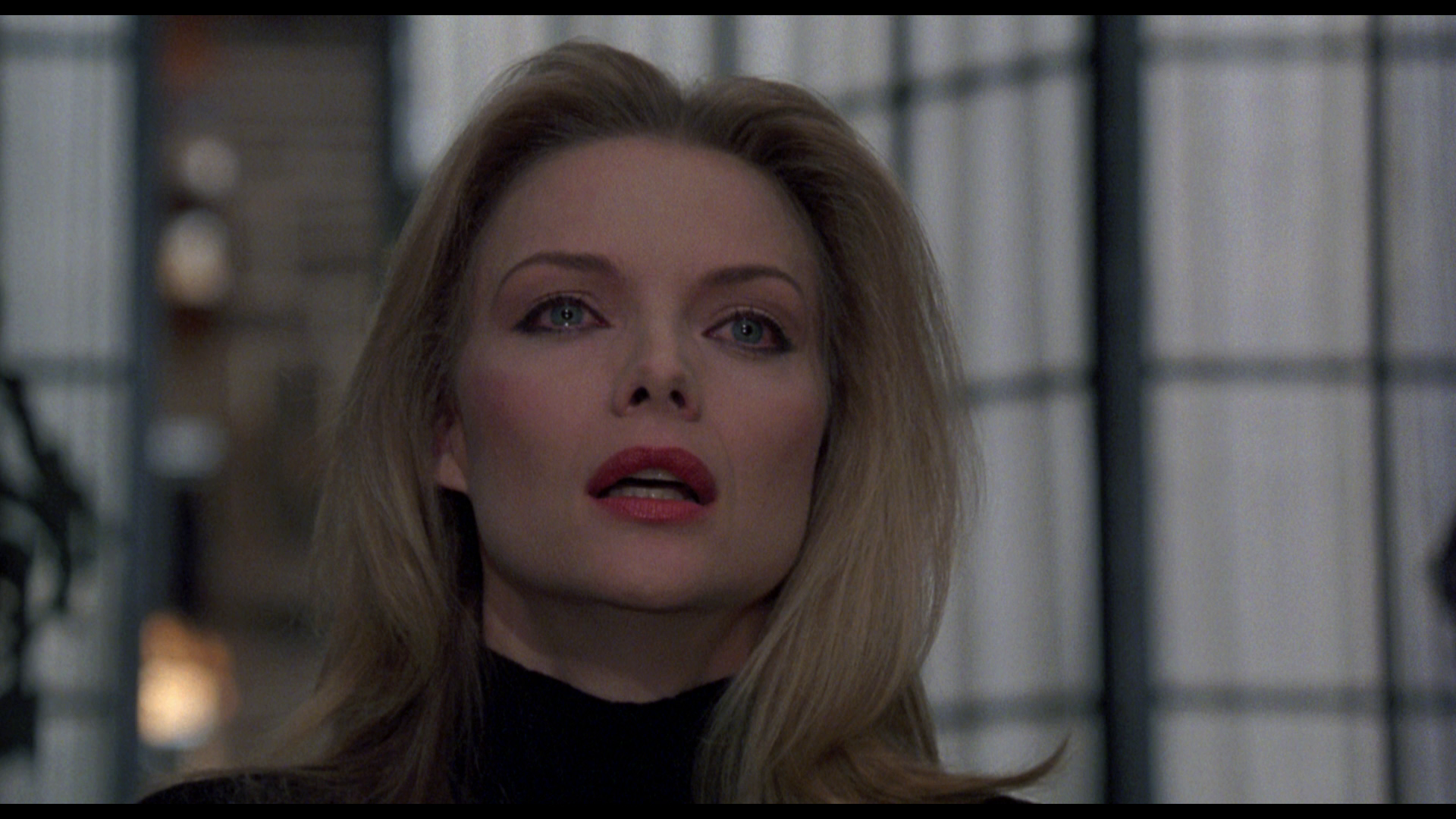
The visual and aural presentation of Wolf also goes beyond the standards of horror productions. The cinematography by Giuseppe Rotunno, a longtime collaborator of Federico Fellini, surprises with long takes built on numerous close-ups and pullbacks. They seem to create a narrative of their own, forcing us to focus on details chosen by the cinematographer and on the space filling the frame, where the movement of characters—and the fact that they are not constrained by excessive editing—appear crucial. Ennio Morricone’s symphonic score delights with its lyricism, emphasizing the lurking threat through a recurring, swelling synthesizer sound.
Even the makeup, although created by Rick Baker—a true specialist in the field of wolf transformations (Oscars for the famous An American Werewolf in London and The Wolfman from 2011)—is surprisingly restrained, aimed not at shocking but at revealing the wild side of man.
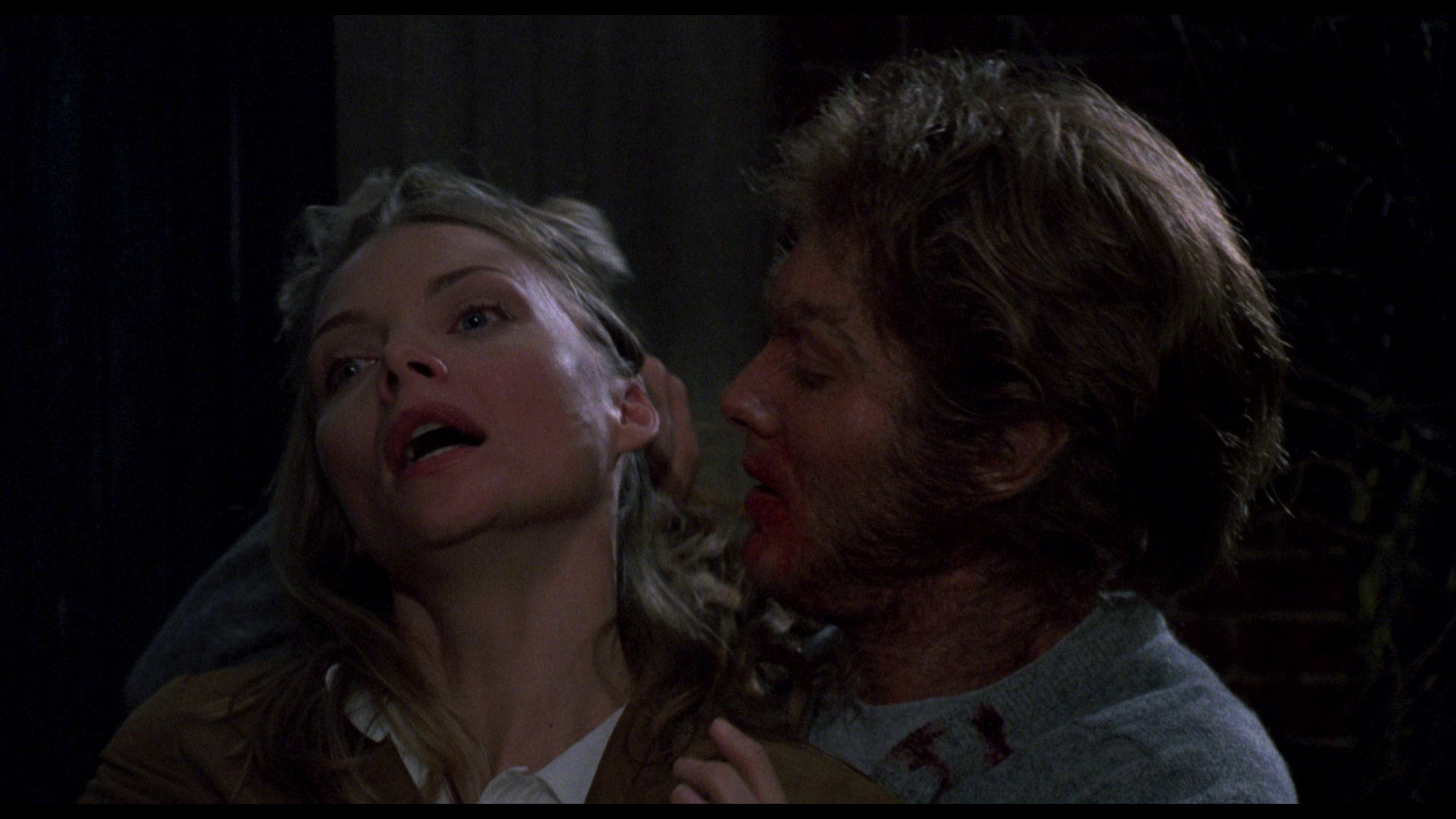
Metaphor drives the horror, which in another case might have been a classic reading akin to Francis Ford Coppola’s Dracula and Kenneth Branagh’s Frankenstein, made around the same period. The screenplay by Jim Harrison, later revised by Wesley Strick, not only brings the wolf into the present day, but also places him in an environment that would seem alien and not particularly conducive to fear. Evoking that emotion, however, does not seem to concern the director much.
Perhaps this is precisely how horror should be understood—fear is a consequence of a well-told story, and dread hides between the lines. Wolf illustrates this very nicely, which I will conclude with a fragment of dialogue from the film: when asked what there is about the full moon, a bored policeman played by Richard Jenkins replies wittily, It’s brighter.


LUCIA’S GRACE. Resembles a Kind Of Missionary Endeavor

DOKUMENT. Short Film That Feels Monumental

BEAUTIFUL BOY. The Acting is Remarkable [REVIEW]

Looking Back at SPIDER: More Terrifying Than Horror
